


 Deutsch
 English
 Español
 Français
 Nederlands
 Português


 Share





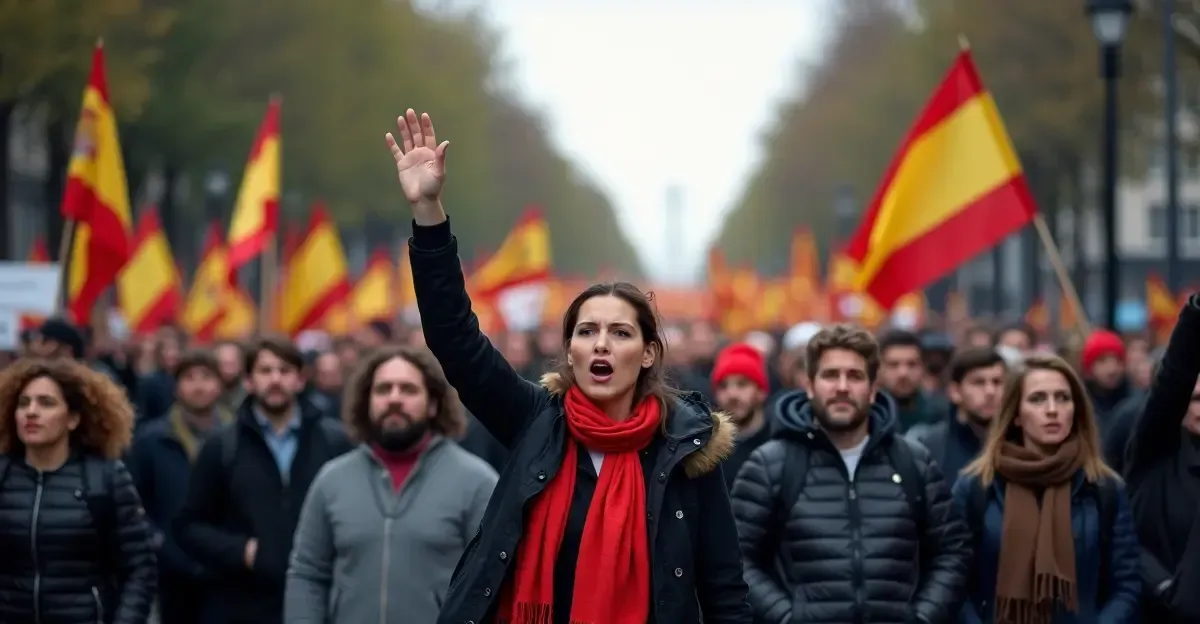
On Wednesday, 11 November 2026, millions of Spanish workers walked off the job in the country's first general strike in 14 years. Organised under the slogan “Salaries, Housing, Prices,” the 24-hour Spain general strike paralysed public transport, schools, markets and health services as workers demanded higher pay, affordable housing and lower living costs.
What is the Spain general strike 2026?
The strike was called jointly by Spain's two largest union confederations, UGT and CCOO, alongside smaller unions and tenants' associations. It is the first nationwide general strike since 2012. Minimum-service rules kept some public transport running, but organisers reported stoppages of up to 90 percent in the automotive and port sectors and 82 percent in waste collection. Business group CEOE, however, said participation was low in most sectors.
The action grew out of anger over a housing crisis that has pushed average rents up by around 80 percent in a decade, while home prices have risen 63 percent. The immediate trigger was the eviction of 87-year-old Maricarmen Abascal in September 2026; her death days later sparked a five-week occupation of Madrid's Puerta del Sol and nationwide protests. Spain's housing affordability crisis has since become the central issue ahead of the 29 November snap election.
Why are Spanish workers striking?
Housing crisis at the centre
Unions and tenant groups want limits on real estate speculation and tourist lets, automatic lease renewals and stronger renter protections. “The most important thing is that there is social justice, that there are decent wages, that people have the right to access decent housing,” said firefighter José during a rainy rally at Madrid's Plaza de Cibeles. “And that not all the money goes to those at the top. Wealth must be distributed.”
Wages and the cost of living
The unions are also demanding higher salaries and at least a 7 percent increase in Spain's minimum wage for 2027. The broader campaign echoes cost-of-living protests in Europe, with workers arguing that wages have not kept pace with inflation and housing costs.
How the strike disrupted Spain
Transport was heavily affected. State rail operator Renfe cancelled about 24 percent of high-speed and long-distance trains and 10.2 percent of commuter services. In Madrid, roughly 80 percent of metro trains ran during rush hour and 50 percent off-peak, while many bus routes operated on reduced schedules.
- Education: schools ran with fewer teachers, with some classes cancelled.
- Fuel and food: many petrol stations closed and markets expected reduced supplies.
- Health: hospitals and health centres operated on a weekend or holiday schedule.
- Media: regional broadcaster Canal Sur showed a black screen instead of its morning news, stating: “There is no broadcast as a result of the general strike.”
In Madrid and Barcelona, demonstrations blocked highways and urban roads. Police reported at least 653 strike-related incidents nationwide and more than 50 arrests, with pepper spray used at Madrid's Mercamadrid market. Madrid authorities estimated 120,000 demonstrators in the capital; in Barcelona, organisers claimed 400,000, while police put the figure at 55,000.
Political and electoral impact
The strike comes 18 days before Spain's snap general election on 29 November 2026. Prime Minister Pedro Sánchez's Socialist-led coalition hopes the housing debate will mobilise left-wing voters, while the conservative People's Party (PP) accused UGT and CCOO of mounting a “political strike.” A poll by 40dB for El País and Cadena SER found 46 percent of Spaniards supported the strike and 49 percent did not. Spain's November 2026 election is expected to be closely fought, with polls suggesting a possible PP–Vox coalition. Catalonia deployed 9,000 police officers, 3,000 more than usual, amid warnings of possible unrest after the Barcelona demonstration.
FAQ
What is Spain's general strike about?
The 24-hour walkout on 11 November 2026 was about higher wages, affordable housing and lower living costs, under the slogan “Salaries, Housing, Prices.”
Why did Spain hold a general strike in 2026?
The strike followed the eviction and death of 87-year-old Maricarmen Abascal and years of rising rents and home prices. Unions said government housing measures were insufficient.
Who called the Spain general strike?
It was called jointly by Spain's two biggest union confederations, UGT and CCOO, with support from smaller unions and tenants' associations.
How did the strike affect public transport?
Renfe cancelled about 24 percent of high-speed and long-distance trains and 10.2 percent of commuter services, while Madrid's metro ran at reduced frequency.
When is Spain's 2026 general election?
The snap general election will be held on 29 November 2026.


Follow Discussion