


 Deutsch
 English
 Español
 Français
 Nederlands
 Português


 Share
Share




Revolutionary Nuclear Microscope Completed
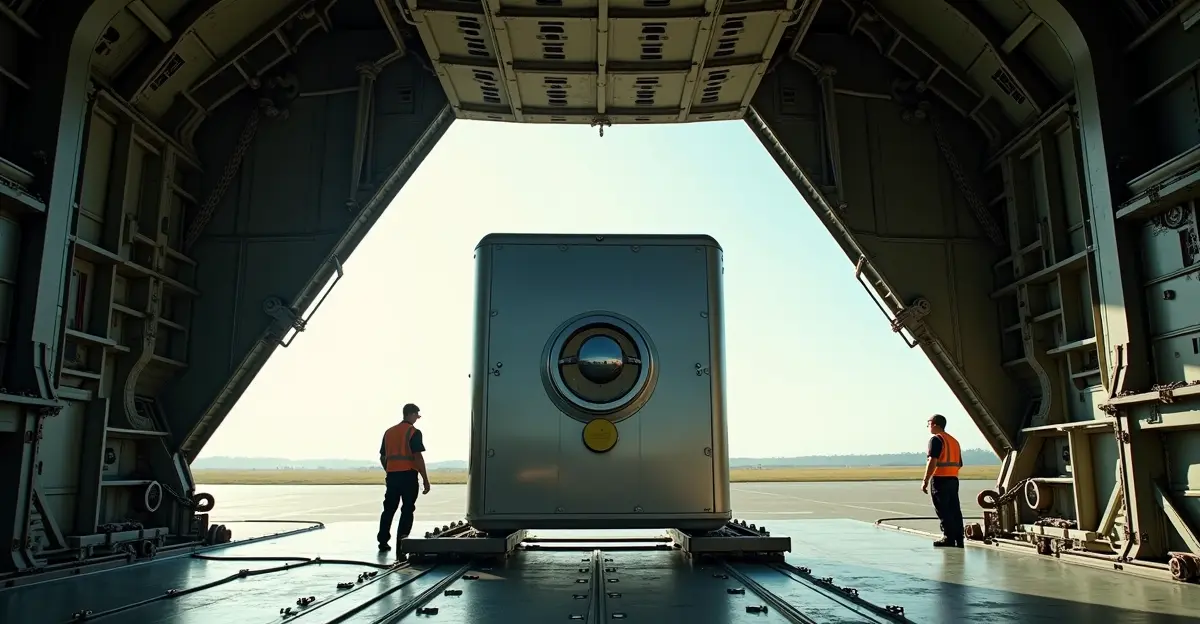
GRETA (Gamma-Ray Energy Tracking Array), the world's most powerful nuclear physics detector, has been completed at Lawrence Berkeley National Laboratory. This advanced instrument will soon be installed at Michigan State University's Facility for Rare Isotope Beams (FRIB) to enable unprecedented exploration of atomic nuclei.
Unprecedented Sensitivity
GRETA employs 30 ultra-pure germanium modules cooled to -184°C to detect gamma radiation emitted when unstable atomic nuclei return to ground state. Project director Paul Fallon states: "GRETA provides 10-100 times greater sensitivity than previous instruments, allowing us to observe weaker structures and fundamental natural forces."
Scientific Breakthroughs Expected
The detector tracks gamma photon energy and 3D trajectories, creating unique isotopic fingerprints. Researchers aim to solve major physics mysteries:
Heavy Element Formation
GRETA will study how stars create heavy elements like gold and uranium through nucleosynthesis processes.
Nuclear Drip Lines
Scientists will investigate nuclear stability limits where protons or neutrons can no longer bind to nuclei.
Exotic Nuclear Shapes
The instrument will examine pear-shaped nuclei that may explain why the universe contains more matter than antimatter.
Technical Marvel
GRETA's precision aluminum frame aligns within millionths of an inch. Each module contains four hexagonal germanium crystals forming a complete sphere around targets - a significant upgrade from the 12-module GRETINA system. Its electronics process 50,000 signals/second per crystal, exceeding design goals during testing.
Real-Time Data Processing
Integrated with DELERIA high-speed streaming, GRETA sends data directly to supercomputers via DOE's ESNet for immediate analysis, maximizing valuable beam time efficiency.
Future Research
At FRIB, GRETA will study approximately 1,000 new atomic nuclei types before potentially relocating temporarily to Argonne National Laboratory. This versatile instrument will drive nuclear physics research for decades.





Follow Discussion