


 Deutsch
 English
 Español
 Français
 Nederlands
 Português


 Share
Share




South Korea is breathing new life into the long-stalled Gyeongwon Line railway restoration project, a move that could eventually reconnect Seoul with North Korea's eastern port city of Wonsan. The announcement, made by Unification Minister Chung Dong-young on August 6, 2026, revives a project first launched in 2015 but suspended just a year later amid rapidly deteriorating inter-Korean relations. The railway project is the latest in a series of cautious overtures by President Lee Jae-myung's administration, which took office in June 2025, aimed at thawing the frozen relationship with Pyongyang.
Background and History of the Gyeongwon Line
The Gyeongwon Line traces its origins to the early 20th century, when it was built by the Chosen Government Railway between 1911 and 1914 as a vital east–west trunk route connecting Seoul (then Keijō) to the port of Wonsan. For decades, it served as one of the Korean peninsula's most important rail corridors. After the division of Korea following World War II, the line was severed along the 38th parallel, and later along the Military Demarcation Line established after the Korean War armistice. The southern portion continued to operate within South Korea, with gradual upgrades including electrification and double-tracking in the Seoul metropolitan area. However, the section near the Demilitarized Zone (DMZ) remained disconnected, a physical reminder of the peninsula's division.
The Revival Plan
Under the renewed initiative, South Korea will restore a disconnected section of track near the DMZ, extending the operational line further northwards. The project is not intended to immediately cross the border into North Korea—Pyongyang has made that impossible since 2024, when it demolished cross-border road and rail links on its side. Instead, the immediate goal is to improve access to peace and ecological tourism sites in the border region and to stimulate local economic activity. The railway could eventually link to Wonsan, where North Korea has developed the Wonsan-Kalma coastal tourist zone, if and when political conditions allow.
Construction is expected to be completed by 2029. The Unification Ministry also proposed expanding the use of the Inter-Korean Cooperation Fund, an underutilized government fund originally designed for cross-border exchanges and humanitarian projects. Since 2016, only about 2–3% of the fund has been spent annually, largely due to sanctions and diplomatic deadlocks. The ministry now wants to redirect these resources toward domestic border-area development, including railway stations, peace parks, museums, and reunification research.
Tourism and Economic Development
A key driver behind the railway revival is the promise of border tourism. The DMZ, a 250-kilometer-long, 4-kilometer-wide buffer zone, has been largely untouched by human activity for over 70 years, resulting in a uniquely rich and diverse ecosystem. It also holds deep historical significance for visitors interested in the Korean War and the division of the peninsula. By improving rail access, the government hopes to attract more tourists and create jobs in economically lagging border communities, where young people have long migrated to cities and military restrictions have stifled development. The railway is also seen as a complement to the DMZ Peace-Link Train service, which resumed limited operations in April 2026 on the western Gyeongui Line.
Political and Diplomatic Context
President Lee Jae-myung has made inter-Korean engagement a priority despite the bleak diplomatic landscape. North Korea has not responded to the railway announcement, and leader Kim Jong-un has repeatedly rebuffed Seoul's outreach. Lee himself has described efforts to engage the North as "shouting into an echoless void." Foreign Minister Cho Hyun acknowledged on August 5 that multilateral negotiations involving North Korea, the United States, and China are "realistically difficult" under current conditions, following the failure of Indonesian-mediated talks earlier this year.
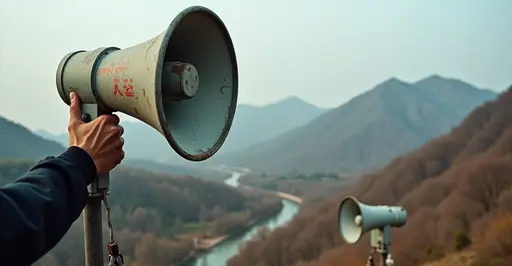
Still, the railway project fits a pattern of symbolic but concrete gestures. In 2025, South Korea turned off loudspeakers along the border that had broadcast propaganda and K-pop into North Korea for 15 years. These steps signal Seoul's willingness to reduce tensions and invest in long-term infrastructure that could one day facilitate genuine reconnection. As correspondent Gabi Verberg noted, "With the construction of this railway, they are literally seeking connection. The country hopes that one day the two cities can be linked again."
FAQ
What is the Gyeongwon Line?
The Gyeongwon Line is a historic railway that originally connected Seoul to Wonsan in what is now North Korea. Built between 1911 and 1914, it was severed after Korean division and is now being restored on the southern side as a potential future inter-Korean link.
Will the railway actually cross into North Korea?
Not immediately. The current restoration focuses on the disconnected section near the DMZ on the South Korean side. Cross-border operation would require North Korean cooperation, which remains unlikely after Pyongyang destroyed border rail links in 2024.
Why is South Korea pursuing this project now?
The project aims to boost tourism and economic development in border regions, demonstrate goodwill, and lay the groundwork for eventual inter-Korean reconnection. It also aligns with President Lee Jae-myung's policy of sustained engagement despite diplomatic challenges.
When will the railway be completed?
South Korean officials aim to complete the restoration by 2029.

Follow Discussion