


 Deutsch
 English
 Español
 Français
 Nederlands
 Português


 Share
Share




Tensions Escalate at Korean DMZ Following Military Incident
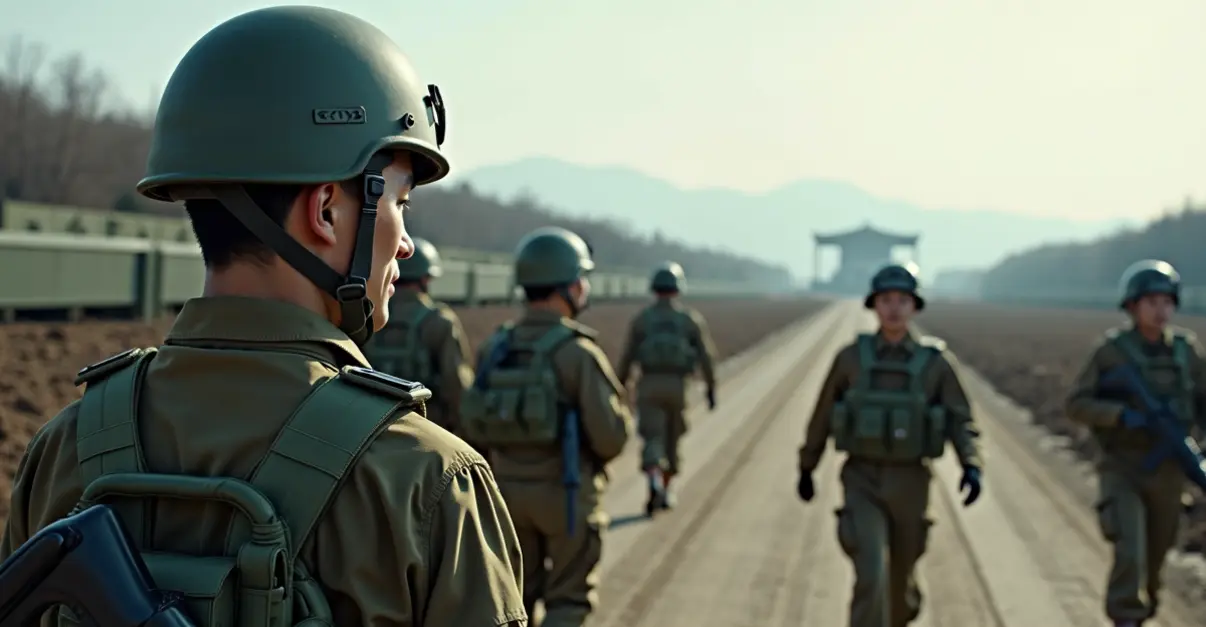
North Korea has accused South Korea of "serious provocation" after South Korean forces fired warning shots toward North Korean soldiers who briefly crossed the military demarcation line in the Demilitarized Zone (DMZ) on Tuesday. The incident occurred as North Korean troops were reportedly working on construction projects near the heavily fortified border.
Border Incident Details
According to South Korea's Joint Chiefs of Staff, North Korean soldiers operating near the Military Demarcation Line (MDL) within the central frontline DMZ crossed the border around 15:00 local time on Tuesday. In response, South Korean forces fired more than 10 warning shots from a machine gun, prompting the North Korean soldiers to retreat north of the MDL.
North Korean Army Lieutenant General Ko Jong Chol condemned the action as a "premeditated and deliberate" provocation that risks driving the situation to an "uncontrollable phase." State media reported that the North Korean soldiers were engaged in building a barrier intended to "permanently seal the southern border" as part of Pyongyang's ongoing efforts to completely shut down cross-border access.
Historical Context of DMZ Tensions
The Korean Demilitarized Zone has been a flashpoint for tensions between the two Koreas since the Korean War ended in 1953 with an armistice rather than a peace treaty. The 250-kilometer long, 4-kilometer wide buffer zone remains one of the most heavily militarized borders in the world, with both sides maintaining significant troop presence and fortifications.
This incident marks the latest in a series of border confrontations. In early April, South Korea similarly fired warning shots when approximately 10 North Korean soldiers briefly crossed the border. The DMZ's lack of physical fencing and dense vegetation often leads to accidental crossings, though both sides typically respond with heightened military alertness.
Broader Geopolitical Implications
The border incident occurs amid several significant developments in inter-Korean relations. New South Korean President Lee Jae-myung, who took office in June, has made improving relations with North Korea a key priority of his administration. However, North Korea has repeatedly rebuffed his overtures, with Kim Jong Un's sister Kim Yo-jong recently stating that Pyongyang has "no interest" in improving relations due to Seoul's continued alliance with the United States.
Simultaneously, North Korea has been strengthening its military cooperation with Russia, providing artillery and missiles for Moscow's war in Ukraine. Kim Jong Un continues to showcase North Korea's nuclear capabilities while expanding his country's strategic partnerships beyond traditional allies.
Recent De-escalation Efforts
In a bid to reduce tensions, South Korea recently dismantled propaganda loudspeakers along the border that had been broadcasting K-pop music and news into North Korea. Pyongyang considers these broadcasts acts of psychological warfare and had threatened military action against them. North Korea subsequently removed some of its own speakers from the border area.
The loudspeaker conflict dates back to the 1960s, with periods of activation and deactivation reflecting the state of inter-Korean relations. The most recent resumption occurred in 2024 after North Korea sent trash-filled balloons across the border, prompting South Korea to restart the broadcasts before halting them again in 2025.
Military analysts note that while such border incidents rarely escalate into full-scale conflict, they highlight the fragile nature of the truce between the two Koreas and the constant potential for miscalculation along one of the world's most dangerous borders.





Follow Discussion