


 Deutsch
 English
 Español
 Français
 Nederlands
 Português


 Share
Share




North Korea's Leader Orders Massive Nuclear Arsenal Expansion
North Korean leader Kim Jong-un has called for an 'exponential' increase in the country's nuclear weapons production, according to state media reports from June 2026. During a visit to a newly operational uranium enrichment facility, Kim ordered a dramatic ramp-up in the production of weapons-grade nuclear material, signaling a major escalation in Pyongyang's nuclear ambitions. The announcement comes as independent monitors confirm that North Korea has more than doubled its fissile material production capacity over the past five years.
Background: A Decade of Nuclear Proliferation
North Korea's nuclear program has advanced steadily since its first nuclear test in 2006. Despite international sanctions and diplomatic efforts, the country has continued to develop both nuclear warheads and delivery systems. The North Korea nuclear program timeline shows a clear acceleration under Kim Jong-un, who has prioritized weapons development as a cornerstone of national security. According to the International Atomic Energy Agency (IAEA), North Korea now operates multiple uranium enrichment facilities, including the Yongbyon complex and a secret site at Kangson. The IAEA's latest report states that 'nuclear activities in the Democratic People's Republic of Korea give rise to serious concern.'
Key Developments in 2026
New Uranium Enrichment Facility Revealed
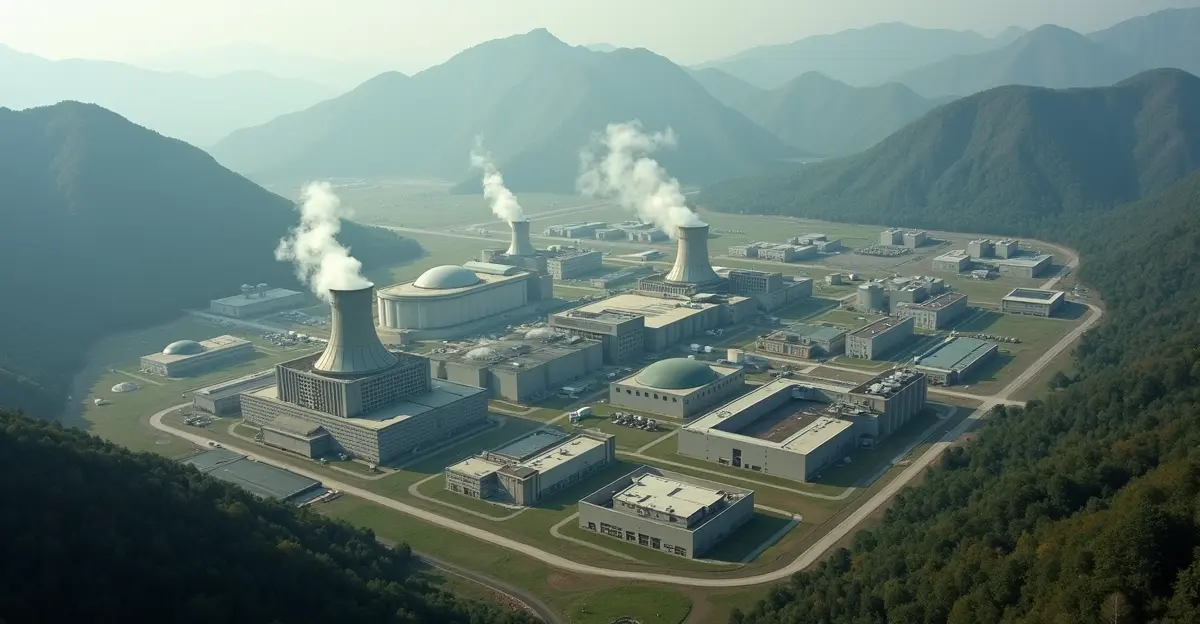
State news agency KCNA released photographs of Kim walking through a hall lined with hundreds of centrifuges — equipment used to enrich uranium to weapons-grade levels. The facility, described as employing 'more sophisticated technology,' represents a significant upgrade from previously disclosed sites. Analysts believe this is the third time North Korea has publicly unveiled a uranium enrichment plant, suggesting growing confidence in its nuclear capabilities.
Exponential Production Capacity
Kim stated that North Korea's capacity to produce nuclear materials has more than doubled over the past five years, fulfilling a five-year plan enacted after the collapse of denuclearization talks with the United States. The 2025 global nuclear threat assessment from the US Defense Intelligence Agency confirms that North Korea has restored its nuclear test site at Punggye-ri and is 'postured to conduct a seventh nuclear test at a time of its choosing.'
International Response and Concerns
The international community has reacted with alarm to the latest developments. The IAEA has repeatedly warned that North Korea's continuous operation of uranium enrichment plants and maintenance of nuclear test sites pose a serious threat to global non-proliferation efforts. The United States, South Korea, and Japan have condemned the expansion, while the UN Security Council remains divided on further sanctions due to China and Russia's opposition.
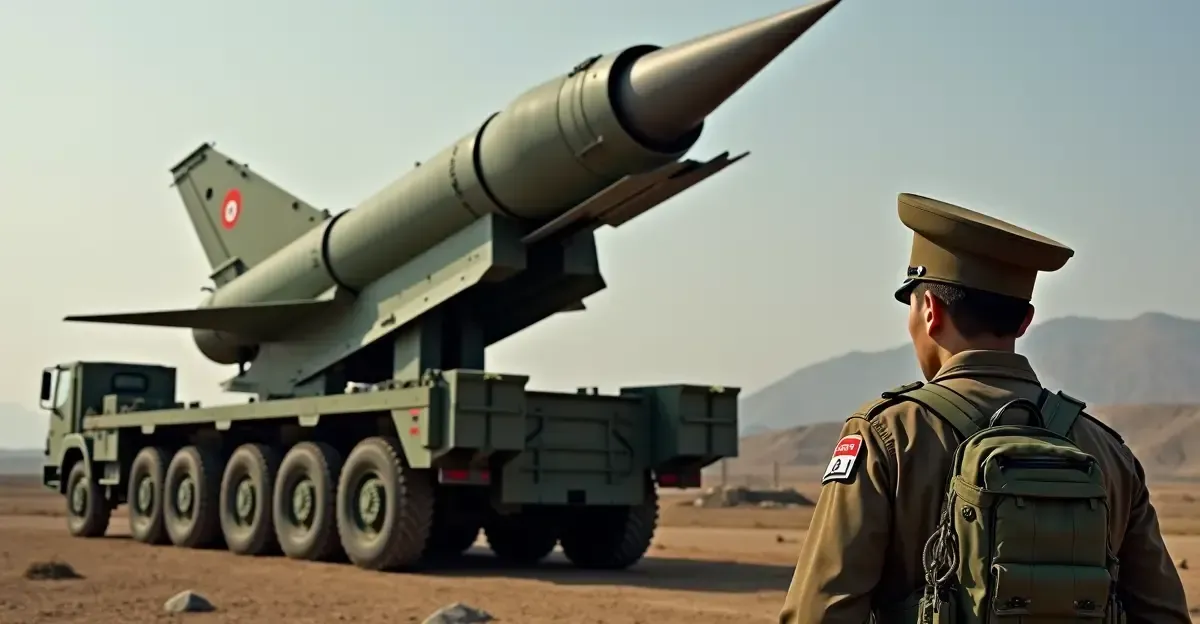
Experts estimate that North Korea now possesses enough fissile material for approximately 90 nuclear warheads, with an estimated 50 assembled. The country is believed to have developed thermonuclear weapons and miniaturized warheads capable of being mounted on intercontinental ballistic missiles (ICBMs). The Hwasong-17 ICBM capabilities have been demonstrated in multiple tests since 2022, showing potential range to reach the US mainland.
Strategic Implications
Kim Jong-un's latest order signals a firm rejection of denuclearization talks and a strategic shift toward permanent nuclear status. Analysts suggest that Kim aims to be recognized as a nuclear weapons state, which would allow him to negotiate sanctions relief from a position of strength. 'Kim's goal is recognition as a nuclear state to push for lifting UN sanctions, rather than disarmament,' said a senior analyst at the Institute for Science and International Security. 'Exercising the position of a nuclear weapons state is his invariable stand.'
The expansion also has implications for regional security. South Korea has increasingly discussed the possibility of developing its own nuclear deterrent or hosting US nuclear weapons again. Meanwhile, North Korea's deepening military cooperation with Russia — including a 2024 security treaty — provides Pyongyang with technology transfers and sanctions evasion routes, further complicating international efforts to curb its program.
What Does Exponential Growth Mean for Global Security?
The term 'exponential' suggests that North Korea is moving from incremental increases to a rapid, compounding expansion of its arsenal. If North Korea can produce enough fissile material for 10-15 warheads per year instead of the current 6-7, its stockpile could exceed 150 warheads within a decade. This would fundamentally alter the strategic balance in Northeast Asia and increase the risk of nuclear proliferation in the region.
Frequently Asked Questions
How many nuclear weapons does North Korea have?
Estimates vary, but the Institute for Science and International Security (ISIS) assessed in 2023 that North Korea had material for approximately 45-65 weapons. By 2026, that number is believed to have grown to around 50-90 warheads, with production capacity increasing.
Can North Korea hit the United States with a nuclear missile?
Yes. North Korea has tested ICBMs such as the Hwasong-17 and Hwasong-18, which have demonstrated theoretical range to reach the US mainland. However, questions remain about the warheads' ability to survive atmospheric re-entry and deliver a nuclear payload accurately.
What is the IAEA's role in monitoring North Korea?
The IAEA has not had inspectors inside North Korea since 2009. The agency relies on satellite imagery and open-source intelligence to monitor North Korea's nuclear activities. Its reports consistently express 'serious concern' about the country's nuclear program.
Why is North Korea expanding its nuclear arsenal now?
Kim Jong-un likely sees nuclear weapons as essential for regime survival and leverage against the United States. The breakdown of denuclearization talks, the Ukraine war diverting US attention, and the security treaty with Russia have created a permissive environment for expansion.
What can the international community do?
Diplomatic options are limited. The UN Security Council is divided, with China and Russia blocking new sanctions. Further economic pressure, cyber operations, and enhanced missile defense cooperation among US allies are possible responses, but none have reversed North Korea's nuclear progress in the past.
Sources
Information for this article was drawn from reports by the International Atomic Energy Agency (IAEA), the US Defense Intelligence Agency, the Institute for Science and International Security (ISIS), KCNA state media, and news outlets including CNN and the Associated Press.

Follow Discussion