


 Deutsch
 English
 Español
 Français
 Nederlands
 Português


 Share
Share




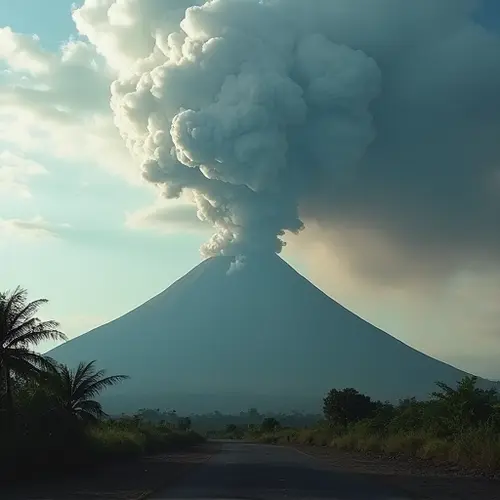
Anak Krakatau eruption on Sunday 6 September 2026 forced Indonesia's Soekarno-Hatta International Airport to suspend operations for four hours, delaying or cancelling 209 flights after volcanic ash drifted over Jakarta and parts of Sumatra. The Indonesian geological agency said the volcano erupted at around 03:50 local time for approximately 30 seconds, with no casualties or evacuations reported. The closest inhabited place is more than 16 kilometres away.
What happened at Anak Krakatau?
Mount Anak Krakatau, the 'child of Krakatoa' in the Sunda Strait between Java and Sumatra, has been on Level III (Siaga) alert since 2 July 2026. According to Indonesia's Meteorology, Climatology and Geophysics Agency (BMKG), volcanic ash reached 6,000 metres on the volcano's Java side, while plumes rose up to 15,000 metres toward Sumatra and Banten province. Local media reported that schools cancelled Saturday activities and fishermen stayed ashore, with some residents suffering eye irritation.
Anak Krakatau first emerged from the caldera left by the catastrophic 1883 Krakatoa eruption and has been growing since 1927. The eruption is part of a broader pattern in the Pacific Ring of Fire, a region where earthquakes and volcanic activity are frequent.
How did the eruption affect flights?
Volcanic ash spread rapidly across West Indonesia, prompting Soekarno-Hatta International Airport to halt air traffic for four hours starting early Sunday morning. Indonesia's Ministry of Transport confirmed that 209 flights were affected, including several international routes. Authorities said six airports suspended flight operations on Sunday.
For travellers, the disruption highlights how quickly volcanic ash can intersect with aviation safety in one of the world's most volcanically active countries. Airlines are monitoring ash dispersal patterns, and passengers are advised to check flight status before travelling to Soekarno-Hatta.
Anak Krakatau: 2018 vs 2026 eruption
| Year | Event | Impact |
|---|---|---|
| 2018 | Large sector collapse | Deadly Sunda Strait tsunami, more than 400 killed |
| 2026 | Ash eruption | 209 flights affected, no casualties or tsunami |
What safety advice has been issued?
The National Disaster Mitigation Agency (BNPB) urged residents to remain calm but extra alert. 'Stay calm, but be extra alert,' the agency said. People in areas where ash is falling were advised to wear face masks and eye protection, stay indoors as much as possible, protect water sources and drive cautiously. Officials added there was no imminent tsunami risk.
Historical context: the deadly 2018 tsunami
Anak Krakatau made global headlines in December 2018 when a large flank collapse triggered a tsunami in the Sunda Strait that killed more than 400 people. The 2018 Sunda Strait tsunami remains a stark reminder of the volcano's potential danger, although Sunday's event was ash-focused and did not trigger a tsunami.
Impact and implications
The flight disruption underscores how vulnerable Indonesia's aviation network is to volcanic ash clouds. Authorities continue to assess air quality and ashfall across Jakarta, Banten and Lampung. The volcano remains on Level III (Siaga) alert, and the Center for Volcanology and Geological Hazard Mitigation (PVMBG) is monitoring activity around the clock.
Frequently Asked Questions
Why were Jakarta flights delayed?
Flights were delayed because volcanic ash from Anak Krakatau spread over Jakarta and surrounding airspace, posing a serious risk to aircraft engines.
How many flights were affected?
209 flights were affected, including several international flights.
Is there a tsunami risk?
No. Officials said there was no imminent tsunami risk from this eruption.
What should residents do?
Wear masks and eye protection, stay indoors, protect water sources, and drive cautiously in ash-affected areas.
Where is Anak Krakatau located?
It lies in the Sunda Strait between Java and Sumatra, part of Indonesia's Pacific Ring of Fire.




Follow Discussion