


 Deutsch
 English
 Español
 Français
 Nederlands
 Português


 Share
Share




What Is NATO's Nuclear Sharing Program?
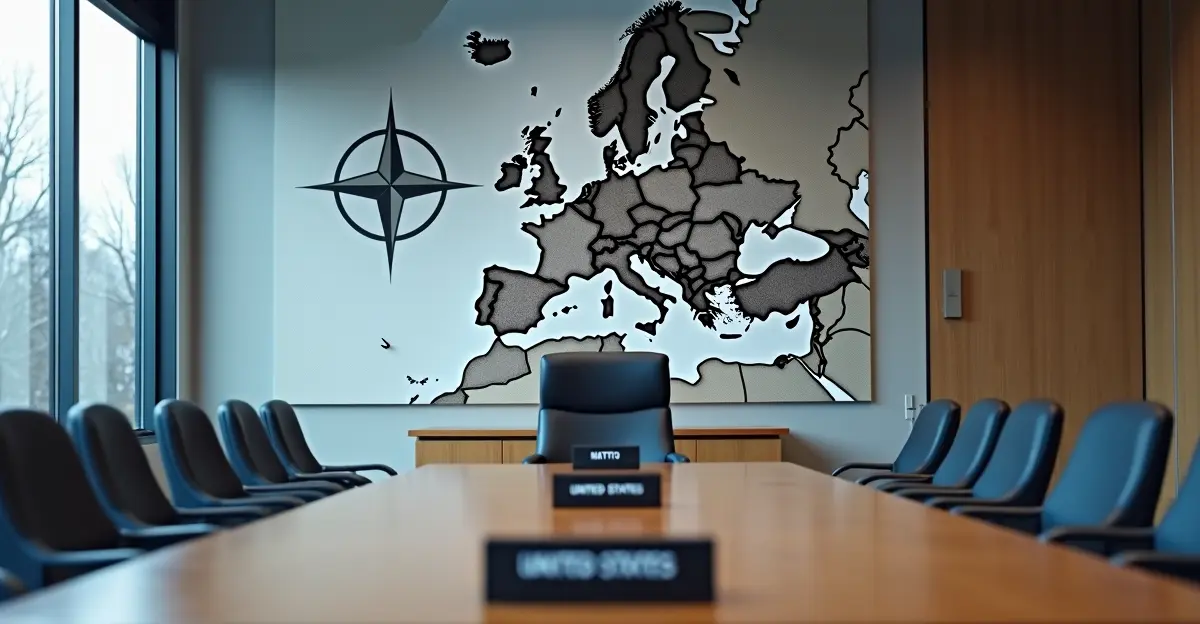
The United States is reportedly exploring the possibility of expanding its nuclear weapons hosting program to include more NATO countries in Eastern Europe, according to a Financial Times report based on three anonymous sources. The confidential talks focus on broadening NATO's nuclear-sharing initiative, known as the Dual-Capable Aircraft (DCA) program, which currently involves six allies: the United Kingdom, Germany, Italy, the Netherlands, Belgium, and Turkey. Under this arrangement, roughly 100 U.S. tactical B61 nuclear bombs are stored at bases across these countries, ready for deployment on allied aircraft in times of crisis.
The potential expansion comes at a critical juncture for European security, as the White House signals a possible reduction in conventional military support to Europe while shifting strategic focus toward Asia. European nations, rattled by Russia's full-scale invasion of Ukraine and ongoing hybrid threats, are simultaneously ramping up their own defense spending amid doubts about long-term U.S. commitment to NATO. The move is seen by analysts as an attempt by Washington to reassure allies of its nuclear umbrella even as conventional force posture changes.
Eastern European Countries Push for Nuclear Hosting Role
According to the Financial Times, NATO members on the alliance's eastern flank — particularly Poland and the Baltic states of Estonia, Latvia, and Lithuania — have expressed strong interest in hosting U.S. nuclear-capable aircraft. These nations share borders with Russia and Belarus and have long sought stronger security guarantees following Moscow's aggressive military posture.
Poland's President Andrzej Duda has been a vocal advocate, describing the hosting of U.S. tactical nuclear weapons as a "no-brainer" given Russia's deployment of nuclear-capable systems to Belarus. Poland already operates the F-35A stealth fighter, which was certified in 2024 to carry the B61-12 thermonuclear gravity bomb, making it technically ready to participate in the DCA program. The NATO nuclear sharing expansion would mark a significant shift in the alliance's deterrent posture, moving nuclear assets closer to potential flashpoints.
Confidential Talks in Early Stages
The discussions are being conducted through highly confidential NATO channels and remain in a preliminary phase. A source told the Financial Times that the talks could ultimately result in no changes, underscoring the sensitivity and complexity of nuclear burden-sharing. Any final decision would require consensus among NATO's Nuclear Planning Group and approval from the U.S. President. The US nuclear weapons in Europe debate touches on fundamental questions about alliance solidarity, escalation risks, and strategic messaging to Moscow.
Defense Industry Poised to Benefit
An expansion of the DCA program would have significant implications for the defense industry. According to CNBC, analysts expect companies involved in manufacturing and maintaining dual-capable aircraft to benefit substantially. Key players include Lockheed Martin (producer of the F-35), BAE Systems, and Rolls-Royce, which supply components and maintenance services for these advanced jets.
Dan Coatsworth, an investment analyst at AJ Bell, noted that deploying and maintaining dual-capable aircraft is extremely costly. "More demand for such aircraft could therefore be positive for defense companies and create additional jobs," Coatsworth said. The F-35A's nuclear certification — achieved ahead of schedule in October 2023 after more than a decade of development — makes it the first fifth-generation fighter capable of carrying the B61-12 bomb, offering enhanced stealth penetration capabilities that legacy aircraft like the F-16 and Tornado cannot match.
F-35A: The Backbone of Modernized Deterrence
European NATO allies including Italy, the Netherlands, Germany, and now the UK are acquiring F-35As specifically to fulfill their nuclear-sharing roles. The United Kingdom recently announced the purchase of at least 12 new F-35A jets capable of carrying nuclear bombs, described by Prime Minister Sir Keir Starmer as "the biggest strengthening of the UK's nuclear posture in a generation." However, under NATO's nuclear sharing agreements, the bombs remain under U.S. custody and control, requiring explicit authorization from the U.S. President and NATO's Nuclear Planning Group for any nuclear mission.
Strategic Implications and Russian Reactions
The expansion of U.S. nuclear weapons hosting eastward would likely provoke a strong response from Russia. The Kremlin has consistently opposed any NATO military infrastructure near its borders, and the deployment of nuclear-capable aircraft to Poland or the Baltics would be seen as a direct challenge. Russian President Vladimir Putin has already cited NATO's eastward expansion as a justification for the war in Ukraine.
NATO Secretary-General Mark Rutte recently emphasized the alliance's readiness to defend all member territory. Following a Russian drone strike that hit a residential building in Romania — a NATO member — Rutte stated on X that the alliance is prepared to protect every inch of Allied ground. He described Russia's actions as "reckless and dangerous for all of us." The NATO Russia tensions 2025 continue to drive security debates across the continent.
While hosting U.S. nuclear weapons would make an attack on Poland riskier for Russia, experts caution that the discussions are still nascent. "There is also a real possibility that nothing will come of it," one source told the Financial Times, highlighting the diplomatic and operational hurdles that remain.
FAQ
What is NATO's nuclear sharing program?
NATO's nuclear sharing program, also called the Dual-Capable Aircraft (DCA) program, allows allied nations to host and deliver U.S. nuclear weapons using their own aircraft. Currently, six countries participate: Belgium, Germany, Italy, the Netherlands, Turkey, and the United Kingdom.
Which Eastern European countries want to host nuclear weapons?
Poland and the Baltic states (Estonia, Latvia, Lithuania) have expressed strong interest in hosting U.S. nuclear-capable aircraft under NATO's nuclear sharing arrangement.
How would this benefit defense companies?
Expanding the program would increase demand for dual-capable aircraft like the F-35, benefiting manufacturers such as Lockheed Martin, BAE Systems, and Rolls-Royce through aircraft sales, maintenance contracts, and related jobs.
What is the F-35A's role in nuclear deterrence?
The F-35A was certified in 2024 to carry the B61-12 thermonuclear gravity bomb, becoming the first fifth-generation fighter with nuclear capability. Its stealth features allow it to penetrate advanced air defenses, significantly strengthening NATO's deterrent posture.
How would Russia likely respond to nuclear expansion in Eastern Europe?
Russia would likely view the deployment of U.S. nuclear-capable aircraft to Poland or the Baltics as a provocation and a threat to its national security, potentially leading to heightened military tensions and counter-deployments.
Sources
- Financial Times report (June 2025)
- CNBC analysis of defense industry impact
- Stars and Stripes coverage of NATO nuclear talks
- NATO official statements by Secretary-General Mark Rutte
- Arms Control Association report on UK F-35A acquisition



Follow Discussion