


 Deutsch
 English
 Español
 Français
 Nederlands
 Português


 Share
Share




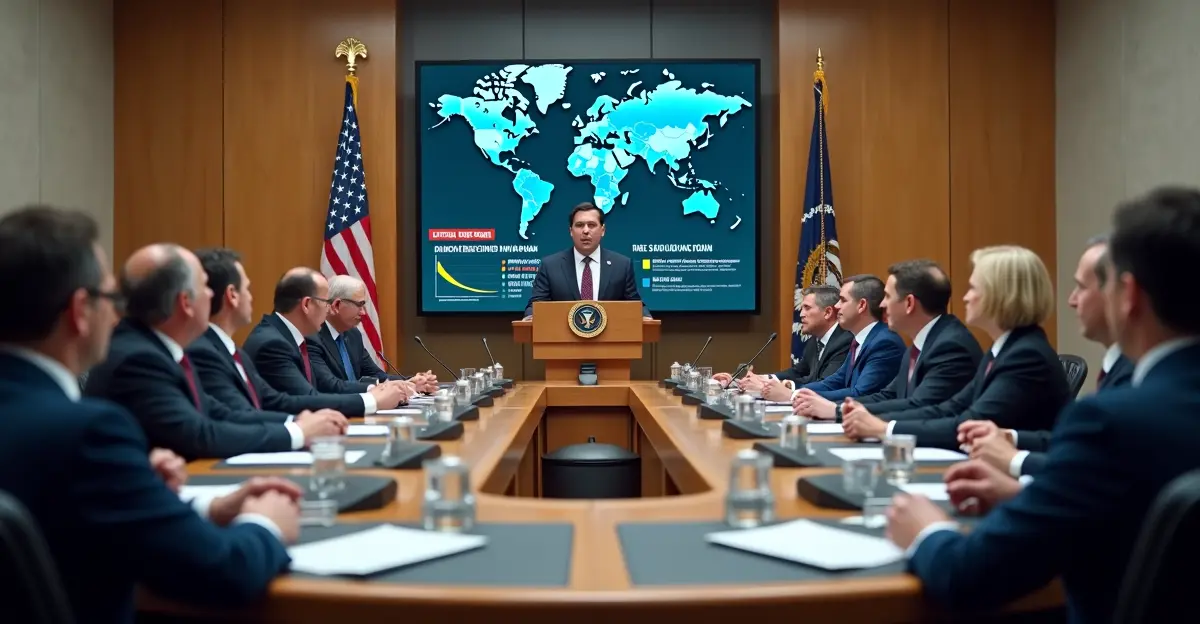
As the global energy transition accelerates, control over critical minerals such as lithium, cobalt, and rare earth elements has become the central axis of strategic rivalry between China, the United States, and Europe. In 2026, this competition has reached a fever pitch, with China dominating roughly 60% of global rare earth processing while the U.S. and EU scramble to build alternative supply chains, fund domestic mining, and subsidize recycling technologies. This article analyzes the geopolitical moves, trade restrictions, and investment strategies shaping the critical minerals landscape in 2026.
The Strategic Importance of Critical Minerals
Critical minerals are the building blocks of modern technology and clean energy. Rare earth elements (REEs)—a set of 17 metals including neodymium, praseodymium, and dysprosium—are essential for permanent magnets used in electric vehicle (EV) motors, wind turbines, and defense systems. Lithium and cobalt are vital for battery storage. Without a secure supply of these materials, the energy transition and national security ambitions of Western nations face significant risks.
China's dominance is not just in mining but in processing. According to the International Energy Agency, China accounts for nearly 90% of global rare earth refining capacity and about 60% of processing for lithium and cobalt. This concentration gives Beijing enormous leverage. In 2025, China tightened export controls on rare earth processing technologies, citing national security, and in early 2026 it expanded restrictions on key minerals used in defense and high-tech manufacturing.
China's Strategic Moves in 2026
China's critical minerals export controls have become a key tool in its geopolitical arsenal. In 2025, Beijing banned the export of rare earth extraction and separation technologies, forcing foreign companies to rely on Chinese processing or invest heavily in developing their own. In 2026, China further restricted exports of gallium, germanium, and antimony—minerals critical for semiconductors and defense. These moves have sent shockwaves through global supply chains.
China also continues to invest in overseas mining projects, particularly in Africa and Latin America, securing long-term access to lithium and cobalt. Through the Belt and Road Initiative, Chinese companies have acquired stakes in mines in the Democratic Republic of Congo, Chile, and Argentina. This strategy ensures that even as Western nations try to diversify, China retains influence over upstream supply.
United States: IRA and Domestic Mining Push
The United States has responded with a multi-pronged strategy anchored by the Inflation Reduction Act (IRA) of 2022. By 2026, the IRA's provisions for critical minerals are in full swing. The law provides tax credits for domestic production of battery components and critical minerals processing, and it requires that a growing percentage of EV battery minerals come from free-trade partners to qualify for consumer subsidies.
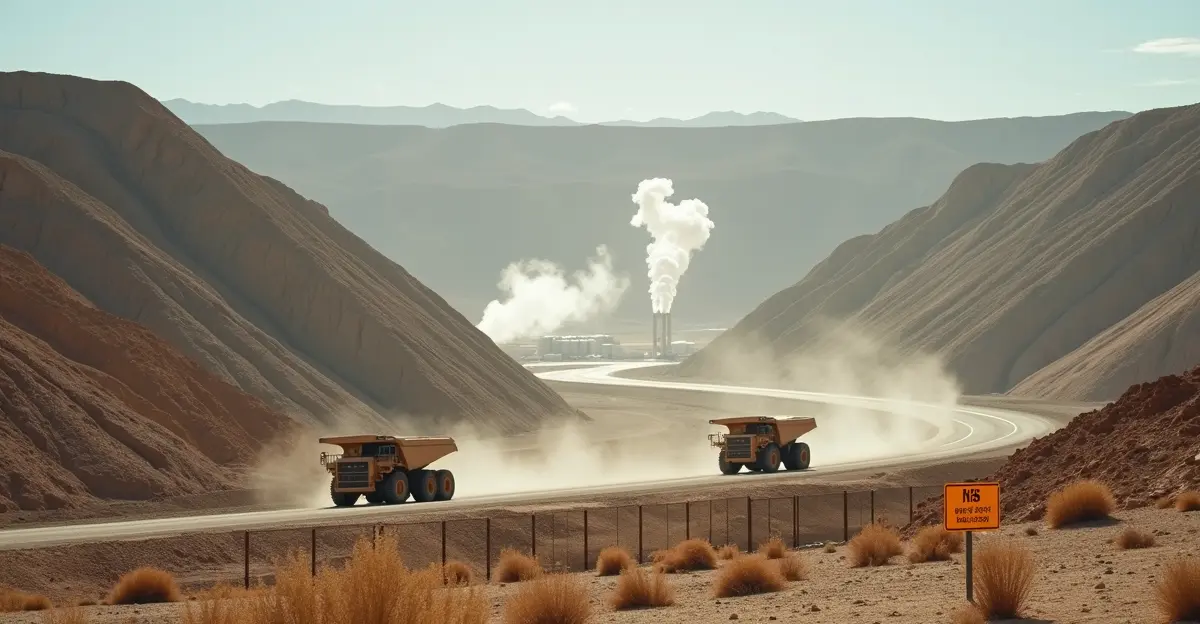
The U.S. Department of Energy has allocated over $3 billion to build domestic processing facilities for rare earths and lithium. The US critical minerals strategy includes the revival of the Mountain Pass mine in California—the only rare earth mine in the U.S.—and a new processing plant in Texas. However, progress has been slow. Environmental reviews, community opposition, and technical challenges have delayed several projects.
The U.S. has also forged alliances with Australia and Canada. In 2026, the U.S.-Australia Critical Minerals Partnership has accelerated, with Australian companies supplying rare earth oxides and lithium to American processors. Canada, with its vast mineral reserves, has become a key partner under the Defense Production Act.
European Union: The Critical Raw Materials Act
The European Union's EU Critical Raw Materials Act (CRMA), adopted in 2024, set ambitious targets: by 2030, the EU aims to extract 10% of its annual consumption of critical minerals, process 40%, and recycle 15%. In 2026, implementation is in full swing. The European Commission has identified 34 critical raw materials and is fast-tracking permitting for mining projects in Sweden, Finland, and Portugal.
The EU has also launched the European Raw Materials Alliance and signed strategic partnerships with resource-rich countries like Chile, Namibia, and Kazakhstan. A key focus is on recycling: the EU's Battery Regulation mandates recycled content quotas for new batteries, spurring investment in urban mining. However, the bloc still relies heavily on China for processing, and domestic mining faces strong environmental opposition.
Trade Restrictions and Geopolitical Tensions
Trade restrictions have become a defining feature of the critical minerals landscape. In 2025, China imposed export licenses on rare earth magnets and restricted technology transfers. The U.S. retaliated with tariffs on Chinese minerals and expanded the scope of the US-China trade war to include critical minerals. The EU has introduced its own anti-coercion instrument to deter supply disruptions.
These moves have created a fragmented global market. Companies are now building "China-plus-one" strategies, maintaining some Chinese supply while diversifying to other sources. The World Trade Organization has seen a rise in disputes, but no quick resolution is in sight.
Investment and Innovation in Alternative Technologies
In response to supply risks, governments and companies are investing heavily in alternatives. Research into rare earth-free magnets, solid-state batteries, and sodium-ion batteries has accelerated. In 2026, several startups have demonstrated commercial-scale production of magnets using iron nitride and other abundant materials.
Recycling is another growth area. The U.S. Department of Energy has funded pilot plants for recycling rare earths from e-waste and end-of-life EV batteries. In Europe, companies like Solvay and Umicore have expanded recycling capacity. However, recycling currently meets only a small fraction of demand—less than 5% for rare earths.
Expert Perspectives
"The critical minerals race is the defining geopolitical struggle of the 21st century," says Dr. Sarah O'Connor, a senior fellow at the Center for Strategic and International Studies. "China's processing dominance gives it a stranglehold that will take a decade or more to break. The U.S. and EU are making progress, but they need to accelerate permitting, invest in innovation, and deepen alliances."
Industry leaders echo the urgency. "We cannot afford to be complacent," says Mark Thompson, CEO of a U.S. rare earth processing startup. "Every year of delay means more leverage for China. We need a wartime-level effort."
FAQ: Critical Minerals and Great Power Competition
What are critical minerals?
Critical minerals are metals and non-metals that are essential for modern technologies and clean energy, such as lithium, cobalt, rare earth elements, and graphite. They are considered "critical" because of their economic importance and supply risk.
Why does China dominate rare earth processing?
China has invested heavily in rare earth processing technology over the past three decades, building a massive cost advantage. It also has lower environmental standards and government subsidies that make its processing cheaper than in Western countries.
What is the U.S. doing to reduce dependence on China?
The U.S. is using the Inflation Reduction Act to fund domestic mining and processing, forging partnerships with allies like Australia and Canada, and investing in recycling and alternative technologies. It has also imposed tariffs and export controls on Chinese minerals.
How is the EU responding?
The EU's Critical Raw Materials Act sets targets for domestic extraction, processing, and recycling. The bloc is also signing strategic partnerships with resource-rich countries and funding research into substitutes and recycling.
Will recycling solve the supply problem?
Recycling is important but currently insufficient to meet demand. It can reduce dependence on primary mining over time, but scaling up recycling infrastructure will take years. Most experts see recycling as a complement to, not a replacement for, new mining and processing capacity.
Conclusion: The 2026 Landscape and Beyond
2026 is a pivotal year for critical minerals. China's tightening export controls, the U.S. IRA ramp-up, and the EU's CRMA implementation are reshaping global supply chains. While Western nations are making progress, the gap between ambition and reality remains wide. The next few years will determine whether the U.S. and EU can break China's stranglehold or whether the energy transition will remain dependent on Beijing's goodwill.
As the critical minerals race 2026 intensifies, one thing is clear: supply chain security is now a top-tier national security issue. The chessboard is set, and the moves made in 2026 will echo for decades.
Sources
- Wikipedia: Rare-earth element
- Wikipedia: Inflation Reduction Act
- International Energy Agency, Critical Minerals Data
- U.S. Department of Energy, Critical Minerals Strategy
- European Commission, Critical Raw Materials Act



Follow Discussion