


 Deutsch
 English
 Español
 Français
 Nederlands
 Português


 Share
Share




The Strategic Realignment of Critical Mineral Supply Chains: From Globalization to Ally-Shoring
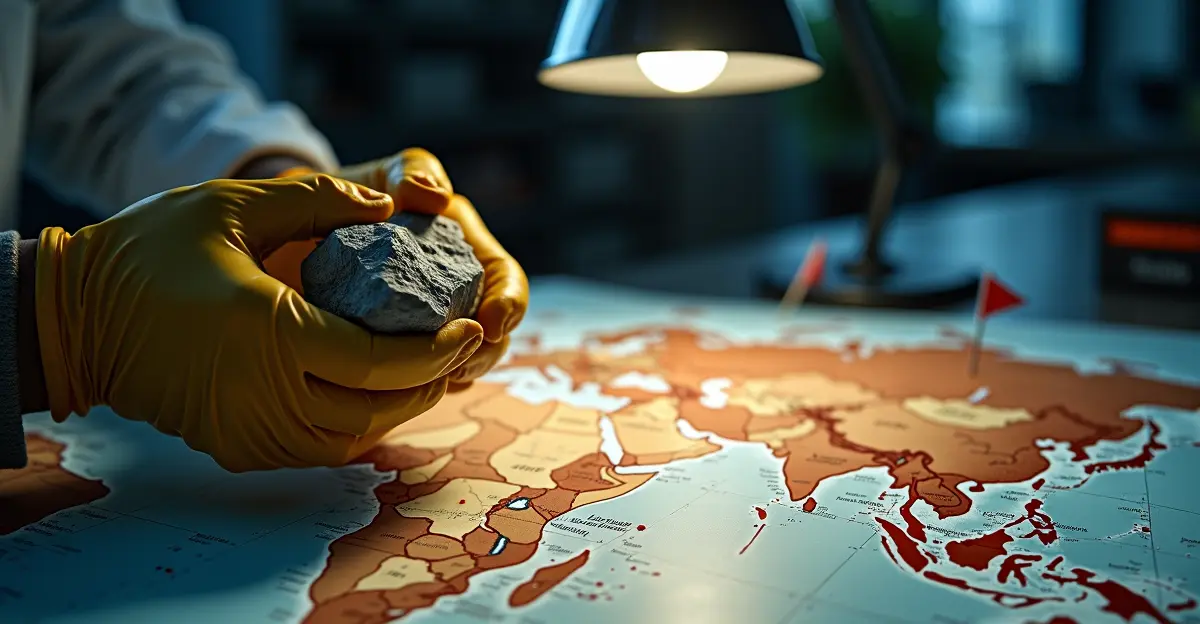
In a fundamental shift reshaping global resource markets, Western nations are restructuring critical mineral supply chains away from China-dominated networks toward strategic alliances among trusted partners. Recent months have seen accelerated Western efforts to secure critical mineral supply chains, with multiple high-profile strategic partnerships announced in response to growing concerns about China's dominance in rare earth processing and refining capabilities. This strategic pivot from cost-driven globalization to 'ally-shoring' reflects a broader geopolitical realignment where national security concerns now trump economic efficiency, creating new winners and losers in the global resource landscape while potentially escalating trade tensions.
What is Ally-Shoring in Critical Minerals?
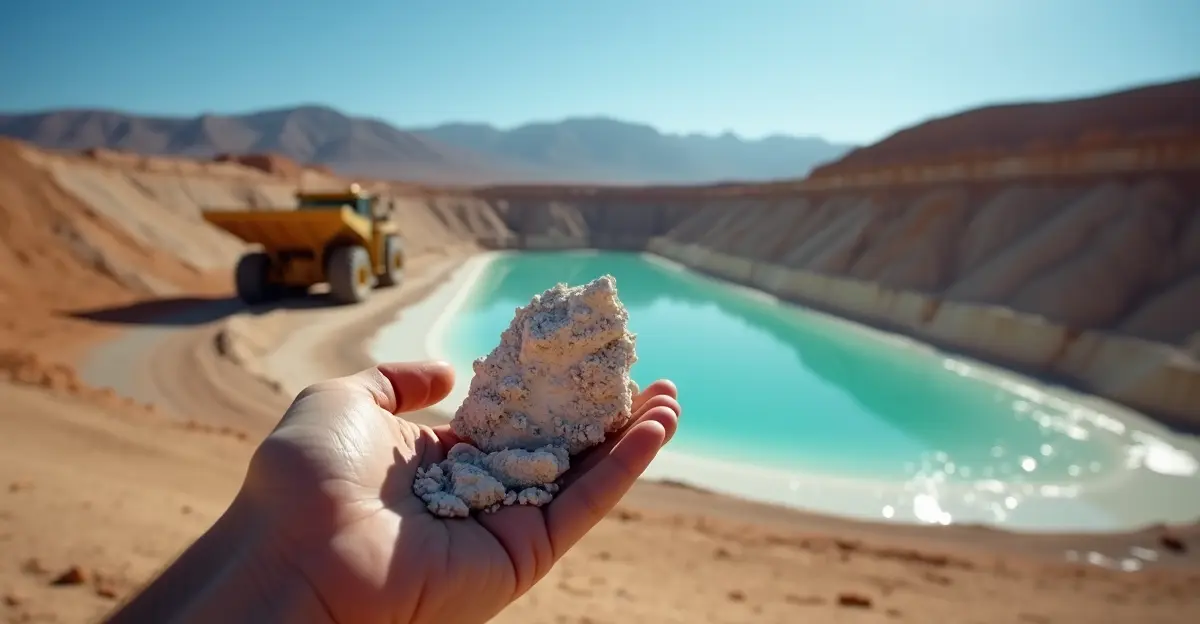
Ally-shoring represents a strategic approach where nations prioritize supply chain partnerships with geopolitical allies rather than pursuing purely cost-optimized global networks. This concept has gained urgency as China controls approximately 90% of global rare earth refining capacity and 70% of production, creating significant vulnerabilities for Western defense, technology, and energy sectors. The shift marks a departure from decades of globalization that prioritized efficiency over security, now recognizing that critical minerals like rare earths, lithium, cobalt, and nickel are essential for everything from electric vehicles and wind turbines to advanced weapons systems and artificial intelligence infrastructure.
Recent Strategic Partnerships Reshaping Supply Chains
The acceleration of ally-shoring initiatives has produced several landmark agreements in 2025-2026 that fundamentally alter the global minerals landscape:
The $8.5 Billion U.S.-Australia Partnership
Signed on October 20, 2025, by President Donald J. Trump and Prime Minister Anthony Albanese, the United States-Australia Framework for Securing Supply in the Mining and Processing of Critical Minerals and Rare Earths represents a comprehensive bilateral effort. The agreement commits both nations to mobilize at least $1 billion in financing for projects within six months, establishes a U.S.-Australia Critical Minerals Supply Security Response Group, and streamlines permitting processes. Australia is particularly crucial as the world's top destination for rare earth exploration and fourth-largest rare earth producer, with Australian companies being the largest foreign investors in the U.S. mining sector. This partnership leverages Australia's world-class geological reserves and mining expertise while addressing investment support, geological mapping cooperation, and minerals recycling technology.
U.S.-Thailand Rare Earth Agreements
On October 26, 2025, the United States and Thailand signed a Memorandum of Understanding to strengthen cooperation on critical minerals supply chains. The agreement aims to diversify global critical minerals supplies, promote trade and investment between the two countries, and support secure and resilient supply chains. While Thailand currently lacks formal critical-minerals classification and extensive downstream processing capacity, the pact positions Thailand alongside Malaysia as strategic partners in Southeast Asia's critical minerals pivot. The MOU establishes mechanisms for cooperation including government meetings, workshops, information exchanges, and capacity-building activities, emphasizing adherence to high international standards and technology transfer.
Expanded Minerals Security Partnership
The 2026 Critical Minerals Ministerial, hosted by the United States on February 4, 2026, brought together representatives from 54 countries and the European Commission to reshape the global critical minerals market. Secretary of State Marco Rubio announced major initiatives including the signing of 11 new bilateral critical minerals frameworks/MOUs with countries like Argentina, the Cook Islands, and the UK. The U.S. launched the Forum on Resource Geostrategic Engagement (FORGE) as the successor to the Minerals Security Partnership, chaired initially by South Korea. The U.S. government is mobilizing over $30 billion in support for critical minerals projects, including EXIM Bank's $10 billion Project Vault initiative to establish a domestic strategic reserve.
Geopolitical Drivers Behind the Shift
The strategic realignment toward ally-shoring is driven by multiple converging factors that have fundamentally changed how nations view supply chain security. China's demonstrated willingness to use mineral exports as geopolitical leverage – including halting exports to Japan in 2010 and implementing new restrictions in 2025 – has created acute awareness of vulnerability. The US-China trade tensions have accelerated this shift, with both nations recognizing critical minerals as strategic assets rather than mere commodities. Additionally, the global transition to renewable energy and electric vehicles has dramatically increased demand for minerals that were previously niche commodities, transforming them into essential components of national economic and security strategies.
According to experts, China has invested billions over 30+ years to develop specialized technology and infrastructure for rare earth processing, creating barriers to entry that will take Western nations years to overcome. The European Green Deal has also influenced this shift, with the EU setting 2030 benchmarks for domestic processing and recycling of critical minerals. This broader geopolitical context explains why nations are willing to accept higher costs and reduced efficiency in exchange for greater supply chain security and reduced dependence on potential adversaries.
Economic and Strategic Implications
The shift from globalization to ally-shoring creates significant economic and strategic implications that will reshape global markets for years to come. On the economic front, this realignment will likely increase costs for critical minerals in the short to medium term as new supply chains are established and scaled. However, proponents argue that these costs are justified by reduced geopolitical risk and enhanced national security. The strategic implications are even more profound, as nations increasingly view mineral access through the lens of great power competition rather than market economics.
The emergence of new mineral hubs in allied nations could redistribute economic benefits away from traditional centers of mineral processing. Countries like Australia, Canada, and potentially Thailand stand to gain significant investment and technological transfer as Western nations seek to diversify their supply chains. However, substantial rare-earth output faces years-long infrastructure, regulatory, and processing bottlenecks before materializing at scale, meaning the transition will be gradual rather than immediate.
Expert Perspectives on the Transition
Industry analysts and geopolitical experts offer nuanced perspectives on the ally-shoring transition. 'China's dominance in rare earth processing gives Beijing significant geopolitical leverage that has been demonstrated repeatedly,' notes a Fortune analysis from March 2026. 'The U.S. and allies are scrambling to diversify supply chains, but experts warn it could take a decade for other countries to build comparable processing capabilities.'
The Council on Foreign Relations recommends an innovation-focused strategy rather than trying to out-mine or out-process China through traditional methods. Their report suggests scaling disruptive technologies in materials science, waste recovery, and recycling to leapfrog China's control, emphasizing that waste-based recovery and recycling offer faster, cleaner, and more cost-effective paths to reducing dependence than traditional mining expansion.
Future Outlook and Challenges
Looking forward, the ally-shoring trend faces several significant challenges that will determine its ultimate success. Coordination among allies remains complex, with different regulatory frameworks, environmental standards, and economic priorities creating potential friction points. The substantial capital requirements for building new processing infrastructure – estimated in the tens of billions of dollars – present financing challenges despite government support initiatives.
Environmental and social considerations also loom large, as new mining and processing operations must navigate increasingly stringent sustainability requirements. The circular economy initiatives focusing on recycling and waste recovery could complement traditional mining approaches, potentially accelerating supply chain diversification. Additionally, the potential for trade tensions remains high as nations implement policies that could be viewed as protectionist or discriminatory under existing international trade rules.
Frequently Asked Questions
What are critical minerals and why are they important?
Critical minerals are materials of strategic or economic importance essential for modern technologies, defense systems, and renewable energy infrastructure. They include rare earth elements, lithium, cobalt, nickel, and others used in electric vehicles, wind turbines, semiconductors, and advanced weapons systems.
How much does China dominate critical mineral supply chains?
China controls approximately 90% of global rare earth refining capacity and 70% of production. This near-monopoly gives Beijing significant geopolitical leverage, as demonstrated by export restrictions implemented in 2010 and 2025.
What is the Minerals Security Partnership?
The Minerals Security Partnership is an international initiative launched in 2022 to strengthen critical mineral supply chains among allied nations. In 2026, it evolved into the Forum on Resource Geostrategic Engagement (FORGE), chaired initially by South Korea, with participation from 54 countries.
How long will it take to reduce dependence on China?
Experts estimate it could take a decade or more for Western nations to build comparable processing capabilities to China's, given China's 30+ years of investment in specialized technology and infrastructure.
What are the economic costs of ally-shoring?
Ally-shoring will likely increase critical mineral costs in the short to medium term as new supply chains are established, but proponents argue these costs are justified by reduced geopolitical risk and enhanced national security.


Follow Discussion