


 Deutsch
 English
 Español
 Français
 Nederlands
 Português


 Share
Share




What is the Strait of Hormuz Security Crisis?
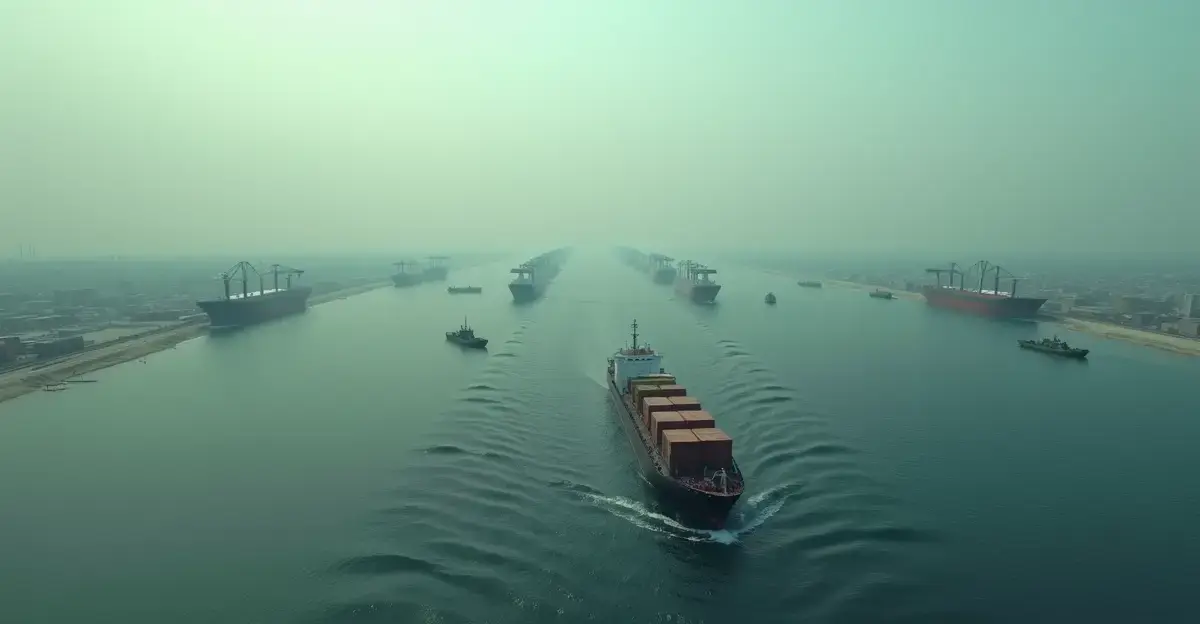
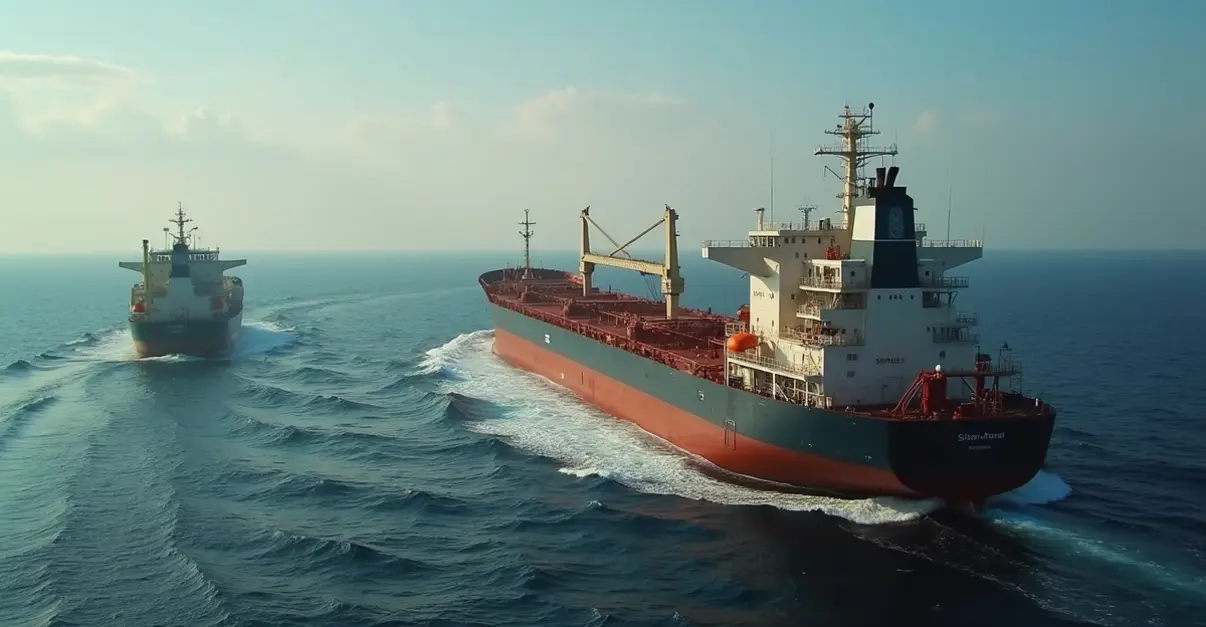
The United States Navy has announced plans to provide military escorts for oil tankers through the strategically vital Strait of Hormuz, but experts warn that implementing this convoy system faces significant operational challenges. The maritime security crisis in the Middle East has escalated dramatically in March 2026, with Iran effectively shutting down the critical waterway that carries 20-25% of the world's oil supply. US Treasury Secretary Scott Bessent confirmed the escort plans in a Sky News interview, stating the US Navy would begin protecting commercial vessels, though the exact timeline remains uncertain.
Why US Tanker Escorts Face Major Implementation Challenges
According to Pieter Zhao, a maritime security researcher at Erasmus University Rotterdam, establishing an effective convoy system in the narrow Strait of Hormuz presents formidable obstacles. 'The expectation is that this could be set up by the end of March,' Zhao told BNR Newsradio, 'but setting up a convoy service in such a narrow strait has historically always been difficult. There are many threats involved and you need a large number of ships.'
Military Requirements and Risks
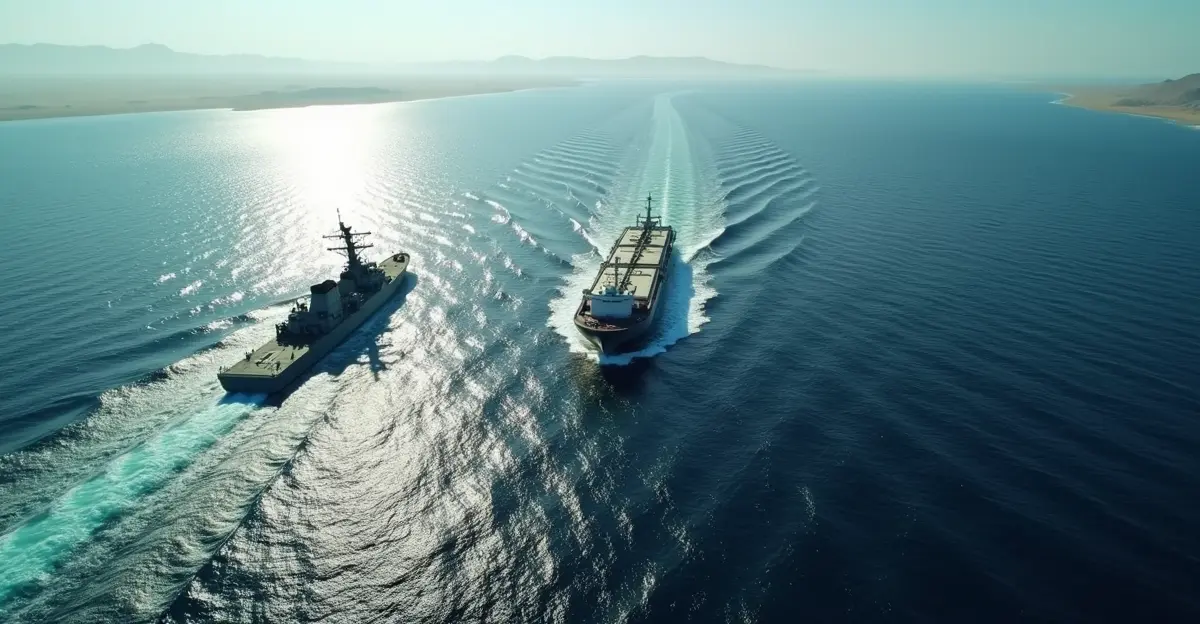
For an effective operation, Zhao's calculations indicate at least ten destroyers or frigates would be required. 'But those ships themselves also become direct targets for Iran, so that's risky.' The US Navy currently has eight Arleigh Burke-class destroyers in the region equipped with AEGIS combat systems that could provide air defense against Iranian drones and anti-ship missiles. However, these vessels would face constant threats from Iran's Islamic Revolutionary Guard Corps, which controls much of the coastline.
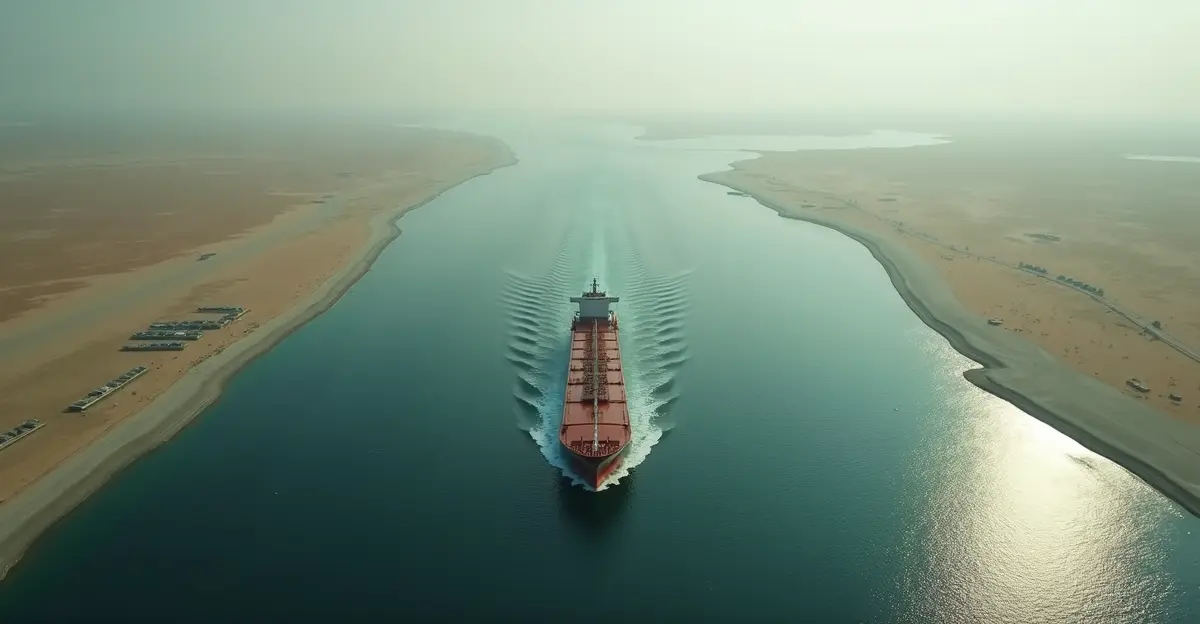
The narrow geography of the Strait of Hormuz compounds these challenges. The waterway is only about 21 nautical miles wide at its narrowest point, with shipping lanes just 2 miles wide. This confined space makes defending against swarms of drones or shore-to-ship ballistic missiles particularly difficult. Historical precedents like the 1987-1988 'Tanker War' operations, which included the tragic USS Vincennes incident where an Iranian passenger jet was accidentally shot down, highlight the risks of military operations in these waters.
G7 International Cooperation and Coordination Issues
Other nations are considering similar escort missions. French President Emmanuel Macron announced earlier this week that an international plan involving G7 countries like Canada, Germany, France, Italy, Japan, and the United Kingdom is being developed. However, Zhao notes that while international cooperation is theoretically possible, practical implementation remains complex.
'You first have to set up a system where ships gather and sail in groups,' Zhao explained. 'Then the question arises which ships under which flag are allowed to sail through first. National interests will certainly play a role.' The coordination challenges mirror those faced during similar operations like Operation Prosperity Guardian in the Red Sea, where multinational naval forces protected shipping lanes.
Capacity Limitations and Oil Market Impact
Even if established, convoy capacity would be severely limited. 'With about ten frigates, you might be able to escort five to ten commercial ships per convoy,' Zhao estimates. 'That's less than ten percent of normal traffic through the Strait of Hormuz.' This limited capacity means the operation would do little to immediately relieve pressure on oil prices, which have surged to their highest levels in nearly four years.
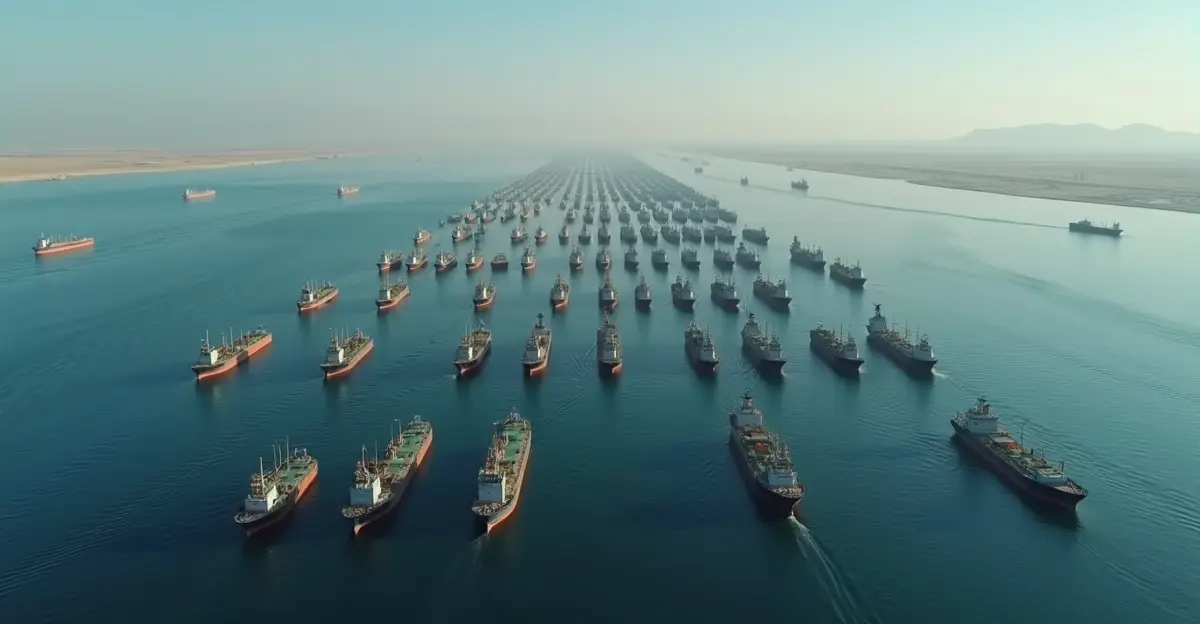
Currently, more than 68 loaded oil tankers carrying approximately 16 billion liters of oil remain trapped in the Persian Gulf, equivalent to Greece's annual crude oil consumption. The maritime insurance industry has become increasingly nervous, with some insurers canceling war risk coverage entirely.
Iranian Threat Assessment: Mines vs. Direct Attacks
US intelligence assessments indicate that direct attacks by Iran pose a greater threat than sea mines, despite recent US strikes against Iranian mine-laying vessels. The primary concern is that even one missile or drone slipping through defenses could sink a tanker, giving Iran significant leverage. While mines are more straightforward to counter with mine-countermeasure capabilities from Littoral Combat Ships, direct attacks using swarms of drones or ballistic missiles present a more complex challenge.
'The risk exists that Iran will close the strait with sea mines,' Zhao warned. 'Then a convoy service becomes even riskier.' Mine clearance operations would require specialized vessels to be deployed first, further delaying any convoy operations. Iran has previously threatened to mine the strait and has undertaken preparations for such operations.
US Domestic Measures: Jones Act Suspension
Concurrently, the US administration is taking domestic measures to alleviate oil market pressure. Washington has temporarily suspended the century-old Jones Act, which requires transport between American ports to be conducted by US-flagged vessels. This 30-day waiver allows foreign tankers to transport fuel from Gulf Coast to East Coast refineries, potentially lowering domestic transportation costs.
However, Zhao views these as short-term solutions. 'Just like releasing strategic oil reserves,' he noted, 'it doesn't change much structurally about the problem.' The Jones Act suspension represents a significant policy shift, as the law has strong support from maritime unions and national security advocates who argue it protects American shipping interests.
Historical Patterns and Future Outlook
Historically, discussions about convoys emerge whenever critical sea routes come under pressure. 'In World War I, the Allies tried to break through the Dardanelles to supply their Russian ally,' Zhao observed. 'That proved very difficult early on.' This pattern repeats: narrow straits are easy to close but difficult to reopen.
The situation remains fluid, with the US Navy recently informing the shipping industry that it cannot currently provide military escorts due to logistical or operational constraints. While the probability of eventual tanker escorts remains high according to experts, the exact organizational structure and international participation remain uncertain. The Middle East geopolitical tensions continue to evolve, with the new Iranian Supreme Leader Mojtaba Khamenei vowing to keep the Gulf closed amid ongoing strikes against tankers.
Frequently Asked Questions
What is the Strait of Hormuz?
The Strait of Hormuz is a strategic waterway between the Persian Gulf and the Gulf of Oman, providing the only sea passage from the Persian Gulf to the open ocean. Approximately 20-25% of the world's oil and 20% of global liquefied natural gas passes through this chokepoint annually.
Why are tanker escorts needed now?
Iran has effectively shut down the strait since the start of the US-Israeli war against Iran, attacking multiple vessels and threatening further closures. This has trapped over 68 oil tankers in the Persian Gulf and caused oil prices to surge to four-year highs.
How many ships would be needed for effective escorts?
Maritime security experts estimate at least ten destroyers or frigates would be required for an effective convoy operation, but even this would only protect 5-10 commercial vessels per convoy—less than 10% of normal traffic.
What are the main threats to tankers?
Primary threats include Iranian anti-ship missiles, drone swarms, potential sea mines, and harassment by Islamic Revolutionary Guard Corps vessels. US intelligence assesses direct attacks pose greater risks than mines.
What is the Jones Act suspension?
The Jones Act is a century-old US law requiring domestic shipping between American ports to use US-built, owned, and crewed vessels. The 30-day waiver allows foreign tankers to transport oil domestically to alleviate supply chain pressures.
Follow Discussion