


 Deutsch
 English
 Español
 Français
 Nederlands
 Português


 Share
Share




The Red Sea Shipping Crisis: A Year of Disruption and Strategic Realignment
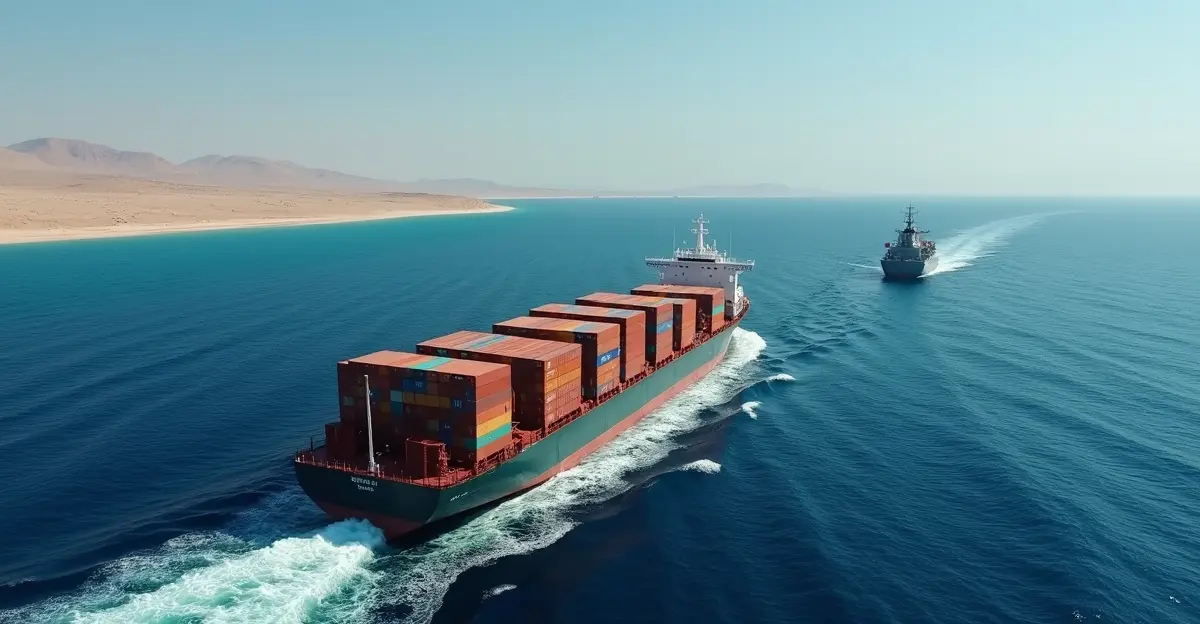
The Red Sea shipping crisis, now entering its second year with escalating intensity, represents one of the most significant disruptions to global trade since the pandemic. Beginning in October 2023 with Houthi attacks on commercial vessels, this maritime security challenge has forced the rerouting of approximately 12% of world trade around Africa's Cape of Good Hope, creating ripple effects across global supply chains, energy markets, and geopolitical alignments. With over 190 attacks documented by October 2024 and a staggering 57.5% reduction in Suez Canal traffic, the crisis has evolved from a regional security issue into a structural threat to globalized commerce.
What is the Red Sea Shipping Crisis?
The Red Sea shipping crisis began on October 19, 2023, when Iran-backed Houthi rebels in Yemen launched missiles and armed drones at Israel, demanding an end to the Gaza conflict. The Houthis subsequently expanded their targeting to include commercial vessels transiting the Bab el-Mandeb Strait, the southern maritime gateway to the Suez Canal. According to the Armed Conflict Location and Event Data project, Houthi forces have attacked 178 vessels throughout their two-year blockade, sinking four ships and killing nine sailors. The strategic importance of this corridor cannot be overstated: approximately 30% of global container trade and 12% of total world trade normally transits through the Suez Canal, making it a critical artery for global commerce.
The Economic Impact: Supply Chains Under Pressure
The economic consequences of the Red Sea crisis have been profound and multifaceted. Major shipping companies including Maersk, MSC, and CMA CGM have been forced to reroute vessels around Africa's Cape of Good Hope, adding approximately 4,000 miles to Asia-Europe journeys and increasing transit times by 30-40%. This rerouting has caused shipping costs to surge dramatically:
- Asia-to-Europe shipping rates increased nearly five-fold during peak disruption periods
- China-to-U.S. routes saw costs more than double
- Insurance premiums for vessels transiting the Red Sea increased by 400-500%
- Global container capacity has been effectively reduced by 15-20%
J.P. Morgan Research estimates these disruptions could add 0.7 percentage points to global core goods inflation and 0.3 percentage points to overall core inflation. The crisis has particularly affected just-in-time manufacturing systems, with several European automotive plants announcing temporary shutdowns due to delayed parts shipments from Asia. The situation has been compounded by parallel disruptions at the Panama Canal, creating what experts call a "dual-chokepoint crisis" in global shipping.
Energy Security Implications
The Red Sea crisis has significant implications for global energy security, particularly for liquefied natural gas (LNG) and oil shipments between Asia and Europe. The Bab el-Mandeb Strait serves as a critical transit point for Middle Eastern energy exports to European markets. Key impacts include:
- LNG shipments from Qatar to Europe face extended transit times and increased costs
- Oil tankers carrying crude from the Persian Gulf to Europe must navigate alternative routes
- European energy security has become increasingly dependent on longer, more expensive supply routes
- The crisis has accelerated European efforts to diversify energy sources away from Middle Eastern suppliers
The situation escalated dramatically in February 2026 following Operation Epic Fury, a coordinated US-Israel military campaign against Iran. This triggered a broader regional conflict that effectively closed both the Red Sea and the Strait of Hormuz simultaneously, creating what shipping analysts describe as "the most severe multi-node disruption in modern shipping history."
Operation Prosperity Guardian: Assessing International Response
In response to the escalating crisis, the United States launched Operation Prosperity Guardian on December 18, 2023, a multinational security initiative involving nations including the United Kingdom, Australia, Canada, Denmark, and others. The operation has conducted numerous airstrikes against Houthi-controlled territory in Yemen and established naval patrols in the southern Red Sea and Gulf of Aden. However, the effectiveness of this coalition has been mixed:
| Successes | Challenges |
|---|---|
| Reduced frequency of successful Houthi attacks on coalition-protected vessels | Houthis continue to target ships with Israeli, US, or UK connections |
| Improved intelligence sharing among coalition members | Limited participation from regional Arab states |
| Enhanced maritime domain awareness in the region | Difficulty in completely securing a vast maritime area |
| Demonstrated international commitment to freedom of navigation | Ceasefire agreements have proven temporary and fragile |
A 2025 US-Houthi ceasefire agreement saw Houthis agree not to attack US vessels but continue targeting Israeli and Israeli-linked ships. The operation has resulted in casualties including 10 deaths and 2 injuries on the Houthi side, with 3 non-combat deaths and 2 F-18 aircraft losses on the coalition side. The asymmetric warfare tactics employed by Houthi forces, including low-cost drones and missiles, have proven difficult to counter completely with traditional naval power.
Strategic Implications for Global Trade Networks
The Red Sea crisis has exposed fundamental vulnerabilities in globalized trade networks and raised critical questions about the security of maritime chokepoints. Several strategic implications have emerged:
- Supply Chain Resilience: Companies are reevaluating their dependence on single maritime routes and implementing multi-modal transportation strategies
- Inventory Management: The crisis has accelerated the shift away from just-in-time inventory systems toward just-in-case approaches with larger safety stocks
- Geopolitical Realignment: The conflict has deepened divisions between Western powers and Iran-aligned actors in the Middle East
- Maritime Security Doctrine: Navies worldwide are reassessing their approaches to protecting commercial shipping in contested waters
The crisis has demonstrated how regional conflicts can rapidly escalate into global economic disruptions, highlighting the interconnected nature of modern trade. As one shipping executive noted, "We're witnessing the weaponization of global supply chains in real-time. What happens in Yemen doesn't stay in Yemen—it affects factories in Germany, retailers in the United States, and consumers worldwide."
Future Outlook and Long-Term Consequences
Looking ahead, the Red Sea shipping crisis appears likely to persist as a structural feature of global trade for the foreseeable future. Several factors suggest continued volatility:
- The underlying geopolitical tensions between Iran, its proxies, and Western powers show no signs of resolution
- Houthi capabilities have proven resilient despite coalition military pressure
- Shipping companies have adapted to longer routes, reducing the urgency for a complete security solution
- The crisis has created new economic realities that may persist even if security improves
The Congressional Research Service report on Red Sea shipping disruptions emphasizes that the economic effects extend far beyond immediate shipping costs, affecting global inflation, manufacturing competitiveness, and energy security. The crisis has also accelerated discussions about alternative trade routes, including the development of the Northern Sea Route through Arctic waters and increased investment in rail connections between Asia and Europe.
Expert Perspectives on the Crisis
Maritime security experts offer varying assessments of the crisis and its implications. Dr. Sarah Chen, a geopolitical risk analyst at the International Maritime Security Institute, notes: "The Red Sea crisis represents a paradigm shift in how non-state actors can influence global trade. The Houthis have demonstrated that relatively low-cost asymmetric tactics can disrupt trillion-dollar trade flows, creating a new playbook for future conflicts." Meanwhile, shipping industry veteran Michael Rodriguez warns: "We're seeing the fragmentation of global shipping routes. What was once a highly efficient, integrated system is becoming Balkanized by security concerns, with different vessels taking different routes based on their flag, ownership, and cargo."
Frequently Asked Questions
How long has the Red Sea shipping crisis been going on?
The crisis began on October 19, 2023, and has persisted for over two years, with escalating intensity in 2025-2026 following broader regional conflicts involving Iran and its proxies.
What percentage of global trade is affected by the Red Sea disruptions?
Approximately 12% of world trade normally transits through the Suez Canal, with about 30% of global container trade affected by the rerouting around Africa's Cape of Good Hope.
How have shipping costs changed due to the crisis?
Shipping costs on Asia-Europe routes increased nearly five-fold during peak disruption periods, while insurance premiums for Red Sea transits rose by 400-500%.
What is Operation Prosperity Guardian?
Operation Prosperity Guardian is a US-led multinational naval coalition launched in December 2023 to protect commercial shipping in the Red Sea from Houthi attacks, involving over a dozen nations.
How has the crisis affected energy markets?
The crisis has disrupted LNG and oil shipments between the Middle East and Europe, increasing transit times by 30-40% and contributing to higher energy prices in European markets.
Are there long-term solutions to secure Red Sea shipping?
Long-term solutions require addressing the underlying geopolitical conflicts in Yemen and the broader Middle East, combined with improved maritime security cooperation and potentially developing alternative trade routes.
Conclusion: A New Era of Maritime Insecurity
The Red Sea shipping crisis has fundamentally altered assumptions about the security of global maritime trade routes. What began as a regional conflict has evolved into a systemic challenge to globalization itself, exposing vulnerabilities in just-in-time supply chains and highlighting the geopolitical dimensions of commercial shipping. As the crisis enters its third year, businesses, governments, and international organizations must develop more resilient approaches to maritime trade that account for the new reality of contested chokepoints and asymmetric threats. The lessons learned from the Red Sea will likely shape global trade policy and maritime security doctrine for decades to come.

Follow Discussion