Nederlands
 English
 Deutsch
 Français
 Español
 Português





Historic Restitution After 85 Years
In a significant act of cultural restitution, Germany has returned two small fragments of the world-famous Bayeux Tapestry to France, ending an 85-year absence. The linen pieces, each measuring just 1-2 centimeters, were stolen during World War II by Nazi archaeologist Karl Schlabow and have now been formally handed back to French authorities.
The Discovery in German Archives
The fragments were discovered in 2023 within the personal archives of Karl Schlabow, a textile specialist and archaeologist who was a member of the Nazi Ahnenerbe research organization. The pieces had been preserved between glass plates in the State Archives of Schleswig-Holstein, where Schlabow's estate has been stored since 2022. 'The identification was possible thanks to documents and inscriptions on the glass,' explained archive officials.
Nazi Research Mission
Schlabow was sent to occupied France in 1941 by the Nazi regime specifically to study the Bayeux Tapestry as part of a broader project seeking historical evidence to support the supposed superiority of the Aryan race. According to the State Archives, 'Schlabow likely removed a piece from the bottom of the nearly thousand-year-old wall hanging and took it to Germany.' This mission was part of the SS's Ahnenerbe (Ancestral Heritage) program, which aimed to find archaeological proof for Nazi racial ideology.
The Bayeux Tapestry's Significance
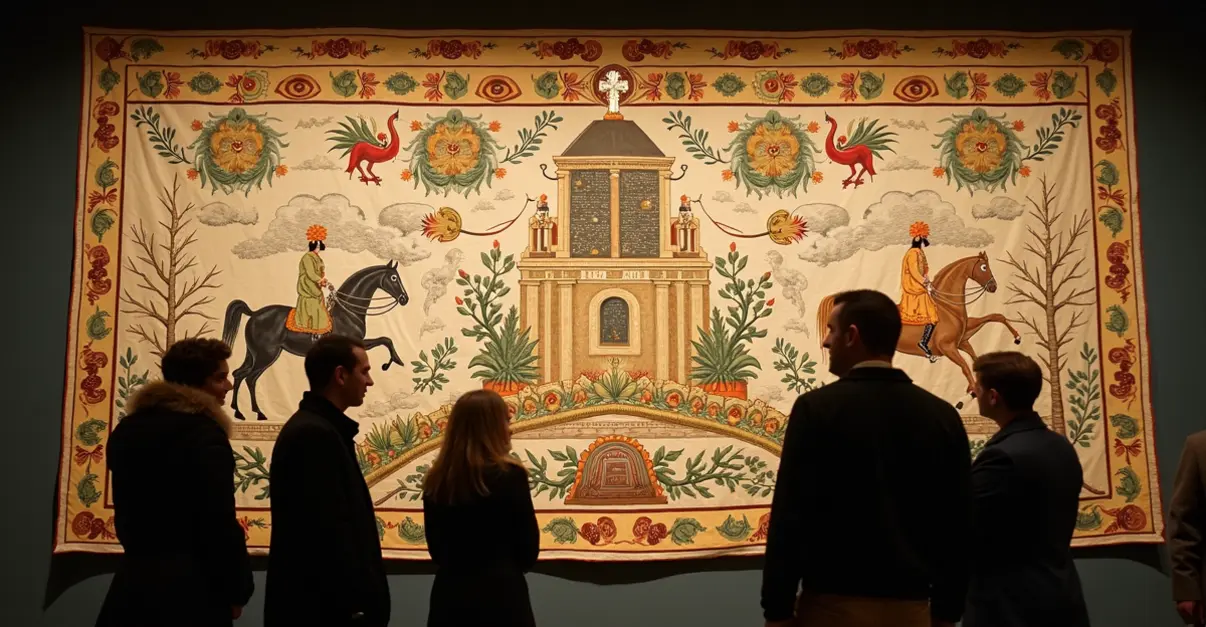
The Bayeux Tapestry is one of the world's most important medieval artifacts. Created around 1068, this 70-meter-long embroidered cloth depicts the events leading to the Norman conquest of England, culminating in the Battle of Hastings in 1066. It has been listed as a UNESCO World Heritage site since 2007 and normally resides in the Musée de la Tapisserie de Bayeux in Normandy.
As Sylvette Lemagnen, conservator of the tapestry, noted in her 2005 book: 'The Bayeux tapestry is one of the supreme achievements of the Norman Romanesque... Its survival almost intact over nine centuries is little short of miraculous.'
Current Developments and Future Display
The timing of this restitution coincides with significant developments for the tapestry. Due to renovations at its home museum in Bayeux, the entire work will be temporarily displayed at the British Museum in London from September 2026 to July 2027 - marking its first return to England in 900 years. The newly returned fragments will likely be reintegrated with the main work before this historic loan.
Karl Schlabow (1891-1984) was a pioneering textile archaeologist who founded the Neumünster Textile Museum and made significant contributions to the field, though his association with the Nazi regime and controversial restoration methods have complicated his legacy. His examination of the Bayeux Tapestry during the war led to his post-war internment until 1947.
This restitution represents another step in ongoing efforts to return cultural artifacts looted during World War II to their rightful owners. As one German archive official stated: 'It was obvious these pieces taken by the Nazis should be returned to France.'