Nederlands
 English
 Deutsch
 Français
 Español
 Português





Archaeologists Uncover Massive Hasmonean-Era Fortification in Jerusalem
In a groundbreaking archaeological discovery that bridges ancient history with modern science, researchers have completed the excavation of a remarkably preserved 2,100-year-old section of Jerusalem's ancient city wall. The massive fortification, dating to the Hasmonean dynasty that ruled Judea from 141 to 37 BCE, represents one of the most significant archaeological finds in Jerusalem in recent decades.
The Discovery: A Window into Ancient Jerusalem
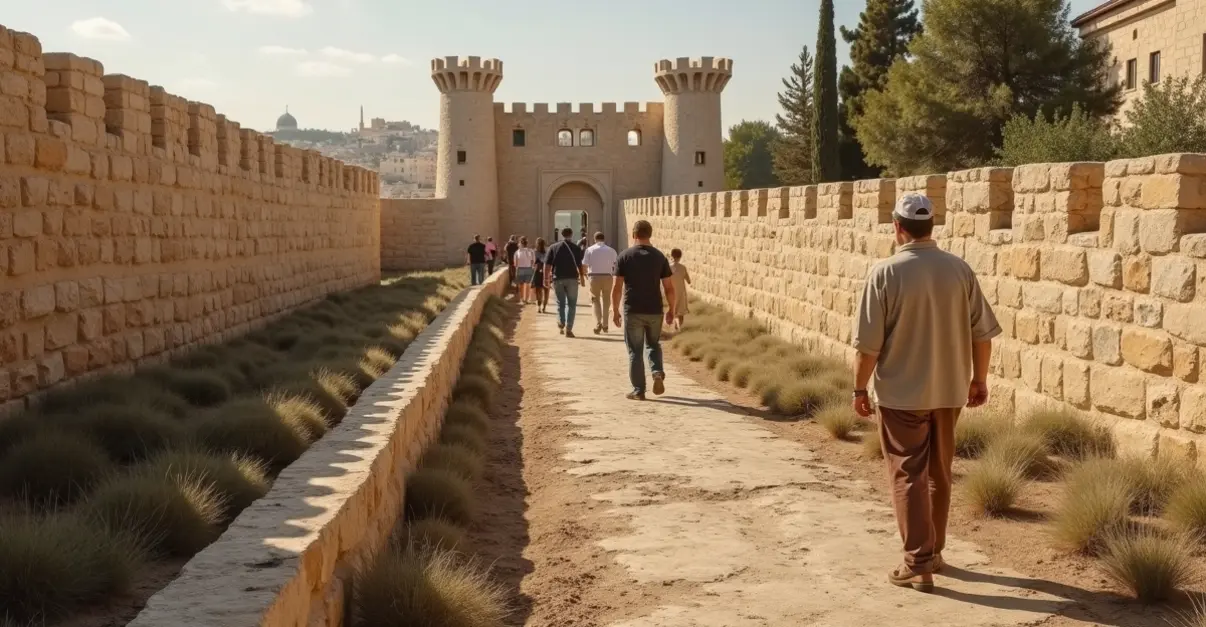
The excavation team, working at the Tower of David Museum complex, uncovered an impressive 40-meter-long, 5-meter-wide section of the ancient wall that once encircled Jerusalem during the Second Temple period. Originally standing over 10 meters high with 60 watchtowers, this fortification was part of what ancient historian Flavius Josephus described as the 'First Wall' protecting the city.
'We've uncovered the longest and most intact section of Hasmonean city wall ever found in Jerusalem,' said lead archaeologist Amit Re'em. 'What makes this discovery particularly fascinating is that the wall was deliberately dismantled at a uniform height across its entire length - this wasn't natural decay or gradual destruction.'
The Historical Mystery: Why Was the Wall Dismantled?
Archaeologists are debating two compelling theories about why this formidable defensive structure was systematically taken down. The first theory points to historical accounts of the Seleucid siege of Jerusalem around 132 BCE, when Hellenistic king Antiochus VII besieged the city. According to Josephus, the Jewish defenders, led by Hasmonean ruler John Hyrcanus I, agreed to peace terms that included dismantling Jerusalem's fortifications.
'We think we've found archaeological evidence for that ancient story,' Re'em explained. 'The wall appears to have been carefully taken down to a uniform level, exactly as described in historical accounts of the peace agreement with Antiochus VII.'
The second theory suggests the wall might have been destroyed a century later by King Herod the Great, who sought to erase Hasmonean monuments and make way for his own palace construction. 'Herod had a political motivation to dismantle Hasmonean structures,' noted archaeological historian Dr. Sarah Bernstein. 'He was establishing his own dynasty and wanted to physically remove symbols of the previous ruling family.'
Archaeological Significance and Methodology
The discovery was made beneath a 19th-century prison building that now forms part of the Tower of David Museum. Archaeologists began excavations in 1999 but had to suspend work during the Second Intifada (2000-2005). Work resumed two years ago, with teams manually removing what amounted to two Olympic swimming pools worth of sand and debris before reaching the ancient stones.
The wall's construction reveals sophisticated engineering techniques of the Hasmonean period. Built with massive stone blocks featuring distinctive chiseled bosses, the fortification demonstrates the advanced military architecture of the time. According to Archaeology Magazine, this discovery provides 'tangible evidence of Jerusalem's development during this important historical period when Jewish independence was restored.'
From Excavation to Exhibition: The Museum's Plans
Now that the archaeological phase is complete, the Tower of David Museum plans to integrate the ancient wall into its new Schulich Wing. Museum director Eilat Lieber announced plans to install a glass floor above the remains, allowing visitors to walk over and view the 2,100-year-old stones.
'This isn't just an archaeological discovery - it's a living connection to Jerusalem's ancient past,' Lieber stated. 'When visitors can literally walk over history and see these massive stones that protected Jerusalem during the time of the Maccabees, it creates a powerful, tangible connection to our heritage.'
The renovation project is expected to take approximately two years and will transform how visitors experience Jerusalem's layered history. The wall will become the centerpiece of the museum's new exhibition space, providing what The Times of Israel describes as 'new insights into ancient Jerusalem's fortifications and political transitions.'
Broader Historical Context
The Hasmonean dynasty, established after the Maccabean Revolt against Seleucid rule, represents a crucial period in Jewish history when independence was restored after generations of foreign domination. The dynasty ruled from approximately 141 to 37 BCE, creating what historian Josephus described as a 'regional power status' kingdom that expanded into neighboring territories.
This discovery helps archaeologists better understand the urban layout and defensive systems of Jerusalem during the Second Temple period. The wall encircled a much larger area than today's Old City, indicating that ancient Jerusalem was significantly more extensive than previously understood.
As Re'em poetically concluded: 'It's wonderful - archaeology and ancient stories coming together. That's the magic of Jerusalem.'