


 Deutsch
 English
 Español
 Français
 Nederlands
 Português


 Share
Share




COP31 Antalya: The Implementation Summit Where Climate Finance Meets Geopolitical Realignment
The 31st United Nations Climate Change Conference (COP31), scheduled for November 9-20, 2026 in Antalya, Turkey, represents a pivotal shift in global climate diplomacy from negotiation to implementation. As nations prepare for this critical summit, the conference's success will hinge on bridging the gap between climate finance commitments and geopolitical realities, particularly through the New Collective Quantified Goal (NCQG) that must replace the previous $100 billion annual target. With Turkey strategically positioned between Europe and the Middle East, COP31 emerges as a testing ground for whether international climate cooperation can withstand economic headwinds, US-China tensions, and the growing North-South divide.
What is COP31 Antalya?
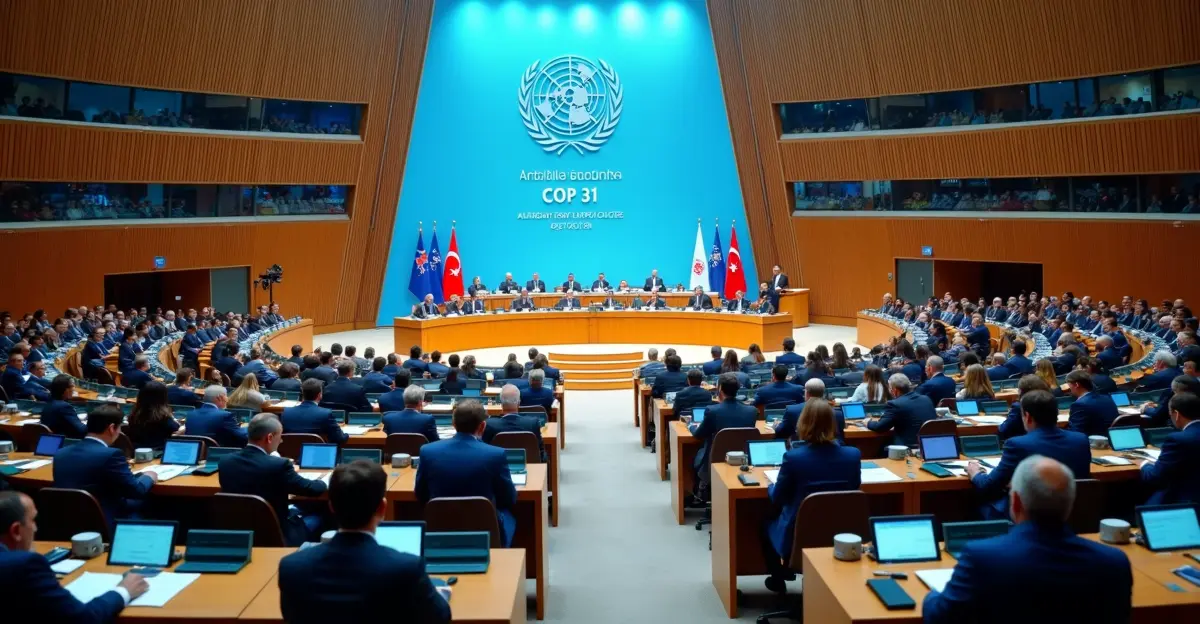
COP31 is the 31st session of the Conference of the Parties to the United Nations Framework Convention on Climate Change (UNFCCC), to be hosted at the Antalya Expo Center in Turkey. Unlike previous conferences focused primarily on negotiations, COP31 has been designated as an "implementation summit" where nations must translate commitments into concrete action. The conference will bring together nearly 200 countries, world leaders, scientists, and civil society representatives under the presidency of Turkey's Minister of Environment, Urbanization and Climate Change, Murat Kurum, with Australian Minister Chris Bowen serving as Vice-President of negotiations.
The New Collective Quantified Goal: Climate Finance at a Crossroads
The centerpiece of COP31 negotiations will be the New Collective Quantified Goal (NCQG) on climate finance, which must establish ambitious targets for the post-2025 period. Current discussions point toward a $300 billion annual commitment from developed to developing countries by 2035, with a broader goal of mobilizing $1.3 trillion in total international climate finance. However, deep divisions persist regarding which countries should contribute, what types of finance should be included, and how funds should be allocated between mitigation and adaptation.
"The NCQG represents more than just numbers—it's a test of global solidarity and trust between developed and developing nations," explains a senior UNFCCC negotiator. "With adaptation finance needs estimated at $310-365 billion annually by 2035 but only $26 billion delivered in 2023, we're facing a 12-14 times gap that COP31 must address."
Turkey's Strategic Geopolitical Positioning
Turkey's hosting of COP31 places the conference at a critical geopolitical crossroads. As a NATO member with growing Middle Eastern influence and energy security partnerships, Turkey bridges European climate ambitions with Middle Eastern energy transition strategies. The country's robust LNG infrastructure and natural gas export agreements with European nations position it as a key player in regional energy security, particularly following Russia's invasion of Ukraine.
Turkey's climate diplomacy reflects its broader foreign policy approach: balancing between competing blocs while advancing national interests. The country has developed nuclear projects with Russia while simultaneously enhancing European energy resiliency through agreements with Moldova, Romania, Hungary, and Bulgaria. This delicate balancing act will be tested at COP31 as Turkey navigates between Western climate finance demands and Middle Eastern energy transition priorities.
Geopolitical Realignment and Climate Finance Implementation
COP31 arrives amid significant geopolitical shifts that will impact climate finance implementation. Three key dynamics will shape the conference:
- US-China Climate Tensions: With China assuming a larger leadership role in global climate diplomacy as US engagement fluctuates, COP31 will test whether these major powers can cooperate on climate finance implementation. A recent CSIS survey of 79 US experts revealed deep divisions about US-China relations entering 2026, with only 3% confident both sides will meet climate commitments.
- Middle Eastern Energy Transition: The weaponization of energy transit routes, particularly through the Strait of Hormuz (carrying 20-25% of global seaborne oil trade), has created what the International Energy Agency calls "the greatest global energy security threat in history." Middle Eastern nations are navigating complex transitions from fossil fuel economies while maintaining energy security.
- North-South Divide: Developing countries continue to demand that high-income nations provide the majority of climate finance, while developed countries want contributions from private companies and emerging economies like China. This fundamental disagreement threatens to stall NCQG negotiations at COP31.
Implementation Gaps and Economic Headwinds
The UNEP's 2025 Adaptation Gap Report reveals alarming implementation gaps that COP31 must address. While 87% of countries have national adaptation plans and over 1,600 adaptation actions have been implemented, financial constraints create uncertainty about future progress. The private sector could contribute around $50 billion annually with proper policy support, but both public and private finance must increase significantly.
Economic headwinds further complicate implementation. With oil prices surging above $100 per barrel and the largest-ever coordinated release of 400 million barrels from emergency reserves, developed nations face competing priorities between climate finance and energy security. The World Economic Forum warns that geopolitical fragmentation combined with market integration is making energy a powerful instrument of statecraft with immediate global impacts.
Expert Perspectives on COP31's Prospects
Climate policy analysts express cautious optimism about COP31's potential to bridge implementation gaps. "Turkey's unique position as a bridge between civilizations and geopolitical blocs could facilitate dialogue that more polarized hosts might struggle to achieve," notes Dr. Elena Martinez, a climate diplomacy expert at the Atlantic Council. "However, the success of COP31 will depend on whether nations can move beyond positional bargaining to genuine problem-solving on climate finance implementation."
Environmental organizations emphasize the urgency of action. Greenpeace has called for an end to coal subsidies in Turkey and stronger adaptation policies, while academic İbrahim Özdemir advocates for greater civil society participation through "meeting and contribution platforms."
FAQ: COP31 Antalya Climate Finance Summit
What is the New Collective Quantified Goal (NCQG)?
The NCQG is the new climate finance target that will replace the previous $100 billion annual commitment from developed to developing countries. It aims to establish more ambitious, transparent, and inclusive financing for the post-2025 period, with current discussions focusing on $300 billion annually by 2035 and $1.3 trillion in total mobilization.
Why is Turkey's geopolitical position important for COP31?
Turkey bridges Europe and the Middle East, making it strategically positioned to facilitate dialogue between Western climate finance providers and Middle Eastern energy transition strategies. Its energy security partnerships and balancing act between competing blocs could help navigate complex geopolitical tensions.
What are the main implementation gaps COP31 must address?
COP31 must address a 12-14 times gap in adaptation finance ($310-365 billion needed annually vs. $26 billion delivered in 2023), bridge the North-South divide on climate finance responsibility, and translate national adaptation plans into funded implementation actions.
How will US-China tensions affect COP31 outcomes?
With China assuming greater climate leadership as US engagement fluctuates, COP31 will test whether these major powers can cooperate on implementation. Deep divisions among US experts about bilateral relations suggest climate cooperation will remain challenging.
What makes COP31 different from previous climate conferences?
COP31 has been designated as an "implementation summit" rather than a negotiation conference, focusing on turning existing commitments into concrete action through the NCQG framework and addressing adaptation finance gaps.
Conclusion: COP31's Implementation Imperative
As nations prepare for COP31 Antalya, the conference represents a critical inflection point in global climate action. The shift from negotiation to implementation comes at a time of significant geopolitical realignment, economic uncertainty, and growing climate finance gaps. Turkey's strategic hosting position offers both opportunities and challenges for bridging divides between developed and developing nations, Western and Middle Eastern priorities, and public versus private finance mobilization.
The success of COP31 will be measured not by new agreements signed but by concrete implementation pathways established for the New Collective Quantified Goal, adaptation finance delivery mechanisms, and geopolitical cooperation frameworks that can withstand economic and political pressures. With the conference scheduled for November 2026 and planning already underway, the world watches to see whether Antalya can become the turning point where climate finance commitments finally meet geopolitical realities.




Follow Discussion