


 Deutsch
 English
 Español
 Français
 Nederlands
 Português


 Share
Share




Unprecedented Marine Heatwave Devastates Ocean Ecosystems
A massive marine heatwave sweeping across global oceans is causing catastrophic mortality events among marine species, with scientists warning that these extreme temperature events are becoming more frequent and intense due to climate change. The current heatwave, which has persisted for months across vast ocean regions, has triggered mass die-offs of everything from foundational species like kelp forests to commercial fish populations, seabirds, and marine mammals.
'What we're witnessing is an ecological catastrophe unfolding in real-time,' says Dr. Maria Rodriguez, a marine biologist at the University of Victoria. 'The scale of mortality is unprecedented in modern records, and the cascading effects through marine food webs will have long-lasting consequences.'
Fisheries Face Economic Collapse
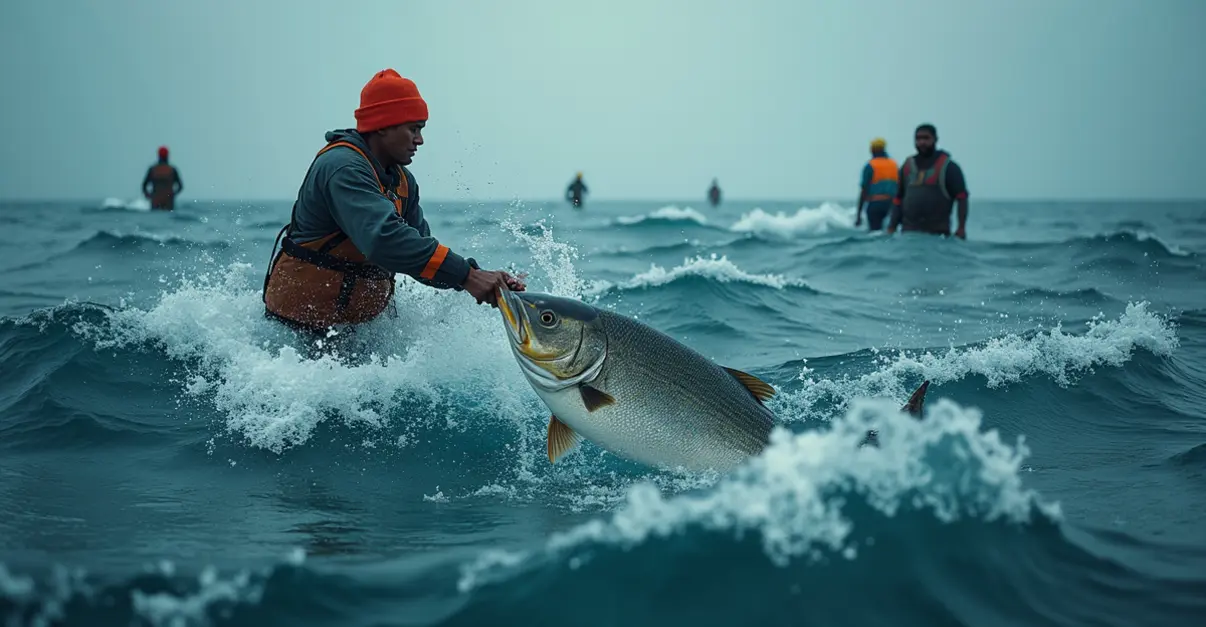
The heatwave's impact on commercial fisheries has been devastating. According to recent studies, aggregate landings in affected regions have decreased by 15-58%, with small-scale fisheries near biogeographic transition zones being particularly vulnerable. Lobster, sea urchin, and sea cucumber fisheries have experienced the most severe declines, threatening the livelihoods of coastal communities worldwide.
'Our fishing communities are facing economic ruin,' explains Carlos Mendez, a third-generation fisherman from Baja California. 'The waters are too warm, the fish have moved north, and what remains is dying. We've never seen anything like this.'
Conservation Response and Adaptation Strategies
In response to the escalating crisis, marine conservation organizations and government agencies are implementing emergency response plans. A globally applicable marine heatwave response framework developed in 2025 includes early warning systems, response level assessments, and targeted conservation actions. Key measures include establishing climate-smart marine protected areas, ecosystem restoration projects, and flexible fisheries management protocols.
'We need immediate action on multiple fronts,' states Dr. Sarah Chen, lead author of the global marine heatwave response plan. 'This includes both reducing greenhouse gas emissions for long-term solutions and implementing adaptive management strategies to protect vulnerable marine ecosystems.'
Cascading Ecological Impacts
The heatwave's effects extend far beyond immediate mortality events. Research from the Nature Reviews Biodiversity study reveals that marine heatwaves cause fundamental transformations in ocean ecosystems. Kelp forests, which serve as critical habitat for numerous species, are collapsing across thousands of kilometers. Species are migrating outside their typical ranges, with some found over 1,000 kilometers north of their usual habitats.
'The entire marine food web is being reshaped,' notes Professor James Wilson, co-author of the University of Victoria study. 'We're seeing temperature-linked diseases spreading rapidly, reduced forage fish quality affecting predators, and ecosystem services like carbon storage being severely compromised.'
Future Outlook and Urgent Action Needed
Climate models predict that marine heatwaves will become four to eight times more frequent by the end of the century, depending on emissions scenarios. The Frontiers in Marine Science review emphasizes the need for integrated approaches combining marine conservation and climate adaptation. Success depends on cross-sectoral coordination, robust governance, adaptive management, and expanded financing mechanisms.
'This is not just an environmental issue—it's an economic and social crisis,' warns Dr. Elena Martinez from the Global Ocean Observing System. 'We need transformative governance frameworks and immediate implementation of conservation measures to protect our oceans and the communities that depend on them.'

Follow Discussion