


 Deutsch
 English
 Español
 Français
 Nederlands
 Português


 Share
Share




Marine Heatwaves Cause Billions in Damage to Global Fisheries
A new comprehensive assessment reveals that marine heatwaves are causing unprecedented damage to global fisheries, with economic losses reaching billions of dollars and threatening food security for coastal communities worldwide. The 2023-2024 period saw nearly 3.5 times more marine heatwave days than any previous year on record, exacerbated by El Niño conditions, according to research published in Nature Climate Change.
Direct Economic Impacts and Fishery Closures
The assessment shows that marine heatwaves have led to widespread fishery closures and significant economic losses. The Peruvian anchovy fishery, one of the world's largest, canceled its entire 2023 season due to heatwave conditions, resulting in '$1.4 billion in direct economic losses' according to industry analysts. Similarly, the Gulf of Alaska cod population dropped by approximately 100 million fish following the 2013 heatwave, devastating local fishing communities.
Dr. Maria Rodriguez, a marine ecologist at the Ocean Conservation Institute, explains: 'What we're seeing is not just temporary disruption but fundamental changes to marine ecosystems. Fish populations are migrating to cooler waters, spawning patterns are being disrupted, and critical habitats like coral reefs and kelp forests are being destroyed at alarming rates.'
Small-Scale Fisheries Hit Hardest
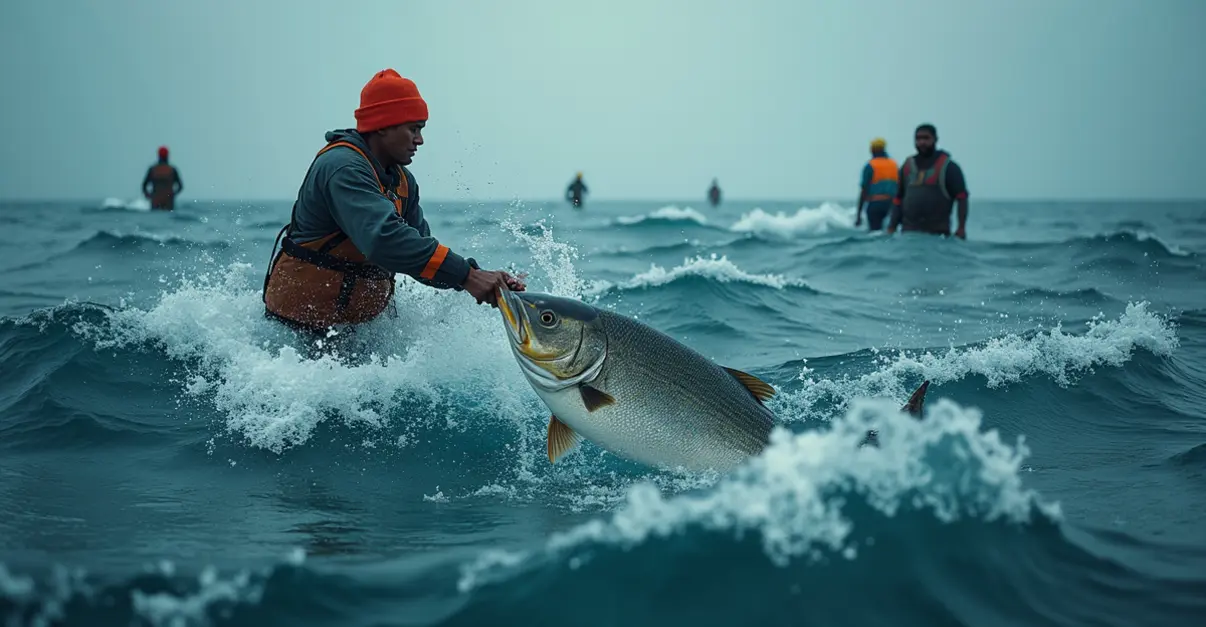
The assessment particularly highlights the vulnerability of small-scale fisheries, which provide essential nutrition and livelihoods for millions globally. Research from Baja California, Mexico, shows that during intense marine heatwave regimes, aggregate landings in lobster, sea urchin, and sea cucumber fisheries decreased by 15-58%. 'Most operations (56%) experienced large reductions in landings, with impacts being more severe for fisheries operating near biogeographic transition zones' according to the study published in Nature Communications.
These small-scale operations often lack the resources to adapt to changing conditions, making them particularly vulnerable. Fisherman Carlos Mendez from Baja California describes the situation: 'We've fished these waters for generations, but now the fish are gone. The water is too warm, and our traditional knowledge no longer applies. We're facing economic ruin.'
Policy Implications and Market Disruptions
The assessment calls for urgent policy interventions at multiple levels. Climate models predict that without significant emissions reductions, marine heatwaves could become 20-50 times more frequent and up to ten times more intense by the end of the century. This would have catastrophic consequences for global seafood markets and food security.
The report recommends several policy measures including:
- Development of early warning systems for marine heatwaves
- Creation of adaptive management frameworks for fisheries
- Investment in alternative livelihoods for affected communities
- Strengthening of international cooperation on ocean monitoring
Dr. James Wilson, a fisheries economist, notes: 'The market implications are profound. We're seeing price volatility, supply chain disruptions, and increased competition for remaining fish stocks. This requires coordinated international policy responses that address both mitigation and adaptation.'
Community Resilience and Adaptation Strategies
Coastal communities are developing innovative adaptation strategies in response to these challenges. In Tasmania, Australia, researchers have developed a stakeholder-guided marine heatwave hazard index specifically for fisheries and aquaculture industries. The index, based on the severe 2015/16 marine heatwave, projects that similar events could occur once every 5 years by the 2050s under low emissions scenarios, or once every 2 years under high emissions scenarios.
Local communities are experimenting with diversification strategies, including aquaculture of heat-tolerant species and development of marine tourism alternatives. However, as climate scientist Dr. Sarah Chen warns: 'Adaptation has limits. If we don't address the root causes of climate change, no amount of adaptation will save our fisheries and coastal communities from collapse.'
Global Implications and Future Outlook
The assessment concludes that marine heatwaves represent one of the most significant threats to global ocean health and food security. With oceans absorbing about 25% of human-caused CO2 emissions and most of the additional heat in the climate system, the frequency and intensity of these events are expected to increase dramatically.
The report emphasizes that immediate action is needed to reduce greenhouse gas emissions while simultaneously building resilience in fishing communities and marine ecosystems. As the assessment states: 'The time for incremental change has passed. We need transformative policies that address both the causes and consequences of ocean warming to protect our fisheries, coastal communities, and global food security.'



Follow Discussion