


 Deutsch
 English
 Español
 Français
 Nederlands
 Português


 Share
Share




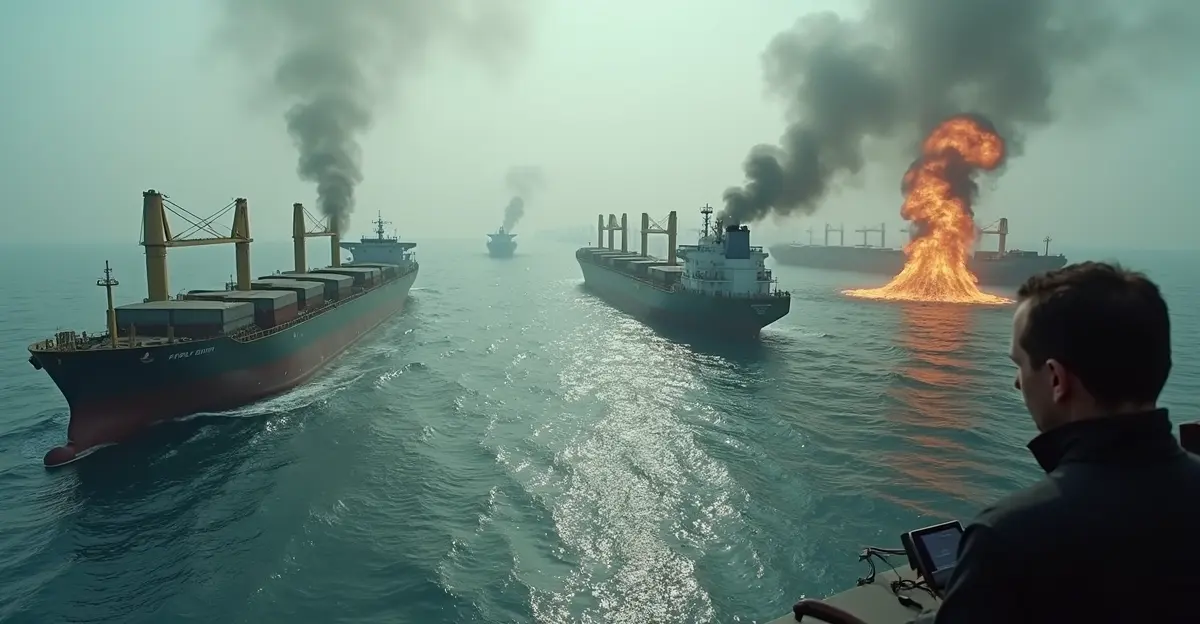
In early March 2026, the Hormuz Shock became the largest energy supply disruption since the 1970s oil shocks. Iran's closure of the Strait of Hormuz—triggered by U.S.-Israeli strikes and the reported death of Supreme Leader Ali Khamenei—cut off roughly 20% of global oil and LNG flows, driving Brent crude above $126 per barrel within days. For net-importing economies from Europe to Asia, the crisis is not just a price spike; it is a structural rewiring of global energy security architecture.
What Is the Hormuz Shock?
The Strait of Hormuz is a 104-mile waterway between Iran and Oman that carries about 25% of seaborne oil and 20% of global LNG annually, according to Wikipedia. The March 2026 blockade, sparked by the war, stopped tanker traffic for weeks. Reuters reported that Saudi Arabia, Iraq and Kuwait had to cut output after 10 days because storage filled and tanker loadings halted. The closure immediately exposed the fragility of strategic petroleum reserves and global energy chokepoints.
Record IEA Reserve Release: 400 Million Barrels
The International Energy Agency orchestrated its largest-ever coordinated release, recommending 400 million barrels across more than 30 member and partner nations, according to Reuters. This is the first true test of strategic petroleum reserve coordination since the system's creation. The release has tempered but not eliminated the spike; Brent remains volatile, trading near $90 after earlier surging past $100 and $126.
Why Alternative Pipelines Are Failing to Fill the Gap
Saudi Arabia's East-West Petroline and the UAE's Habshan-Fujairah pipeline can bypass Hormuz, but combined capacity is far below the 20 million barrels per day normally transiting the strait. global oil transit routes are being stress-tested. Reuters notes bypass pipelines can handle only a fraction of lost volumes, leaving refineries worldwide drawing down inventories at record rates.
Pipeline Bypass Capacity vs. Demand
- Saudi East-West Petroline: about 5 million barrels per day
- UAE Habshan-Fujairah: about 1.5 million barrels per day
- Combined bypass capacity: under 7 million barrels per day
- Normal Hormuz transit: roughly 20 million barrels per day
How India, Japan and South Korea Are Redesigning Energy Autonomy
Asia's largest importers are accelerating diversification. Japan unveiled a plan to back pipeline projects that bypass Hormuz and diversify crude supplies, according to the Japan Times, part of a broader Japan energy security strategy. India, with about 80% import dependency, is signing new Saudi and UAE supply agreements and expanding India strategic oil reserves. South Korea imposed fuel price caps while restructuring refinery intake via Yanbu and Fujairah. These shifts mark a permanent move away from reliance on a single chokepoint.
Structural Consequences: Renewables and Non-OPEC Supply
The shock is accelerating investment in renewable energy capacity and non-OPEC supply. The IEA cut its 2026 oil demand forecast by 1.6 million barrels per day as high prices weigh on consumption, while U.S. crude stockpiles fell below 300 million barrels, a four-decade low, CNBC reported. Governments are treating energy security as a national-security priority, with faster permitting for solar, wind, nuclear and domestic refining.
Expert Perspectives
'This is the first true test of strategic petroleum reserve coordination since the 1970s,' one senior energy analyst told Reuters. 'Even a coordinated 400-million-barrel release cannot replace a chokepoint that moves a fifth of global supply.' Market observers warn that inflation and growth impacts will persist into 2027 unless the strait reopens.
FAQ: The 2026 Hormuz Shock Explained
What is the Strait of Hormuz and why does it matter?
The Strait of Hormuz is a narrow waterway between Iran and Oman through which about 20% of global oil and LNG passes. Its closure removes the only sea route for several Gulf exporters.
How much oil and LNG was cut off?
Roughly 20% of global oil and LNG supply was disrupted, with Brent crude exceeding $126 per barrel in early March 2026.
What did the IEA do?
The IEA coordinated a record 400-million-barrel release across more than 30 nations, the largest in its history.
Can pipelines bypass the Strait of Hormuz?
Only partially. Saudi and UAE bypass pipelines can move under 7 million barrels per day combined, far below the 20 million barrels per day normally transiting.
Which countries are most affected?
India, Japan, South Korea and European importers are most exposed, prompting rapid diversification and domestic capacity investments.
Conclusion
The Hormuz Shock of March 2026 is permanently rewiring global energy transit, reserve policy and import strategies. As the strait remains closed and diplomacy stalls, the world is learning that energy security cannot depend on a single chokepoint.



Follow Discussion