


 Deutsch
 English
 Español
 Français
 Nederlands
 Português


 Share
Share




The 2026 Strait of Hormuz crisis has become the defining energy-geopolitics event of the decade. Since Iran's Islamic Revolutionary Guard Corps sealed the waterway on 28 February 2026 — mining shipping lanes and boarding vessels in retaliation for US–Israeli airstrikes — roughly 20 million barrels per day of crude exports have been severed from global markets. Oil prices spiked to $92 per barrel within the first week and later surged past $126, triggering the largest coordinated strategic petroleum reserve release in International Energy Agency history: 400 million barrels across 32 member countries. Beyond the price shock, however, the crisis is driving a structural reordering of global energy supply chains that will outlast any ceasefire.
The Choke Point That Stopped the World
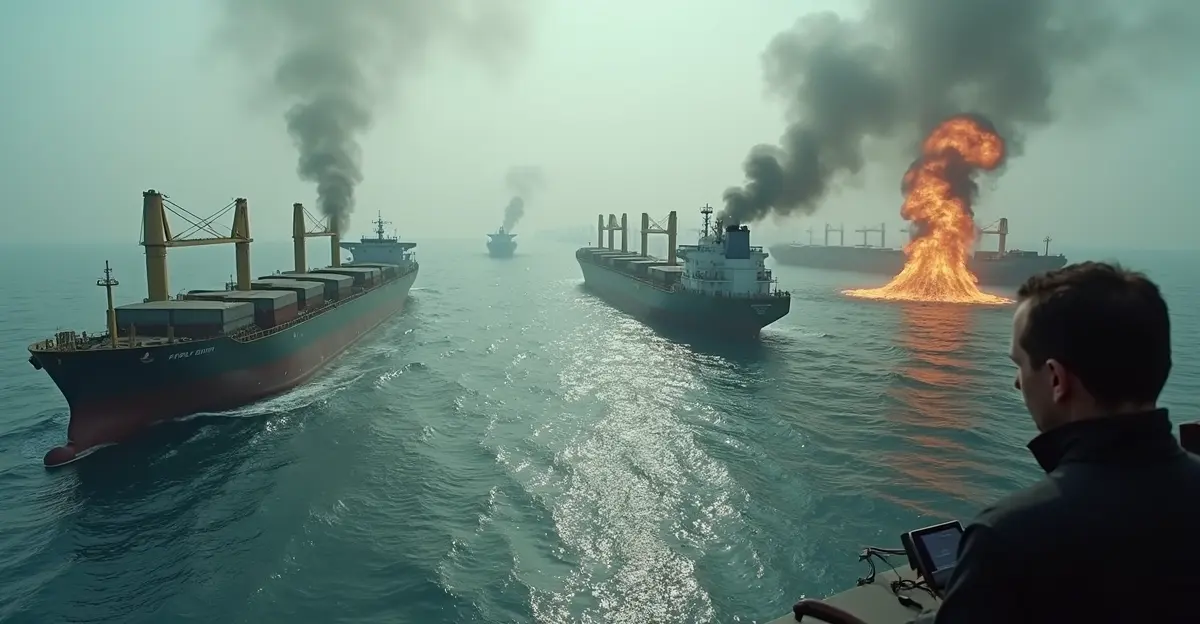
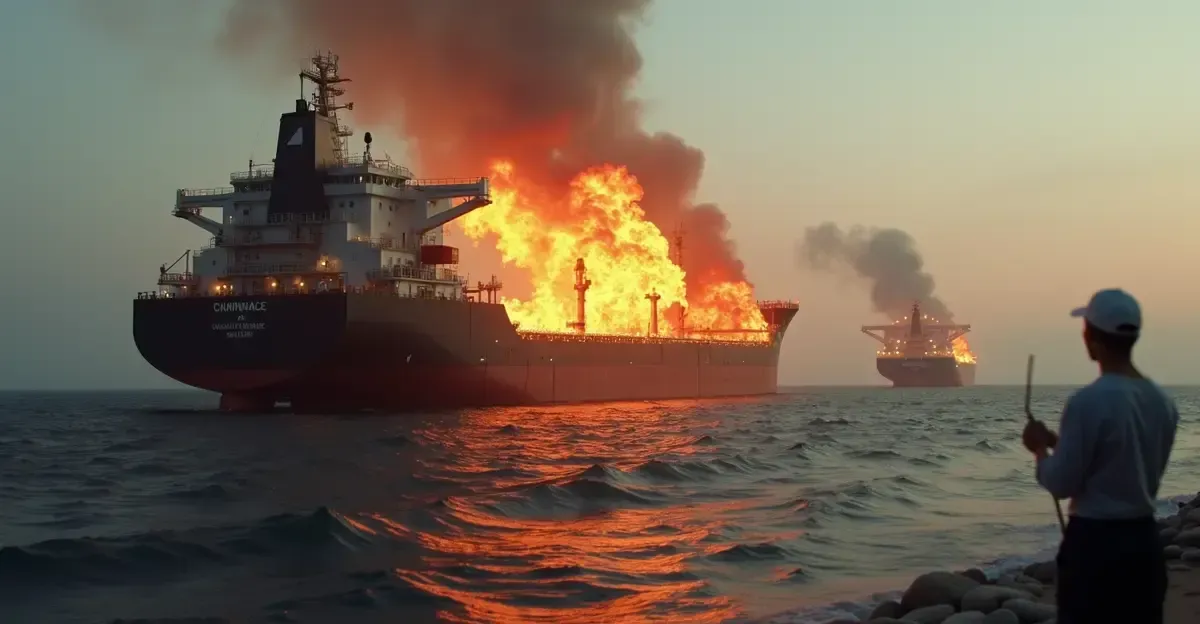
The Strait of Hormuz normally handles about 25% of global seaborne oil and 20% of liquefied natural gas trade. No viable maritime bypass exists — pipeline alternatives across Saudi Arabia and the UAE cover only about 35% of normal flow. When Iran's IRGC laid sea mines and imposed a de facto blockade, tanker traffic collapsed by more than 90%. By May 2026, over 150 commercial vessels were stranded, roughly 20,000 mariners were trapped, and daily trade losses exceeded $4 billion, according to UNCTAD. The disruption was three to five times larger than the 1973 oil embargo, and its effects cascaded far beyond crude markets into fertilizers, helium, aluminum, and jet fuel.
The IEA's Historic Intervention and Market Shock
On 11 March 2026, IEA Executive Director Fatih Birol convened an extraordinary ministerial meeting that produced the largest emergency stock release in the agency's 52-year history. "The scale of this response matches the unprecedented scale of the challenge," Birol stated. The 400-million-barrel commitment — later expanded to 412 million barrels — split roughly 72% crude and 28% refined products, with the Americas contributing 195.8 million barrels, Asia Oceania 108.6 million, and Europe 107.5 million. The US alone began a 172-million-barrel drawdown from its Strategic Petroleum Reserve. Yet the IEA itself cautioned that "only resuming regular shipping transit through the Strait of Hormuz offers a lasting solution."
Very Large Crude Carrier (VLCC) rates hit an all-time record of $423,736 per day, while war-risk insurance premiums surged eightfold. Brent crude, which averaged $72 per barrel before the conflict, peaked above $126 in April before easing to around $85 by June following a tentative US–Iran memorandum that partially reopened the strait.
Winners and Losers in the New Energy Order
Winners: US LNG and Non-Hormuz Producers
The crisis has handed permanent pricing power to producers whose exports bypass Hormuz entirely. US LNG exporters — led by Cheniere Energy and Venture Global — saw Asian demand surge as Japan, South Korea, and Taiwan scrambled to replace Persian Gulf supplies. Total US crude and petroleum product exports hit a record 12.9 million barrels per day in April 2026, with the Port of Corpus Christi posting all-time highs. President Trump framed the moment as "energy dominance," urging Asian buyers to lock in long-term American supply contracts. Meanwhile, non-OPEC producers Brazil, Guyana, and Argentina — whose combined output grew by roughly 400,000 barrels per day in 2026 — are now viewed as structurally indispensable suppliers. Guyana's Stabroek block, operated by ExxonMobil, is on track to surpass one million barrels per day by 2027, and Argentina's Vaca Muerta shale play is accelerating development timelines.
Losers: Asia's Import-Dependent Economies
China, India, Japan, and South Korea together accounted for 69% of all Hormuz crude flows before the crisis. Japan — which sources 95% of its crude oil from the Middle East and depends on imported fossil fuels for 87% of total energy use — faces acute vulnerability. Strategic reserves provide only a temporary buffer; once depleted, energy-intensive sectors such as semiconductors, automobiles, shipbuilding, and chemicals would face slowdowns or shutdowns. South Korea, similarly exposed, has accelerated its energy diversification strategy but new LNG terminals and nuclear restarts require years to complete. India, the world's third-largest oil importer, has been forced to pay steep premiums for alternative Atlantic Basin cargoes, straining its current-account balance.
From Just-in-Time to Security-First
The most consequential legacy of the Hormuz crisis is the death of the just-in-time energy model. For decades, importing nations operated with minimal inventories, relying on the assumption of uninterrupted maritime flows. That assumption has been shattered. Governments are now racing to build strategic inventories, mandate higher commercial stockholding obligations, and diversify supply routes at any cost. The 54-nation FORGE Alliance, launched in February 2026 with over $30 billion in US financing, signals that critical-mineral and energy supply chain security now dominates trade policy. "Supply chain security now trumps efficiency," notes one UNCTAD assessment. "This is forced supply destruction, not voluntary discipline." The shift toward regionalized, resilience-first logistics networks is accelerating, with rerouted shipping via the Cape of Good Hope adding 10–14 days per voyage.
FAQ
What caused the 2026 Strait of Hormuz crisis?
The crisis was triggered by US–Israeli airstrikes on Iran (Operation Epic Fury) on 28 February 2026. Iran's IRGC retaliated by mining the strait, boarding commercial vessels, and effectively halting maritime traffic through the world's most critical energy chokepoint.
How much oil normally passes through the Strait of Hormuz?
Approximately 20 million barrels per day — about 25% of global seaborne oil trade and 20% of LNG — transited the strait before the crisis. No viable maritime bypass exists.
What was the IEA's response?
The IEA coordinated the largest emergency stock release in its history: 400 million barrels (later expanded to 412 million) across 32 member countries, the sixth collective action since the agency's founding in 1974.
Who are the biggest winners from the crisis?
US LNG exporters (Cheniere, Venture Global), US crude producers, and non-Hormuz oil producers in Brazil, Guyana, and Argentina have gained permanent pricing power and market share as buyers diversify away from the Persian Gulf.
Will oil prices remain elevated?
Following a June 2026 US–Iran memorandum, Brent crude fell from April peaks above $126 to around $83 by August. The EIA forecasts Brent averaging $74 in Q3 2026 and $65 in 2027, though risks remain if tensions escalate.

Follow Discussion