


 Deutsch
 English
 Español
 Français
 Nederlands
 Português


 Share
Share




The Geopolitical Trigger: February 2026 Iran Conflict
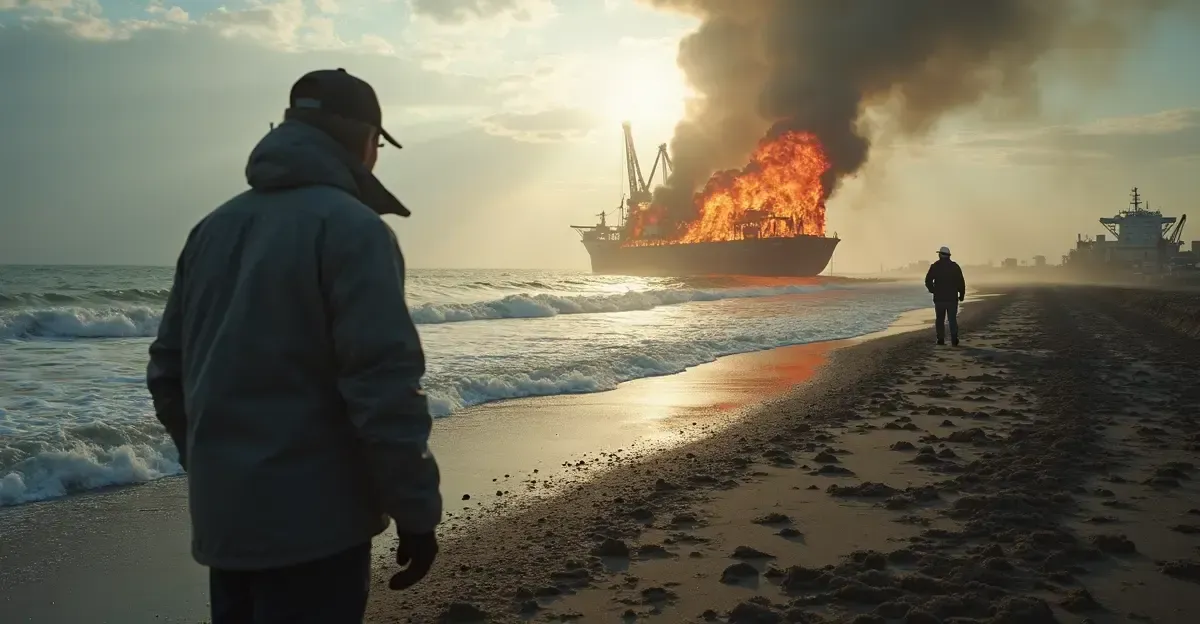
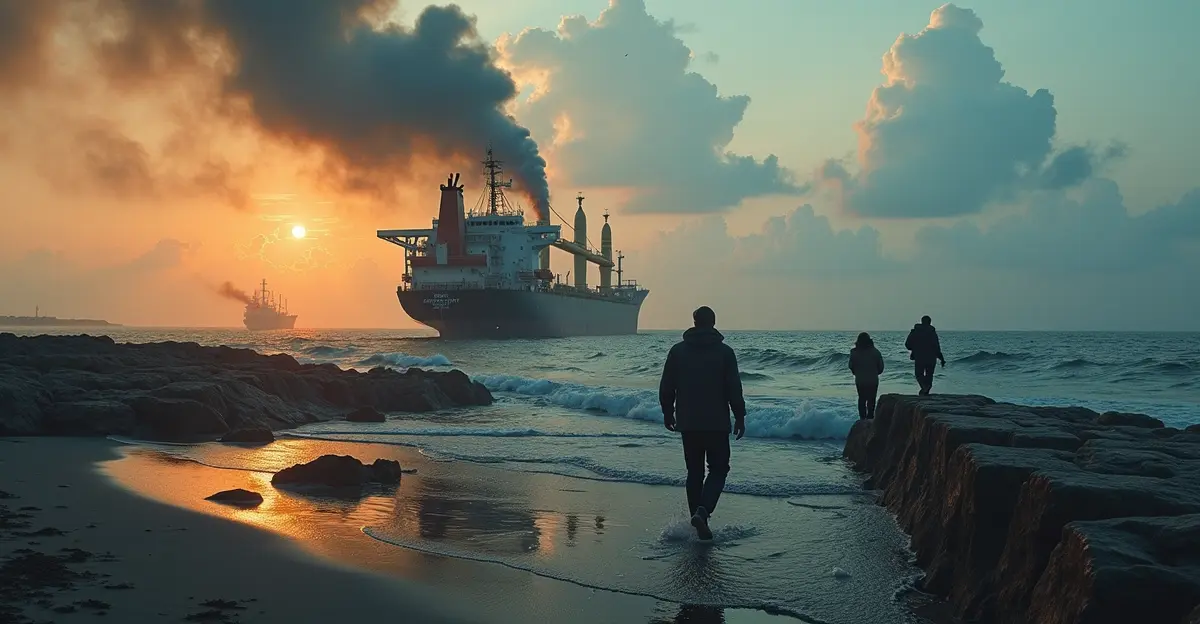
In late February 2026, escalating hostilities between Iran and a U.S.-led coalition culminated in Tehran making good on decades of threats to mine and blockade the Strait of Hormuz. Within days, ship transits through the world's most critical energy chokepoint collapsed by 95%, effectively severing the maritime artery that carries approximately 20% of global oil consumption and a quarter of seaborne petroleum trade. The result is an oil supply disruption unprecedented in modern history — three to five times larger than the 1973 Arab oil embargo.
Magnitude of the Supply Shock
The numbers are staggering. Before the crisis, roughly 20.5 million barrels per day (mb/d) of crude and condensate flowed through the strait, along with 3.5 mb/d of petroleum products. Nearly 17 mb/d — approximately 17% of global oil supply — has been removed from the market. By comparison, the 1973 embargo cut 4.4 mb/d, and the 1979 Iranian Revolution disrupted 4.8 mb/d. "This is not a disruption. This is a cardiac arrest of the global energy system," said Fatih Birol, Executive Director of the International Energy Agency.
The Dallas Federal Reserve's latest scenario analysis, published in early March 2026, models three outcomes. In a four-week closure, Brent crude settles at $98 per barrel. An eight-week disruption pushes prices to $115. A protracted 12-week scenario sends oil to $132, exceeding the inflation-adjusted 2008 record. Even the mildest scenario would subtract 1.6 percentage points from global GDP growth in Q2 2026; the worst case slashes growth by 2.9 points, plunging the world economy into near-recession territory.
Shipping Paralysis and Freight Rate Explosion
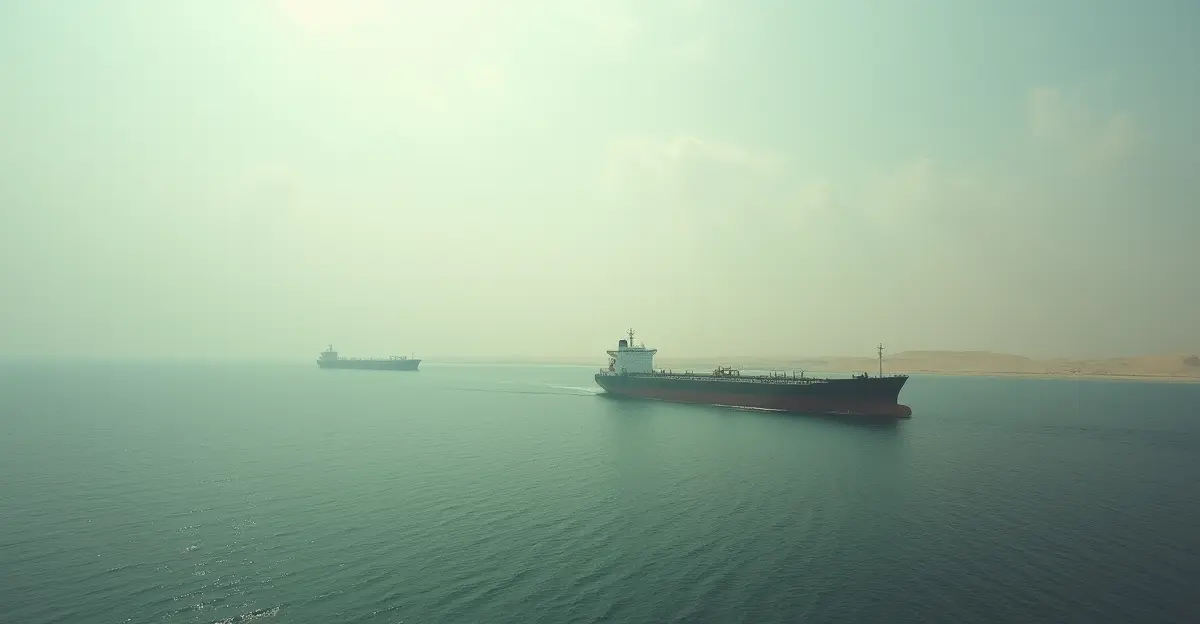
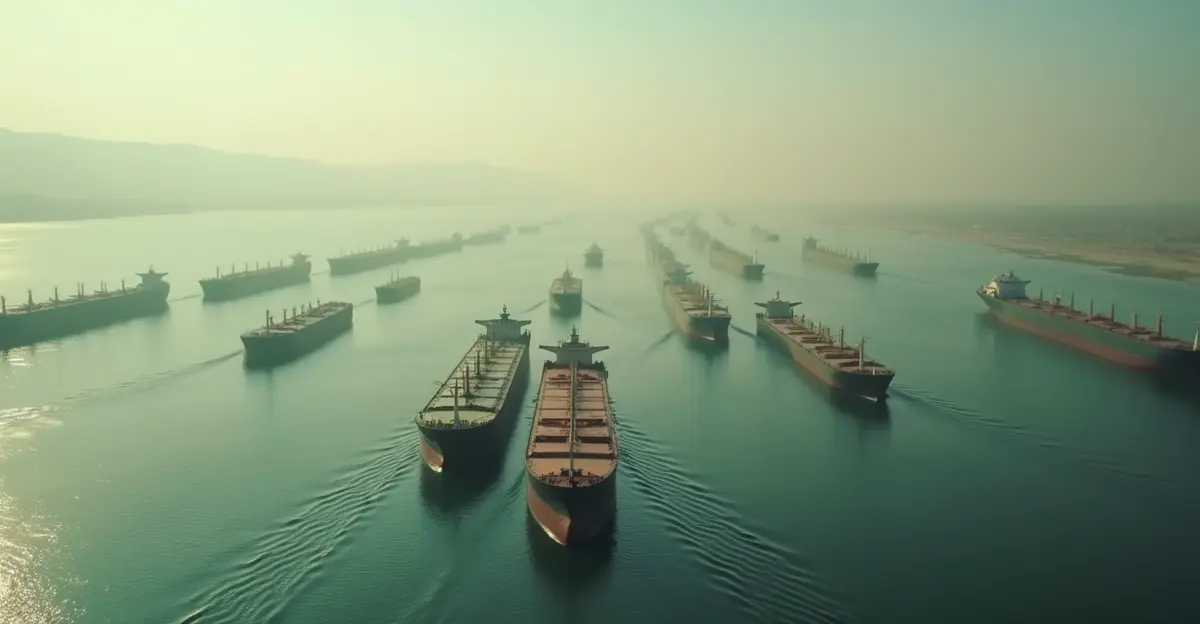
Beyond oil, the closure has paralyzed one of the world's busiest trade corridors. With the strait effectively impassable, container ships and bulk carriers that normally service Gulf ports are being rerouted or stranded. Spot freight rates on the Middle East-to-Asia route have surged by up to 900%, while global supply chain disruptions ripple outward. The Baltic Dry Index, a bellwether for shipping costs, has more than tripled since late February.
The knock-on effects are cascading. Qatar, the world's largest LNG exporter, has been forced to slash shipments, driving Asian spot LNG prices above $35 per million BTU. Kuwait, Iraq, and the UAE — all dependent on the strait for imports of food and manufactured goods — face acute shortages. "This is not just an oil crisis; it is a logistics catastrophe with profound food security implications," warned the UN's World Food Programme in an emergency briefing.
Fertilizer and Food Security at Risk
The crisis is choking global fertilizer supply chains. The Persian Gulf region accounts for over 30% of global urea exports and a significant share of ammonia and phosphate production. With export terminals paralyzed, key agricultural markets — particularly India, Brazil, and sub-Saharan Africa — face critical shortages ahead of the planting season. The benchmark urea price has already spiked 70%, threatening crop yields and pushing the world closer to a food price crisis reminiscent of 2007–2008.
The Defense Spending Surge
The crisis has triggered the most rapid military buildup since the Cold War. Within six weeks, NATO allies and Gulf Cooperation Council states have collectively pledged $400 billion in new defense commitments. The United States has deployed three additional carrier strike groups to the region, while joint U.S.-led mine-clearing operations struggle to reopen the strait. European nations, suddenly confronted with energy vulnerability, are accelerating renewable energy transition plans and reconsidering strategic autonomy. Japan and South Korea, both heavily dependent on Gulf oil, have invoked emergency naval measures to protect alternative supply routes.
Structural Shifts: The End of Gulf Energy Dependence?
Economists and policymakers are already debating the long-term consequences. The IMF has drawn explicit parallels to 1974, when the first oil shock reshaped global energy policy for decades. This time, the response is likely to be even more transformative. "We are witnessing the acceleration of trends that were already underway — energy diversification, electrification, and regionalization of supply chains — but compressed from a decade into months," said Daniel Yergin, vice chairman of S&P Global.
Countries representing 65% of global GDP have announced emergency measures to reduce oil dependence, including accelerated EV mandates, expanded strategic petroleum reserves, and massive investments in alternative energy. China, the world's largest oil importer, has fast-tracked approvals for new coal-to-liquids plants and nuclear reactors. The crisis may ultimately redraw the energy map more profoundly than any policy or climate summit ever could.
FAQ: Strait of Hormuz Crisis 2026
How much of the world's oil passes through the Strait of Hormuz?
Approximately 20% of global oil consumption — roughly 17–20 million barrels per day — transits the strait, along with 25% of seaborne petroleum trade and 20% of global LNG.
How does this compare to the 1973 oil crisis?
The current disruption is three to five times larger by volume removed. The 1973 embargo cut about 4.4 million barrels per day; the Hormuz closure has removed an estimated 17 mb/d.
What are the Dallas Fed's oil price projections?
Under a four-week closure scenario: $98/barrel Brent. Eight-week: $115. Twelve-week: $132. These exceed the 2008 record in real terms for the longer scenarios.
Which countries are most affected?
Asian importers (China, India, Japan, South Korea) face the most acute energy shortages. Gulf states themselves (UAE, Qatar, Kuwait, Iraq) are cut off from imports. European nations face secondary price shocks.
How is the strait being reopened?
A U.S.-led multinational naval coalition is conducting mine-clearance operations, but progress is slow amid ongoing hostilities and Iranian anti-access/area-denial capabilities.
Outlook: A World Remade
As the crisis enters its second month, the global economy is navigating uncharted waters. Even if the strait reopens, the psychological and structural damage is done. Strategic autonomy, energy security, and supply chain resilience have vaulted to the top of policy agendas worldwide. The 2026 Strait of Hormuz crisis may well be remembered as the moment the world truly began to wean itself off fossil fuels — not by choice, but by necessity.


Follow Discussion