


 Deutsch
 English
 Español
 Français
 Nederlands
 Português


 Share
Share




Europe's 2026 gas storage crisis has moved from policy debate to hard economic reality. With Russian pipeline flows via Ukraine terminated and EU inventories at their lowest since 2022, the continent faces a structurally altered energy security landscape. By mid-March 2026, Germany held roughly 30% of storage capacity, France about 29%, and the Netherlands just 23.5%, according to data compiled by EnergyPrices.net. TTF prices near €49.95/MWh and an ECB gas price assumption revised upward by nearly 57% underscore the pressure ahead of the November injection deadline.
Why Europe's gas storage is running empty
Europe ended 2025 with storage about 61% full, down sharply from roughly 72% a year earlier. A colder-than-expected winter, combined with limited renewable output, accelerated withdrawals. The result is a precarious starting point for the 2026 refill season. Under the EU gas storage regulation, member states must reach 90% by 1 November, but current levels of 29–39% across the bloc leave little margin for error. Germany's 30%, France's 29%, and the Netherlands' 23.5% are well below the five-year average. This depleted inventory base means Europe will need to import record volumes during the gas injection season just to return to comfortable levels before next winter.
The permanent end of Russian pipeline transit
The expiration of the five-year Gazprom–Naftogaz transit contract on 1 January 2025 eliminated roughly 15 billion cubic meters of Russian gas that had still flowed through Ukraine each year. Although the immediate impact was felt most sharply in Slovakia, Austria, and Hungary, the broader EU now treats the loss as permanent. The 2025 Slovakia-Ukraine gas dispute exposed the geopolitical fault lines, but the strategic conclusion is unchanged: Europe cannot count on Russian pipeline gas returning. EU auditors have warned that the bloc's broader effort to phase out Russian energy is faltering, with persistent dependencies and inconsistent implementation slowing the exit, according to a Reuters report.
TTF price shock and intensifying LNG competition
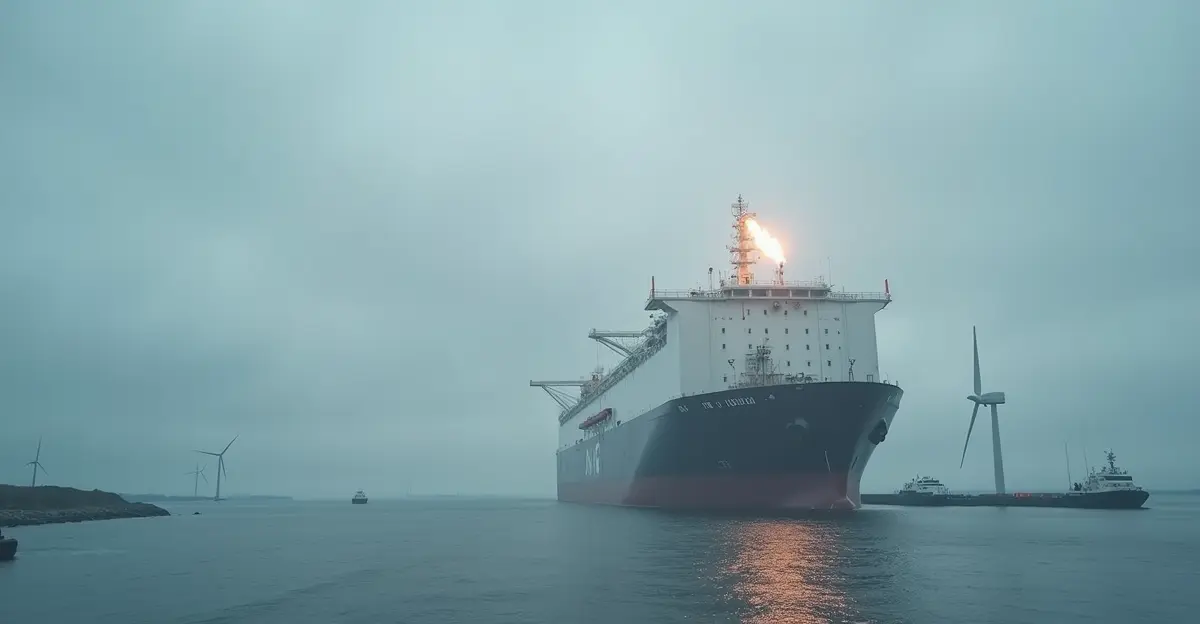
The Dutch TTF benchmark has become the barometer of Europe's new energy reality. In April 2026, front-month prices hovered near €49.95/MWh, and the European Central Bank revised its 2026 gas price assumption upward by nearly 57% compared with earlier projections. This spike is not purely seasonal. Europe now competes directly with Japan, South Korea, and China for US LNG cargoes, and the global LNG market dynamics mean TTF increasingly tracks Gulf Coast conditions and Asian demand. The IEA Gas Market Report Q1-2026 projects US LNG exports reaching 16.7 Bcf/d in 2026, with new capacity from Plaquemines LNG helping to ease tightness, but analysts warn that any disruption to US exports or a colder Asian winter could push prices far higher.
Key storage and price indicators (mid-March 2026)
- Germany: ~30% full
- France: ~29% full
- Netherlands: ~23.5% full
- EU average: 29–39% full
- TTF front-month price: ~€49.95/MWh
- ECB 2026 gas price assumption: +57% revision
Impact on industry, consumers and the green transition
The crisis is not confined to trading desks. Energy-intensive manufacturers face 30–40% higher gas bills, accelerating a wave of relocation to regions with cheaper energy. This erodes the European industrial competitiveness that underpins the single market. Households, meanwhile, see inflation resurface: the ECB now expects euro area headline inflation to rise to 3.1% in the second quarter of 2026 on surging energy costs. The green transition itself is under strain, as governments face pressure to extend coal plant lifetimes or delay phase-outs to keep the lights on. Without a credible bridge from US LNG and accelerated renewables, the EU's 2027 target to end Russian gas imports may collide with economic and political reality.
Expert perspectives
Europe is no longer insulated from global LNG dynamics; the loss of Russian pipeline gas has permanently tied TTF to Gulf Coast weather and Asian demand, one Brussels-based energy analyst said. The ECB's adverse scenarios show that a sharper, more persistent energy shock could produce higher inflation and lower growth simultaneously, complicating monetary policy.
FAQ: Europe's 2026 gas storage crisis
Why is Europe's gas storage so low in 2026?
Storage fell to 29–39% by mid-March 2026 after a cold winter, reduced Russian pipeline flows, and limited renewable generation, leaving the EU far below the level needed for a comfortable refill season.
How much Russian gas did Europe lose after Ukraine transit ended?
The termination of the Gazprom–Naftogaz transit contract on 1 January 2025 removed roughly 15 billion cubic meters of Russian pipeline gas per year, a permanent structural loss for the EU.
Will US LNG be enough to refill storage before next winter?
Analysts project storage could recover to about 96% by November 2026 if temperatures stay normal and US LNG exports reach 16.7 Bcf/d, but any export disruption or cold snap could leave the bloc short.
How will higher TTF prices affect consumers?
Households face 30–40% higher gas bills, and the ECB expects headline euro area inflation to hit 3.1% in Q2 2026, driven by surging energy costs.
Can Europe still meet its green transition goals?
The crisis complicates the EU energy security strategy and green transition timelines, as governments weigh extending coal use against the 2027 deadline to phase out Russian gas.
Conclusion
Europe's 2026 gas storage crisis is a warning that the continent's post-2022 energy adjustment is incomplete. The permanent exit of Russian pipeline gas, depleted inventories, and volatile global LNG competition have created a new normal. Whether new US capacity and policy discipline can bridge the gap before next winter will determine both economic stability and the credibility of Europe's energy transition.


Follow Discussion