


 Deutsch
 English
 Español
 Français
 Nederlands
 Português


 Share
Share




The partial closure of the Strait of Hormuz in 2026 has removed roughly 20 million barrels of daily oil transit from global markets, triggering the most severe energy supply disruption in decades. With UNCTAD projecting global trade growth slowing to 1.5–2.5%, central banks facing fractured policy responses, and Asian importers like India scrambling with under 25 days of reserves, the crisis is forcing a structural rethink of energy security, strategic stockpiling, and maritime chokepoint vulnerability worldwide.
Background: The Chokepoint That Holds the World Hostage
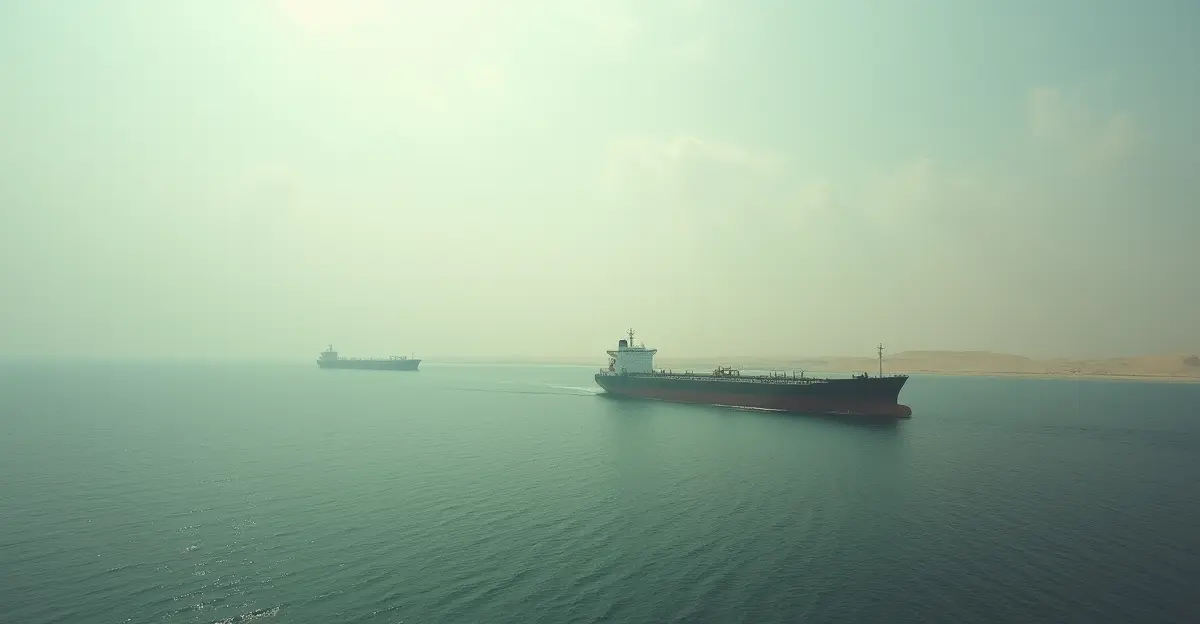
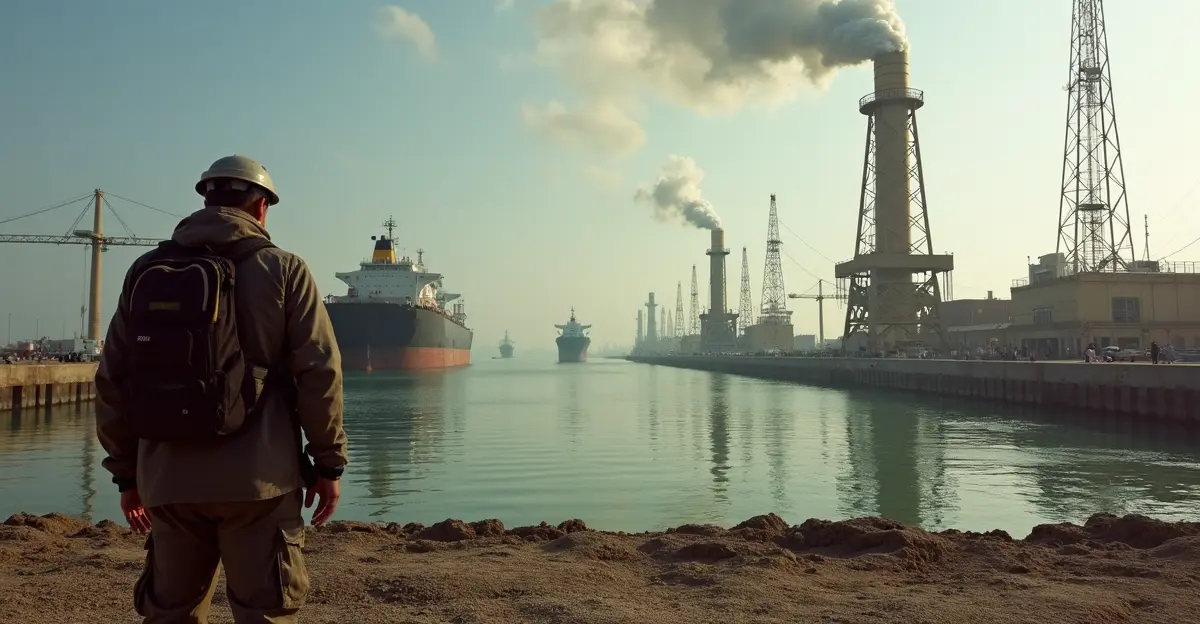
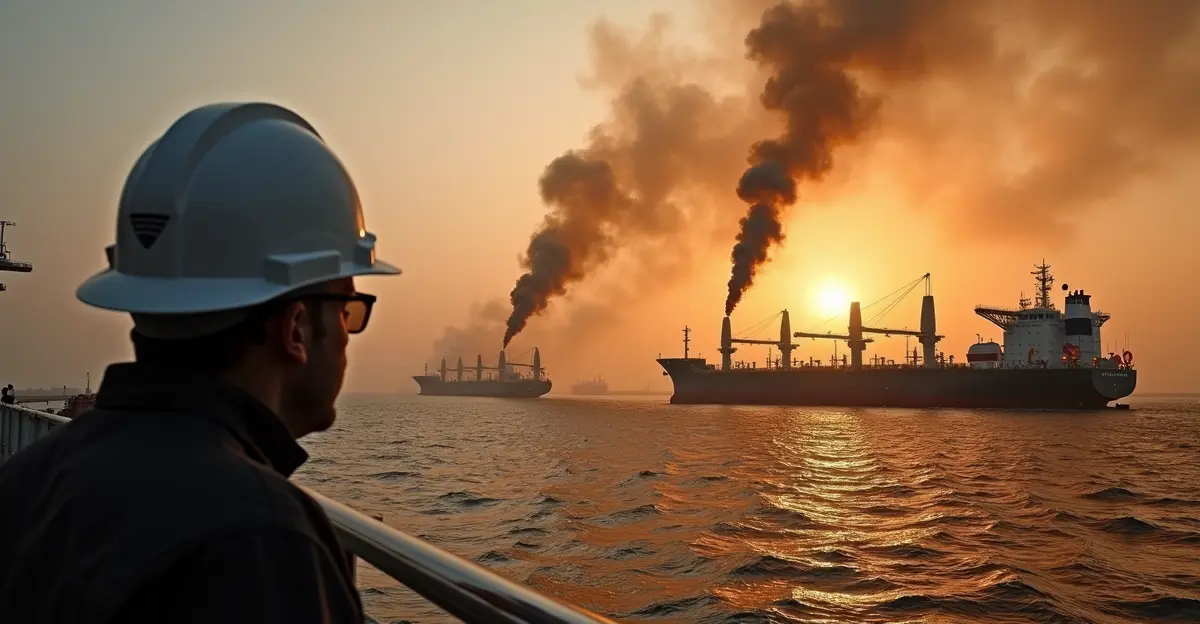
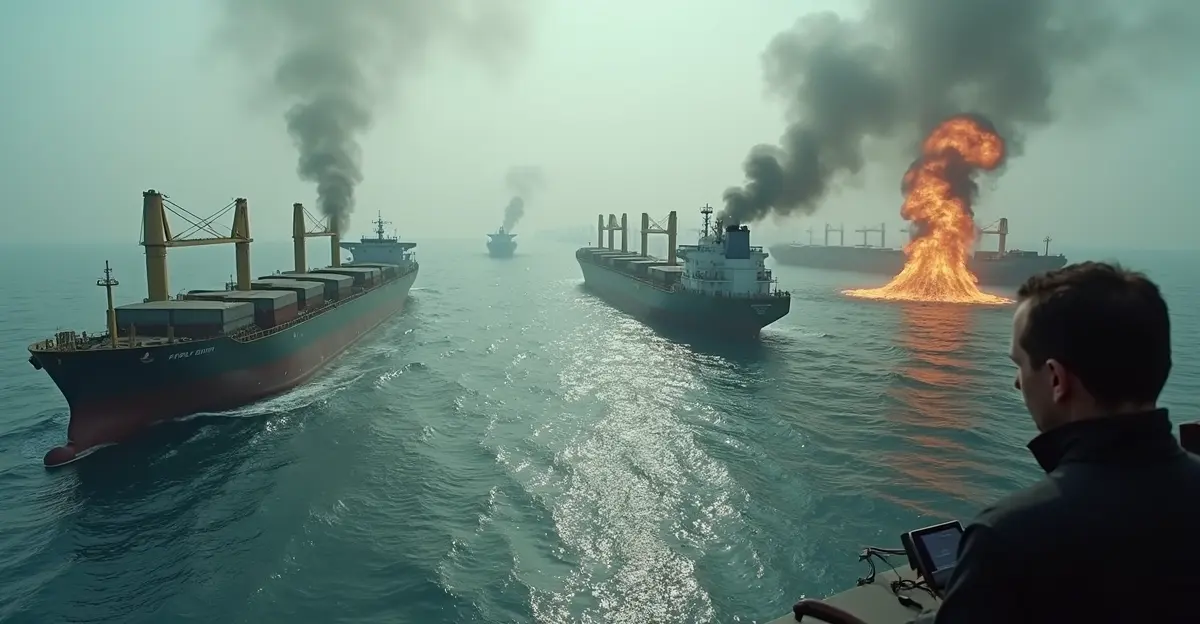
The Strait of Hormuz, a narrow 34-kilometre waterway between Iran and Oman, is the world's most critical maritime chokepoint for energy transit. Before the crisis, approximately 20 million barrels of crude oil and petroleum products — roughly 20% of global seaborne oil trade — passed through daily, alongside about 20% of the world's liquefied natural gas (LNG) supply, primarily from Qatar. The strait's closure following the US-Israel air war against Iran on 28 February 2026, and Iran's subsequent retaliatory blockade, has slashed ship transits by 95%, from 130 per day to just six, according to the International Maritime Organization.
The Dallas Federal Reserve Bank has described the disruption as three to five times larger than past geopolitical oil shocks, including the 1973 Arab oil embargo (6% of global supply) and the 1979 Iranian Revolution (4%). By mid-March 2026, Brent crude had surged from approximately $72 per barrel pre-conflict to a peak above $144 per barrel, before settling near $102 per barrel after a fragile April ceasefire that subsequently unravelled.
Macroeconomic Fallout: Trade, Inflation, and Growth Under Siege
Global Trade Loses Momentum
The United Nations Conference on Trade and Development (UNCTAD) projects that global merchandise trade growth will slow sharply from 4.7% in 2025 to between 1.5% and 2.5% in 2026, directly attributing the deceleration to the Hormuz disruption. Higher energy prices, transport disruptions, market volatility, and a flight to safe assets are compounding the damage. Developing economies, which rely heavily on imported energy and have limited fiscal buffers, are bearing the heaviest burden.
Oil Price Shock and Inflationary Pressures
Bank of America raised its 2026 Brent crude forecast to an average of $77.50 per barrel, up from $61, with tail-risk scenarios of $130 per barrel if the strait remains closed into the second half of the year. The Chicago Federal Reserve, using a medium-scale New Keynesian macroeconomic model, projects that the oil shock could reduce US economic growth by 81 to 166 basis points in 2026, followed by a modest recovery in 2027. However, the Fed notes that the US economy is far more oil-efficient than in past decades — oil consumption per unit of GDP is less than one-third of 1970s levels — and the US has been a net oil exporter since 2019, partially insulating it from the worst effects.
For Europe, the impact is more acute. Although the continent sources only about 8% of its LNG directly from the Middle East, the global competition for alternative supplies has driven European gas futures up 56%. The EU energy security strategy is being tested as never before.
Asia's Energy Emergency: India's 25-Day Warning
Asian economies are the hardest hit, as the vast majority of Persian Gulf oil is shipped eastward. India, which imports about 40% of its crude through the Strait of Hormuz, has publicly confirmed it holds only 25 days of crude oil reserves and an additional 25 days of refined product stocks. Government sources have sought to reassure markets, stating that diversified sourcing from the Americas, Africa, and Russia, along with alternative shipping routes via the Cape of Good Hope, provide a buffer. But the margin for error is razor-thin.
China, Japan, and South Korea face similar vulnerabilities. China's strategic petroleum reserves, estimated at 1,541 million barrels — 3.7 times larger than US reserves — offer more breathing room, but the sheer volume of lost transit (cumulative lost barrels could exceed 800 million under base-case scenarios, per Cashu Research) means even the largest reserves cannot indefinitely compensate.
Central Bank Dilemmas: Fractured Policy Responses
The oil shock presents central banks with a classic stagflationary dilemma: rising inflation alongside slowing growth. The Federal Reserve, the European Central Bank, and the Bank of Japan have all signalled caution, but their responses are diverging. The Boston Fed's research suggests that US monetary policy should focus more on the inflationary effects of oil shocks rather than employment effects, given the reduced oil intensity of the US economy. In contrast, the European Central Bank faces a more acute trade-off, as eurozone inflation expectations have ticked upward while growth forecasts are being revised down. Emerging market central banks, particularly in Asia, are under pressure to raise rates to defend currencies, even as domestic demand weakens.
The global central bank coordination seen during the 2008 financial crisis and the COVID-19 pandemic has not materialized, with each institution calibrating its response to domestic conditions — a fragmentation that risks amplifying financial volatility.
Structural Rethink: Energy Security After Hormuz
The crisis is accelerating a fundamental reassessment of energy security frameworks worldwide. The International Energy Agency (IEA) coordinated a record release of 400 million barrels from strategic reserves across 30 nations — equivalent to only 16 days of lost flow, underscoring the inadequacy of existing stockpiles against a chokepoint closure of this magnitude.
Alternative pipeline routes, such as Saudi Arabia's East-West pipeline and the UAE's Habshan-Fujairah pipeline, are operating at maximum capacity but offset only about 35% of lost volumes, leaving a supply gap exceeding 10 million barrels per day. War-risk insurance premiums have skyrocketed, with Iran reportedly demanding $1.5–2 million per vessel in transit fees — a potential revenue stream of $7.5 billion annually that could reshape the economics of maritime passage.
Longer-term, the crisis is driving investment in renewable energy, energy storage, and supply chain regionalization. The energy transition investment trends are expected to accelerate as nations seek to reduce dependence on vulnerable maritime chokepoints. Companies are reassessing global supply chains toward redundancy and diversification, a shift that will have lasting implications for trade patterns and geopolitical alignments.
Expert Perspectives
"The Hormuz closure is not just an oil shock — it is a structural wake-up call for the entire global trading system," said Dr. Amina Al-Jassim, a senior fellow at the Oxford Institute for Energy Studies. "We are seeing the limits of strategic reserves, the fragility of just-in-time supply chains, and the geopolitical leverage that chokepoint states can exert. The world will not be the same after this."
Sophie Turner, energy security analyst and author of this report, adds: "The 2026 crisis is forcing policymakers to confront a reality they have long avoided: that energy security cannot be taken for granted, and that the cost of diversification — whether through pipelines, renewables, or stockpiles — is far lower than the cost of disruption."
Frequently Asked Questions
What caused the Strait of Hormuz closure in 2026?
The closure was triggered by Iran's retaliatory blockade following the US-Israel air war against Iran that began on 28 February 2026. Iran's Revolutionary Guard Corps issued warnings forbidding passage, boarded merchant ships, and laid sea mines, effectively shutting the strait to most commercial traffic.
How much oil normally passes through the Strait of Hormuz?
Approximately 20 million barrels of crude oil and petroleum products per day, representing about 20% of global seaborne oil trade. Additionally, about 20% of the world's LNG supply transits the strait, primarily from Qatar.
How has the crisis affected global trade growth?
UNCTAD projects global merchandise trade growth will slow from 4.7% in 2025 to between 1.5% and 2.5% in 2026, directly citing the Hormuz disruption as a key driver. Higher energy prices, transport disruptions, and market volatility are compounding the economic damage.
What are the long-term implications for energy security?
The crisis is accelerating investment in alternative pipeline routes, renewable energy, energy storage, and supply chain diversification. Nations are reassessing strategic petroleum reserve adequacy, with many expected to significantly expand stockpile targets. The IEA's record 400-million-barrel reserve release covered only 16 days of lost flow, highlighting the need for larger buffers.
How are central banks responding to the oil shock?
Central banks face a stagflationary dilemma. The Federal Reserve is focusing on inflation control given reduced US oil intensity, while the ECB faces a more difficult trade-off. Emerging market central banks are under pressure to raise rates to defend currencies. Coordinated policy action has been limited, contributing to financial market volatility.
Conclusion: A Watershed Moment for Global Energy
The 2026 Strait of Hormuz crisis is the single most consequential energy-security event of the year, with ripple effects that will be felt for decades. It has exposed the fragility of a global energy system built on a handful of vulnerable maritime chokepoints, and it is driving a structural rethink of how nations approach energy security, strategic stockpiling, and supply chain resilience. As the crisis continues to unfold, one thing is clear: the era of cheap, secure, and uninterrupted energy transit through the Strait of Hormuz is over. The world must adapt — or face the consequences.

Follow Discussion