


 Deutsch
 English
 Español
 Français
 Nederlands
 Português


 Share
Share




The AI-Energy Nexus: What Is It?
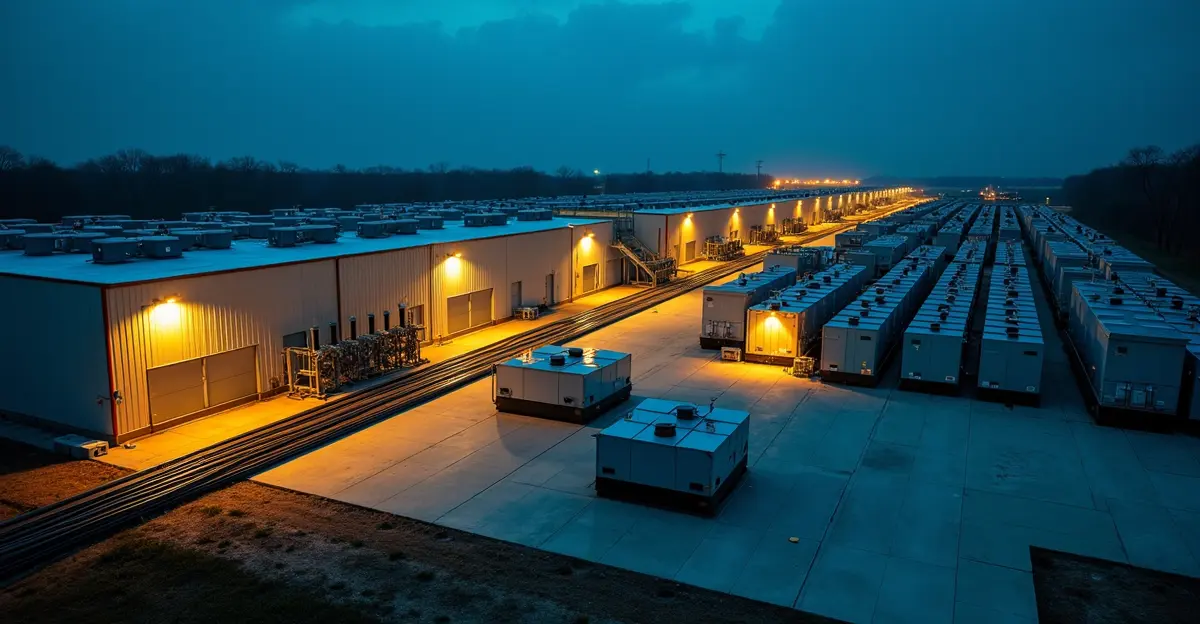
The AI-energy nexus represents the critical intersection between artificial intelligence infrastructure expansion and global energy systems, creating unprecedented challenges for power grids, climate commitments, and energy security. According to S&P Global's 2026 energy outlook, AI-driven datacenter expansion is creating unprecedented electricity demand, with global datacenter electricity use projected to rise 17% by 2026, creating immediate pressure on power grids and testing corporate sustainability commitments. This surge represents one of the most significant energy market disruptions in decades, forcing governments and corporations to reconsider fundamental energy security priorities in the age of artificial intelligence.
Global Electricity Demand: The 17% Surge
Global data center electricity consumption reached approximately 415 terawatt-hours (TWh) in 2024, accounting for about 1.5% of global electricity demand. However, the AI boom has accelerated growth dramatically, with projections showing a 17% increase by 2026. In the United States alone, data centers consumed 183 TWh in 2024—over 4% of national electricity consumption, roughly equivalent to Pakistan's annual electricity demand. By 2030, U.S. data center energy use is projected to reach 426 TWh, representing a 133% increase from 2024 levels. This exponential growth stems from hyperscale facilities optimized for AI workloads, where advanced chips require 2-4 times more energy than traditional counterparts.
The Infrastructure Bottleneck
Major tech companies are investing over $320 billion in data center infrastructure in 2025 alone, outpacing the entire US utility industry's investments. However, up to 11 GW of planned data center capacity for 2026 faces construction delays due to power limitations and grid equipment shortages. These bottlenecks reveal fundamental infrastructure constraints that threaten both AI expansion and renewable energy integration goals. The situation has become so critical that Europe's first microgrid-connected data center was activated in Dublin, Ireland in 2026, using an independent "islanded" system to bypass lengthy grid connection delays that have plagued data center development.
Regional Responses: Europe, US, and China
Europe's €584 Billion Grid Challenge
The European Union faces a monumental infrastructure challenge, requiring €584 billion in grid investments to modernize its extensive 11 million kilometer network. The European Commission's Grids Package, launched in December 2025, revises TEN-E regulations and accelerates permitting processes to address electricity consumption expected to increase by 60% by 2030. Key initiatives include the Energy Highways program targeting 8 strategic bottlenecks across Europe, with specific focus on Iberian Peninsula interconnections, Cyprus-Europe links, Baltic Sea integration, and hydrogen corridors from Portugal to Germany. These measures aim to balance AI competitiveness with the EU's ambitious decarbonization goals while maintaining grid stability.
US Power Grid Under Pressure
In the United States, data center energy capacity is projected to increase fivefold from 25 GW to 120 GW by 2030, with hyperscalers investing $7 trillion globally in infrastructure. The concentration of facilities creates particular strain, with one-third of America's over 4,000 data centers located in just three states: Virginia (643), Texas (395), and California (319). Virginia's situation is especially critical, with data centers consuming about 26% of the state's total electricity supply in 2023. This concentration creates strategic vulnerabilities and forces utilities to reconsider load management strategies while facing interconnection delays of 3-5 years for renewable energy projects.
China's Green Hydrogen Strategy
China has unveiled a strategic approach integrating data center development into its national energy plan, coordinating facilities with regions rich in renewable resources like Qinghai, Xinjiang, and Heilongjiang. The country is accelerating hydrogen energy development with ambitious goals for the 15th Five-Year Plan period (2026-30), aiming for regional self-sufficiency in renewable and clean low-carbon hydrogen. China cemented its global leadership position with total hydrogen production and consumption exceeding 36.5 million metric tons in 2024, making it the world's largest producer and consumer. Approximately 600 renewable hydrogen production projects are planned nationwide, with around 100 already operational, contributing an estimated capacity of 220,000 tons per year.
Corporate Sustainability Commitments Tested
The 2026 mandate for AI companies has shifted from 'scale at all costs' to 'responsible scale' that balances power demands with net-zero goals. Key challenges include grid constraints causing 3-5 year interconnection delays for renewables, evolving carbon accounting rules creating 'carbon debt' from embodied emissions, and federal regulatory standardization efforts. The Greenhouse Gas Protocol's 2026 guidance will determine clean energy procurement strategies, with companies needing to model scenarios across different emissions methodologies. According to industry analysis, competitive advantage now belongs to those integrating power, hardware, and climate strategy from day one, rather than treating sustainability as an afterthought.
Solutions and Innovations
Companies are implementing near-term load flexibility strategies, demonstrating 25% power reduction during peak demand periods. Long-term solutions involve clean, firm power investments like natural gas with carbon capture and storage (CCS), geothermal, and nuclear energy. The microgrid approach pioneered in Dublin represents Europe's entry into privately powered data center ecosystems, following similar trends in the U.S. where microgrids are more established to support AI boom demands. These innovations highlight the growing recognition that traditional grid infrastructure cannot keep pace with AI-driven energy demands without significant rethinking of energy delivery systems.
Geopolitical Implications and Strategic Vulnerabilities
The AI-energy nexus creates new geopolitical dimensions as major economies balance AI competitiveness with decarbonization goals. The emerging competition for clean energy resources has become a strategic priority, with concentrated datacenter locations creating vulnerabilities in energy supply chains. Regions with abundant renewable resources now hold strategic advantages in attracting AI infrastructure, while areas with grid constraints face economic disadvantages. This dynamic is reshaping global energy markets and forcing reconsideration of energy security frameworks developed during the fossil fuel era.
FAQ: AI-Energy Nexus Questions Answered
What is the AI-energy nexus?
The AI-energy nexus refers to the critical intersection between artificial intelligence infrastructure expansion and global energy systems, where AI-driven datacenter growth creates unprecedented electricity demand that strains power grids and tests climate commitments.
How much will datacenter electricity demand grow by 2026?
Global datacenter electricity use is projected to rise 17% by 2026 according to S&P Global's energy outlook, with U.S. data center energy capacity increasing fivefold from 25 GW to 120 GW by 2030.
What are Europe's grid investment needs?
The European Union requires €584 billion in grid investments to modernize its 11 million kilometer network, with electricity consumption expected to increase by 60% by 2030 due to AI and other digital infrastructure demands.
How is China addressing AI energy demands?
China is integrating data center development into its national energy plan, coordinating facilities with renewable-rich regions and accelerating green hydrogen deployment with over 600 renewable hydrogen projects planned nationwide.
Are corporate climate commitments at risk?
Yes, AI's significant environmental impact is testing corporate climate commitments, with companies needing to shift from 'scale at all costs' to 'responsible scale' that balances power demands with net-zero goals.
Future Outlook and Conclusion
The AI-energy nexus represents one of the most significant challenges of the digital age, requiring coordinated responses from governments, corporations, and energy providers. As data center electricity demand continues its dramatic growth—projected to reach 426 TWh in the U.S. by 2030—the pressure on global power markets will only intensify. Success will depend on innovative approaches to energy infrastructure, strategic planning that integrates AI development with renewable energy deployment, and new frameworks for measuring and managing the environmental impact of artificial intelligence. The companies and nations that successfully navigate this complex intersection will gain competitive advantages in both the AI revolution and the clean energy transition.

Follow Discussion