


 Deutsch
 English
 Español
 Français
 Nederlands
 Português


 Share
Share




The AI-Energy Nexus: How Data Center Power Demand is Reshaping Global Energy Markets and Geopolitics
The explosive growth of artificial intelligence and data centers is creating unprecedented electricity demand that's fundamentally transforming global energy markets, accelerating renewable energy deployment, and creating new geopolitical dependencies. According to recent IEA and Goldman Sachs reports, data center electricity consumption is growing four times faster than other sectors, with AI driving a projected 165% increase in power demand by 2030, creating urgent strategic implications for energy security and climate goals.
The Scale of the Challenge: Data Centers to Consume 3% of Global Electricity
Global data center electricity consumption is projected to reach 3% of worldwide electricity demand by 2030, with AI accounting for nearly half of this explosive growth. The International Energy Agency (IEA) projects that electricity generation for data centers will grow from 460 TWh in 2024 to over 1,000 TWh in 2030 and 1,300 TWh in 2035. Currently, data centers account for about 1% of global electricity generation, but this figure is set to triple within six years. Goldman Sachs Research forecasts that AI will drive a massive 165% increase in global data center power demand by 2030 compared to 2023 levels, equivalent to adding another Top 10 power-consuming country to the global grid.
This surge is driven by the development of large language models requiring intensive computing power and specialized high-density data centers. Currently, global data centers use about 55 gigawatts (GW) of power, with AI accounting for 14% of this. By 2027, power demand is projected to reach 84 GW, with AI's share growing to 27%. The digital infrastructure expansion is occurring at a pace that challenges traditional energy planning cycles.
Grid Infrastructure Investment: $720 Billion Needed by 2030
The massive power demand from data centers is forcing rapid grid infrastructure investment, with an estimated $720 billion needed globally by 2030 to accommodate this growth. According to S&P Global research, data center grid-power demand is projected to increase by 22% in 2025 and nearly triple by 2030. This significant growth reflects the expanding digital infrastructure needs driven by artificial intelligence, cloud computing, and increasing data processing requirements.
The rapid expansion poses challenges for electricity grids and energy providers who must accommodate this substantial power demand increase while maintaining grid stability and reliability. Europe alone needs €584 billion in grid investments by 2030, while the US faces challenges supporting AI-driven expansion. The convergence of AI demand, aging infrastructure, geopolitical shifts, and climate risks is redefining energy transition conditions, with adaptation costs projected to reach $885 billion annually for large companies in the 2030s.
Current Energy Mix for Data Centers
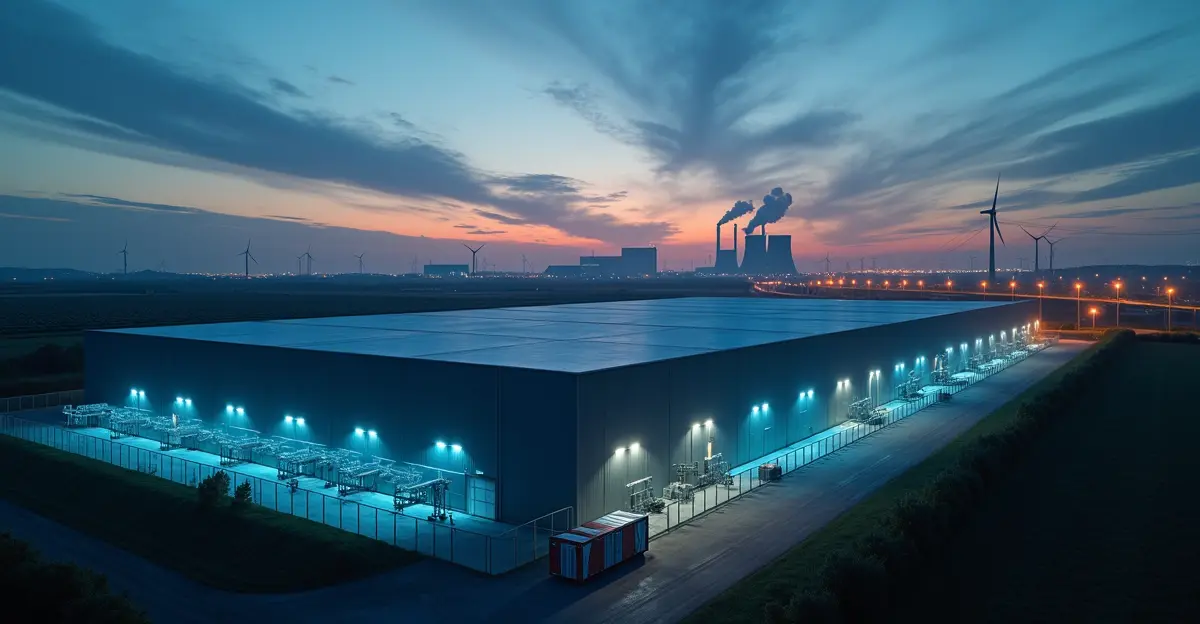
Currently, coal supplies about 30% of data center electricity globally, followed by renewables (27%), natural gas (26%), and nuclear (15%). However, renewables are the fastest-growing source, meeting nearly 50% of additional demand growth by 2030, primarily through wind and solar PV. The US and China dominate the data center market, with the US relying heavily on natural gas (40%) and China on coal (70%). By 2035, low-emissions sources are expected to supply over half of US data center electricity and nearly 60% in China.
The Semiconductor-Energy Nexus: TSMC's Strategic Vulnerability
Taiwan Semiconductor Manufacturing Company (TSMC), producing 60-70% of global chips, is projected to consume 12.5% of Taiwan's total electricity by 2025, creating both vulnerabilities and strategic leverage in the global semiconductor supply chain. Advanced chip production using extreme ultraviolet lithography (EUV) machines consumes enormous electricity - about one megawatt per machine, equivalent to a Spanish household's four-month consumption.
TSMC consumed over 21 billion kWh in 2022, representing 7.5% of Taiwan's total electricity generation. With the transition to advanced 2nm/1nm manufacturing processes requiring more energy, the company's consumption continues to rise dramatically. Taiwan is preparing to increase electricity prices for industrial users, with mega-consumers like TSMC potentially facing over 20% rate hikes. Each 1 TWD electricity rate increase would cost TSMC approximately 21 billion TWD (668 million USD) annually.
The company has accelerated its 100% renewable energy commitment by a decade, moving its target from 2050 to 2040 after intense pressure from environmental groups and key customers like Apple. TSMC currently uses 9.7% renewable energy in Taiwan (10.4% worldwide) and aims for 60% renewable adoption by 2030. This semiconductor manufacturing energy crisis highlights the tension between technological advancement and environmental sustainability.
Geopolitical Implications: Competition for Clean Energy and Manufacturing
The AI-energy nexus is creating new geopolitical dependencies as nations compete for clean energy resources and semiconductor manufacturing capabilities. According to the World Economic Forum, the energy transition is now driven by industrial policy rather than traditional energy policy, with governments using local-content rules, tax credits, and subsidies to achieve economic goals. China leads clean energy manufacturing, spending nearly as much as the US and EU combined.
Resilience has become crucial due to geopolitical tensions, with Europe phasing out Russian fuels and the US diversifying critical mineral supplies. The AI revolution is making power access the primary factor in data center site selection, creating new strategic considerations for nations seeking to attract digital infrastructure investment. The global energy competition is intensifying as countries recognize that computing power and energy security are increasingly intertwined.
Key Geopolitical Developments
- China's policy shift from fixed pricing to competitive bidding is causing the first projected year-on-year decline in global solar additions, falling from 300 GW in 2025 to 200 GW in 2026
- Europe needs €584 billion in grid investments by 2030 to support electrification and AI growth
- 38% of companies with datacenter operations lack net zero commitments, creating a gap between digital expansion and climate goals
- Global energy investment reached $3.3 trillion in 2025, with $2.2 trillion flowing into clean energy technologies
Strategic Responses from Major Economies
Major economies are developing strategic responses to secure both computing power and energy supply chains. The US has implemented the CHIPS and Science Act, providing $52 billion for domestic semiconductor manufacturing, while the EU has committed €49 billion through the European Chips Act. These investments recognize that semiconductor manufacturing is not just a technological challenge but an energy infrastructure challenge.
Power purchase agreements (PPAs) are evolving to meet the needs of data centers, with hyperscalers increasingly backing small modular reactors (SMRs) as a potential solution for reliable, low-carbon power. After 2030, SMRs will become increasingly important, with major technology companies investing in nuclear energy research and development. The energy security strategies of nations are being reshaped by the recognition that digital sovereignty requires energy sovereignty.
Impact on Climate Goals and Sustainability
The massive energy demand from AI and data centers presents both challenges and opportunities for climate goals. While the growth in electricity consumption could strain decarbonization efforts, it's also accelerating renewable energy deployment. Renewables are meeting nearly 50% of additional data center demand growth by 2030, creating new markets for clean energy developers.
However, natural gas and coal together will meet over 40% of new demand until 2030, highlighting the tension between rapid digital expansion and climate commitments. The industry's heavy reliance on fossil fuels (over 80% in Taiwan and South Korea) conflicts with climate goals, creating pressure for accelerated transition to clean energy sources.
FAQ: Understanding the AI-Energy Nexus
What percentage of global electricity do data centers currently consume?
Data centers currently account for about 1% of global electricity generation, but this is projected to reach 3% by 2030 according to IEA estimates.
How much will AI increase data center power demand by 2030?
Goldman Sachs Research forecasts that AI will drive a 165% increase in global data center power demand by 2030 compared to 2023 levels.
What percentage of Taiwan's electricity will TSMC consume by 2025?
TSMC is projected to consume 12.5% of Taiwan's total electricity by 2025 as it expands advanced semiconductor manufacturing.
How much grid investment is needed globally by 2030?
An estimated $720 billion in grid infrastructure investment is needed globally by 2030 to accommodate data center power demand growth.
What are the main energy sources for data centers currently?
Currently, coal supplies about 30% of data center electricity globally, followed by renewables (27%), natural gas (26%), and nuclear (15%).
Future Outlook and Conclusion
The AI-energy nexus represents one of the most significant transformations in global energy markets since the industrial revolution. As data center power demand continues to surge, nations and corporations must navigate complex trade-offs between technological advancement, energy security, and climate commitments. The convergence of digital expansion and energy transition is creating new geopolitical realities where computing power and clean energy resources become strategic assets.
The coming years will see increased competition for both semiconductor manufacturing capabilities and renewable energy resources, with nations that can provide reliable, affordable, and clean power gaining strategic advantages in the digital economy. The energy transition challenges posed by AI growth require coordinated policy responses, massive infrastructure investment, and innovative technological solutions to ensure that digital expansion supports rather than undermines climate goals.

Follow Discussion