


 Deutsch
 English
 Español
 Français
 Nederlands
 Português


 Share
Share




The Geopolitical Calculus of TSMC's Green Energy Dilemma
Taiwan Semiconductor Manufacturing Company (TSMC), the world's leading semiconductor foundry producing over half of the world's advanced chips, faces a critical strategic dilemma that extends far beyond manufacturing floors. As TSMC scales its 2nm and 1.4nm process technologies to maintain global semiconductor leadership, its massive energy demands are creating unprecedented challenges for Taiwan's energy sovereignty amid rising geopolitical tensions with China. This intersection of industrial competitiveness and national security represents one of the most complex strategic calculations in modern technology geopolitics.
What is TSMC's Energy Dilemma?
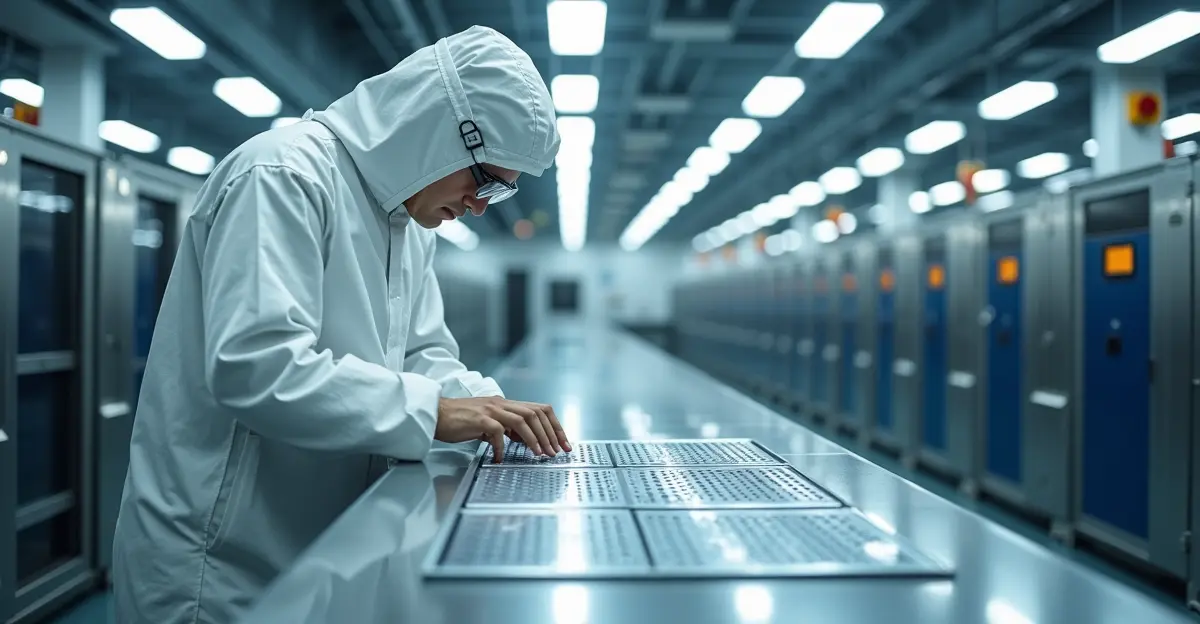
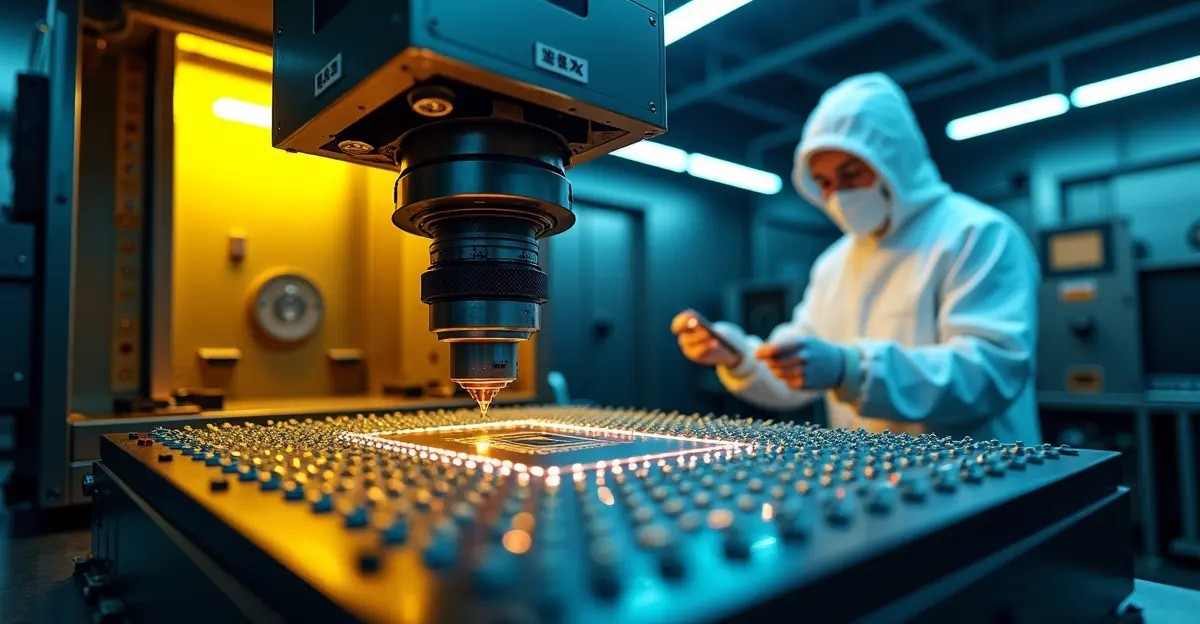
TSMC's energy consumption has grown exponentially alongside its technological advancements. The company's advanced semiconductor manufacturing processes require immense amounts of electricity for ultra-pure water production, clean room operations, and the complex lithography processes that define cutting-edge chips. As TSMC moves toward 2nm and 1.4nm nodes, energy requirements per wafer are projected to increase by 30-50% compared to current 3nm processes. This comes at a time when Taiwan's renewable energy capacity stands at just 16.8% of national electricity generation as of 2024, with a target of 20% by 2025 that appears increasingly challenging to meet.
Taiwan's Renewable Energy Constraints
Taiwan's energy infrastructure faces multiple constraints that complicate TSMC's expansion plans. The island's geography limits large-scale renewable projects, while its grid stability has been questioned following several major outages in recent years. According to Taiwan's Renewable Energy Development Act, the government aims to install 20 GW of solar capacity and 5.7 GW of offshore wind power by 2025. However, achieving these targets requires overcoming significant infrastructure development challenges and regulatory hurdles.
The Taiwanese government's "nuclear-free homeland" policy, which aims to phase out nuclear power by 2025, adds further complexity. This creates a gap that must be filled by renewable sources and imported liquefied natural gas (LNG), making Taiwan's energy supply more vulnerable to external disruptions and price volatility.
Projected Energy Consumption Growth
Industry analysts project that TSMC's energy consumption could increase by 40-60% over the next five years as it ramps up advanced manufacturing. The company's Arizona fab expansion, supported by the US CHIPS and Science Act, represents a $65 billion investment that will further strain Taiwan's energy planning. Each advanced fab requires approximately 100-150 megawatts of continuous power, equivalent to the electricity needs of a medium-sized city.
Energy as a New Front in Strategic Competition
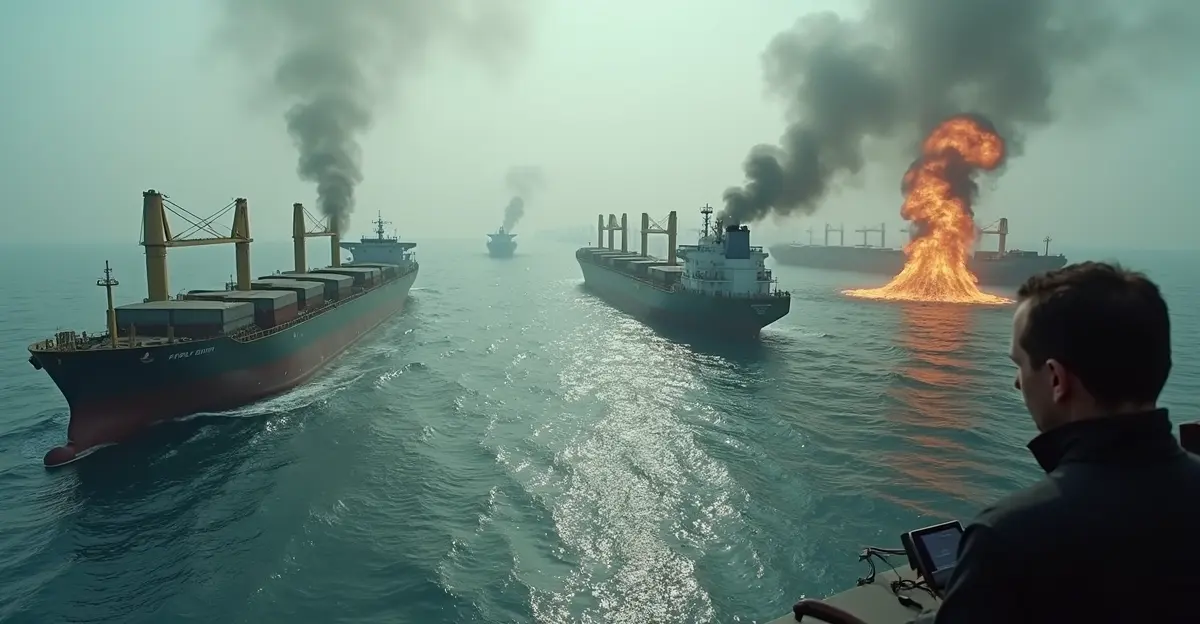
The energy infrastructure supporting TSMC's operations has become a new front in the US-China-Taiwan strategic competition. China's increasing military pressure on Taiwan creates vulnerability for the semiconductor supply chain that powers global technology. The United States has responded with the CHIPS Act, encouraging TSMC to diversify production outside Taiwan while simultaneously seeking to protect Taiwan's semiconductor capabilities.
This creates a paradoxical situation: while the US wants to reduce dependency on Taiwanese semiconductors for security reasons, it also needs to ensure Taiwan's energy security to maintain TSMC's production continuity. The US-China technology competition has thus transformed energy infrastructure into a strategic asset with implications for national security and global economic stability.
Grid Stability and Security Concerns
Taiwan's grid faces dual challenges: meeting TSMC's growing demands while maintaining resilience against potential disruptions. Cybersecurity threats targeting energy infrastructure have increased alongside geopolitical tensions. A successful attack on Taiwan's power grid could cripple TSMC's operations, disrupting global semiconductor supplies for industries ranging from automotive to consumer electronics.
Implications for Global Semiconductor Supply Chains
The concentration of advanced semiconductor manufacturing in Taiwan creates significant supply chain vulnerabilities. TSMC produces over 90% of the world's advanced AI chips, making global technology ecosystems heavily dependent on Taiwan's energy stability. Any disruption to TSMC's operations would have cascading effects across multiple industries, potentially causing economic losses measured in hundreds of billions of dollars.
This dependency has prompted countries worldwide to reassess their semiconductor strategies. The European Union, Japan, and South Korea are all investing in domestic semiconductor capabilities, partly in response to the risks associated with Taiwan's geopolitical situation. However, replicating TSMC's advanced manufacturing capabilities requires not just technological expertise but also reliable, affordable energy supplies.
Balancing Industrial Competitiveness with Energy Security
Taiwan faces a fundamental trade-off between maintaining TSMC's global leadership and ensuring energy sovereignty. Several potential solutions are being explored:
- Accelerated Renewable Deployment: Taiwan could fast-track offshore wind and solar projects, though this faces environmental and regulatory hurdles
- Energy Storage Solutions: Grid-scale energy storage, including pumped hydro and battery systems, could enhance grid stability
- International Energy Partnerships: Collaborations with energy-rich nations could secure LNG and renewable energy imports
- Technological Innovation: TSMC could invest in more energy-efficient manufacturing processes
The Taiwanese government's approach will need to balance multiple priorities: maintaining economic growth through semiconductor exports, ensuring energy security amid geopolitical tensions, and meeting environmental commitments under international climate agreements.
Expert Perspectives on the Dilemma
Industry analysts emphasize the unprecedented nature of this challenge. "TSMC's energy demands represent both Taiwan's greatest economic asset and its most significant vulnerability," notes a senior technology analyst. "The company's success has made Taiwan indispensable to the global economy, but this dependence creates strategic risks that extend far beyond economics."
Energy experts point to the need for integrated planning. "Taiwan cannot solve this challenge through energy policy alone," explains an energy security specialist. "It requires coordination between industrial policy, national security planning, and international diplomacy. The geopolitical implications of energy infrastructure have never been more apparent."
FAQ: TSMC's Energy Dilemma Explained
Why does TSMC need so much energy?
Advanced semiconductor manufacturing requires immense energy for clean room operations, ultra-pure water production, and complex lithography processes. As chip nodes shrink to 2nm and below, energy requirements increase exponentially.
Can Taiwan meet TSMC's future energy demands?
Taiwan faces significant challenges meeting projected demands. Current renewable capacity is 16.8% with a 20% target by 2025, but TSMC's growth may require faster renewable deployment and grid enhancements.
How does this affect global semiconductor supplies?
TSMC produces over 90% of advanced AI chips. Any disruption to its operations due to energy issues would impact global technology supply chains across multiple industries.
What are the geopolitical implications?
Energy infrastructure has become a strategic asset in US-China-Taiwan relations. Ensuring TSMC's energy security is now intertwined with broader national security considerations.
What solutions are being considered?
Options include accelerated renewable deployment, energy storage systems, international energy partnerships, and technological innovations in manufacturing efficiency.
Future Outlook and Strategic Implications
The resolution of TSMC's energy dilemma will shape not only Taiwan's economic future but also global technology leadership. As the semiconductor industry evolves, energy considerations will become increasingly central to strategic planning. Taiwan's ability to balance industrial competitiveness with energy sovereignty will test its diplomatic and technological capabilities in an increasingly contested geopolitical environment.
The coming years will likely see increased international involvement in Taiwan's energy planning, with implications for regional security architectures. How Taiwan navigates this complex landscape will have lasting consequences for global technology ecosystems and international relations in the Asia-Pacific region.



Follow Discussion