


 Deutsch
 English
 Español
 Français
 Nederlands
 Português


 Share
Share




The 2026 Energy Innovation Race: How Geopolitical Competition is Reshaping Clean Tech Development
The global energy transition has fundamentally transformed from climate-focused cooperation to a strategic competition arena, with major economies leveraging industrial policy, R&D investment, and supply chain control to secure technological advantages in clean energy. According to the International Energy Agency's 2026 State of Energy Innovation report, energy-related patents are growing rapidly while over 320 new energy startups secured first funding in 2025, signaling an acceleration of this strategic competition. The World Economic Forum analysis reveals clean energy investment reached a record $2.2 trillion in 2025, indicating that energy innovation is increasingly tied to national security and economic resilience rather than purely environmental goals.
What is the Energy Innovation Race?
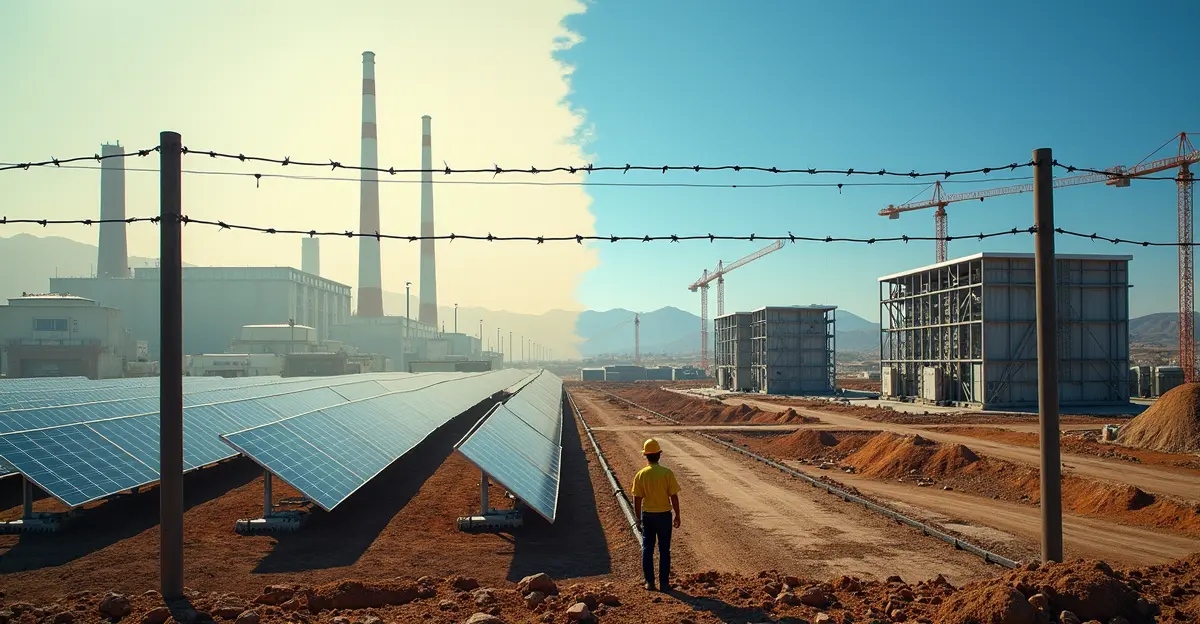
The energy innovation race refers to the global competition among nations to develop, manufacture, and deploy advanced clean energy technologies. This competition has evolved from moral positioning about climate change to a strategic battle for economic advantage, technological leadership, and energy security. The shift represents a fundamental rethinking of energy policy, where countries now view clean technology dominance as critical to their economic future and geopolitical influence. The global energy transition has become a central arena for international competition, with nations investing unprecedented resources to secure their positions in the emerging clean energy economy.
From Climate Cooperation to Strategic Competition
The transformation from collaborative climate action to competitive industrial policy marks one of the most significant shifts in global energy dynamics. Where once nations cooperated under frameworks like the Paris Agreement, they now compete through subsidies, tariffs, and strategic investments. The IEA's 2026 report reveals that energy innovation is increasingly driven by competitiveness and security concerns, with many 2025 policies focusing on technological strength for economic and energy security. This shift reflects a broader trend where energy policy has become inseparable from industrial strategy and national security considerations.
China's Manufacturing Dominance
China continues to dominate global clean technology manufacturing, controlling over 70% of manufacturing capacity in most clean-tech segments except hydrogen electrolyzers. According to BloombergNEF's Energy Transition Supply Chains 2025 report, China attracted 76% of global factory investment in 2024 despite Western efforts to promote onshoring. The country's clean energy technology exports exceeded USD 165 billion in 2025, representing about 15% of its total trade surplus. This manufacturing supremacy has positioned China as the central player in the global clean energy supply chain, creating both opportunities and vulnerabilities for other nations. The China clean energy manufacturing dominance has fundamentally reshaped global trade patterns and investment flows.
Europe's Net-Zero Industry Act
The European Union has responded to this competitive landscape with its Net-Zero Industry Act, adopted in March 2024 and now being implemented across member states. This legislation establishes a framework to accelerate the EU's transition to climate neutrality by 2050 while boosting domestic production capacity for strategic net-zero technologies. The Act sets a target for the EU to manufacture at least 40% of its annual deployment needs for key technologies like solar panels, wind turbines, heat pumps, batteries, and carbon capture systems by 2030. European policymakers have recognized that energy security now depends on technological sovereignty and industrial resilience in clean energy sectors.
India's Domestic Production Goals
India is pursuing ambitious domestic production goals through its Production Linked Incentive (PLI) scheme and other industrial policies. The country has reached its target of 50% installed electricity capacity from non-fossil fuel sources five years early in 2025, becoming the fourth largest renewable market globally. India's Budget 2026 places manufacturing at the core of economic strategy, aiming to increase manufacturing's GDP contribution from 16-17% to 25%. Key allocations include ₹1,000 crore for India Semiconductor Mission 2.0 and a threefold increase to ₹1,004 crore for PLI schemes in white goods, demonstrating the country's commitment to building domestic clean energy manufacturing capacity.
The Investment Landscape: Record Funding and Strategic Shifts
Clean energy investment reached record levels in 2025, with $2.2 trillion of the $3.3 trillion total energy investment flowing into clean technologies. This represents a significant shift in capital allocation, with the ratio of fossil fuel vs. non-fossil fuel investments changing from 1:1 to 1:4 over the past decade in key markets like India. The IEA's 2026 State of Energy Innovation report tracks progress toward 18 key technology milestones (Races to First) related to energy security, sustainability, and economic benefits achievable by 2030. This investment surge reflects growing recognition that clean energy technologies represent not just environmental solutions but critical economic opportunities and strategic assets.
Venture Capital and Startup Ecosystem
The energy startup ecosystem has experienced explosive growth, with over 320 new energy startups securing their first funding in 2025 alone. This venture capital activity spans diverse sectors including advanced battery technologies, grid modernization solutions, renewable energy integration platforms, and next-generation nuclear technologies. The energy startup funding boom reflects both the commercial potential of clean energy innovations and the strategic importance governments place on nurturing domestic technology ecosystems. Many of these startups are developing technologies that could fundamentally reshape energy systems and create new industrial champions.
National Security and Economic Resilience Implications
The energy innovation race has profound implications for national security and economic resilience. Countries now recognize that dependence on foreign clean energy technologies creates strategic vulnerabilities similar to traditional energy import dependencies. The World Economic Forum's analysis identifies resilience as a key theme for 2026, focusing on securing energy infrastructure against geopolitical risks, supply chain shocks, and cyber threats while ensuring economic stability. This security dimension has elevated energy innovation from an environmental priority to a core national security concern, driving increased government intervention and strategic planning.
Supply Chain Diversification Efforts
Major economies are actively pursuing supply chain diversification to reduce dependence on single sources, particularly China. The US and EU combined share of global manufacturing investment increased to around 30% in 2025 from 15% in 2023, indicating modest but meaningful supply chain diversification. However, China maintains a dominant position in international trade, with clean energy technology exports representing 50% of the global total excluding intra-EU trade. These diversification efforts reflect growing concerns about supply chain resilience and the strategic risks of concentrated manufacturing capacity.
Expert Perspectives on the Competitive Landscape
Energy analysts and policymakers increasingly view the clean energy transition through a competitive lens. 'The energy transition has shifted from climate-focused rhetoric to prioritizing energy security, affordability, and industrial policy,' notes the World Economic Forum's 2026 analysis. 'Strategic competition is intensifying, with nations recognizing that clean technology leadership translates directly into economic advantage and geopolitical influence.' This perspective marks a departure from earlier approaches that emphasized global cooperation and shared climate goals, reflecting the reality that nations now compete as much as they cooperate in the energy transition.
Future Outlook: Technology Milestones and Competitive Dynamics
The IEA's 2026 report identifies 18 key technology milestones (Races to First) that will shape the competitive landscape through 2030. These milestones span critical areas including advanced battery chemistries, next-generation solar technologies, green hydrogen production, carbon capture systems, and grid modernization solutions. The race to achieve these milestones first will determine which nations capture the economic benefits of clean energy innovation and establish technological leadership in key sectors. The clean energy technology milestones represent both technical challenges and strategic opportunities for competing nations.
Frequently Asked Questions
What is driving the shift from climate cooperation to energy competition?
The shift is driven by recognition that clean energy technologies represent massive economic opportunities, strategic assets, and sources of geopolitical influence. Nations now view technological leadership in clean energy as critical to their economic future and national security.
How dominant is China in clean energy manufacturing?
China controls over 70% of manufacturing capacity in most clean-tech segments except hydrogen electrolyzers, attracts 76% of global factory investment, and accounts for 50% of global clean energy technology exports excluding intra-EU trade.
What is Europe's Net-Zero Industry Act?
The EU's Net-Zero Industry Act, adopted in March 2024, aims to boost domestic manufacturing of clean technologies, with a target of producing 40% of the EU's annual deployment needs for key technologies by 2030 through streamlined permitting and investment support.
How is India approaching clean energy manufacturing?
India is using Production Linked Incentive schemes and budget allocations to boost domestic manufacturing, aiming to increase manufacturing's GDP contribution to 25% while achieving 50% non-fossil electricity capacity five years early in 2025.
What are the key investment trends in clean energy?
Clean energy investment reached $2.2 trillion in 2025, with over 320 new energy startups securing first funding. Investment is shifting from fossil fuels to clean technologies at a 1:4 ratio in key markets, reflecting changing economic priorities.
Conclusion: The New Energy Geopolitics
The 2026 energy innovation race represents a fundamental transformation in how nations approach energy transition. What began as a collective response to climate change has evolved into a strategic competition for technological leadership, economic advantage, and energy security. As countries invest record amounts in clean energy technologies and pursue aggressive industrial policies, the energy transition has become a central arena for geopolitical competition. The winners of this race will not only contribute to climate solutions but will also secure economic prosperity and strategic influence in the emerging clean energy economy. The energy geopolitics of the 21st century will be defined by competition in clean technology innovation and manufacturing.





Follow Discussion