
 Deutsch
 English
 Español
 Français
 Nederlands
 Português







The AI-Energy Nexus: How Geopolitical Competition is Reshaping Global Power Infrastructure
The explosive growth of artificial intelligence computing demand is forcing a fundamental restructuring of global energy infrastructure, creating new geopolitical dependencies and strategic vulnerabilities that are reshaping international power dynamics. Recent data shows AI-driven data center electricity consumption is projected to double by 2030, reaching 3% of global demand, while major tech companies are making unprecedented energy deals and governments are developing strategic responses to this emerging energy-geopolitical challenge. This convergence of technology, energy, and geopolitics represents one of the most significant structural shifts in global economics since the dawn of the digital age.
What is the AI-Energy Nexus?
The AI-energy nexus refers to the complex interdependence between artificial intelligence infrastructure and global energy systems. As AI models grow exponentially in size and complexity, their computational requirements have skyrocketed, creating unprecedented demands on electricity grids, water resources, and cooling infrastructure. According to the International Energy Agency, global data center electricity consumption reached approximately 415 terawatt hours (TWh) in 2024, representing about 1.5% of global electricity demand, with projections indicating this could double by 2030 primarily driven by AI expansion.
The Energy Consumption Reality of AI Infrastructure
The environmental impact of artificial intelligence includes substantial electricity consumption for training and the usage of deep learning models, as well as the related carbon footprint and water usage impact. Researchers have estimated that a ChatGPT query consumes about five times more electricity than a simple web search, while other studies suggest requests made via ChatGPT use 10 times as much electricity as a Google Search. The computation required to train the most advanced AI models doubles every 3.4 months on average, leading to exponential power usage and resulting carbon footprint.
Data Center Energy Demands
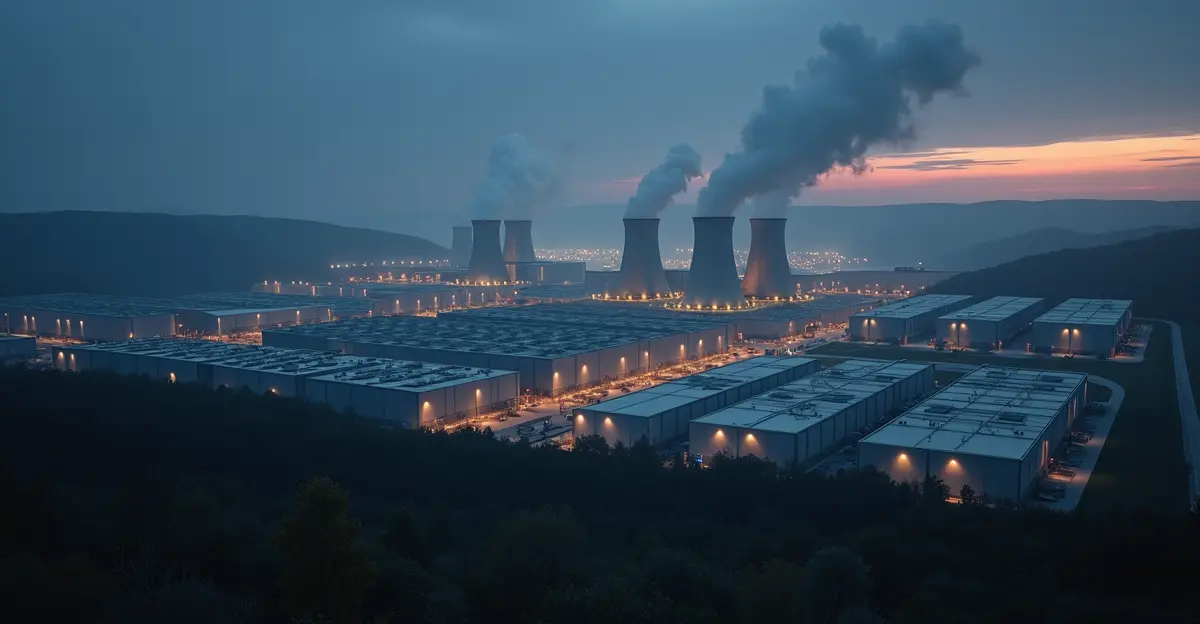
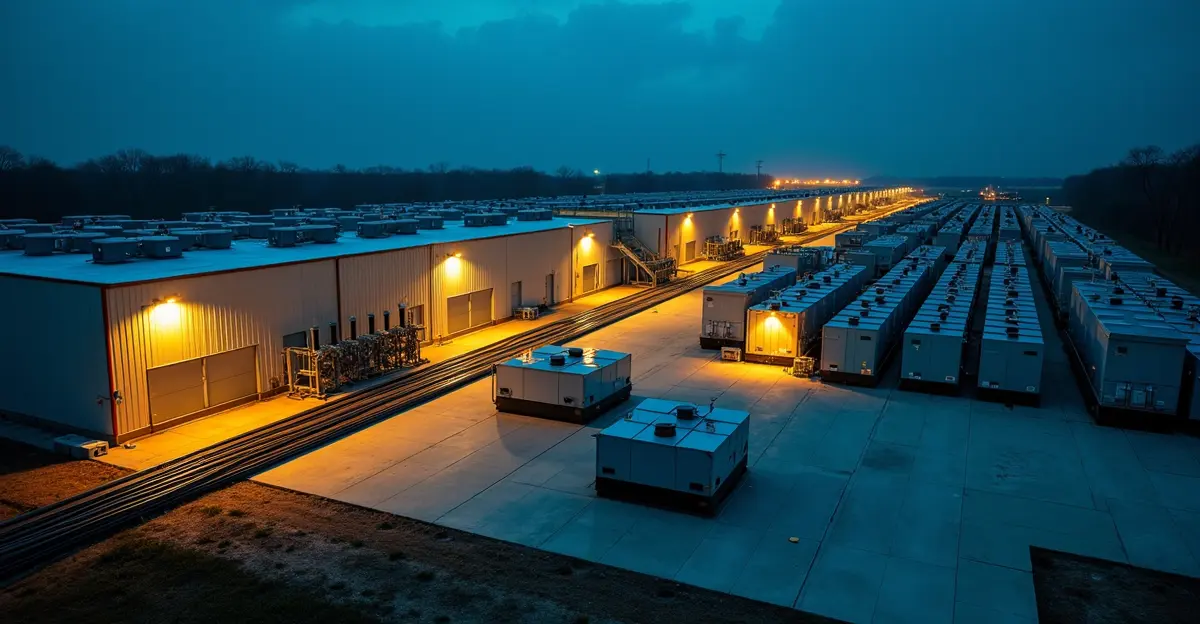
Hyperscale data centers owned by very large cloud service companies account for approximately 74% of U.S. server energy consumption as of 2023, a share that has grown significantly over the past decade as workloads have migrated away from enterprise on-premises infrastructure. These facilities operate at an industrial scale, requiring significant energy for both computation and cooling systems. The rapid growth of data center infrastructure has prompted regulatory debates in multiple jurisdictions regarding tax incentives, electricity grid impacts, water consumption, and compatibility with state and national climate commitments.
Geopolitical Implications of Energy Competition
The scramble for clean energy to power AI operations is intersecting with national security priorities, creating new strategic vulnerabilities and dependencies. Major technology companies including Microsoft, Google, Amazon, and Meta are making unprecedented long-term power purchase agreements (PPAs) for renewable energy, effectively cornering markets in key regions. This competition for energy resources between AI infrastructure and traditional industrial needs is creating tensions in electricity markets worldwide, particularly in regions with limited grid capacity.
The semiconductor supply chain geopolitics has become intrinsically linked to energy security, as advanced chip manufacturing requires massive amounts of reliable electricity and water. Taiwan's semiconductor industry, which produces over half the world's advanced chips, faces particular challenges given its strategic position in the US-China technology competition. The concentration of data centers in specific geographic regions creates strategic vulnerabilities, as nations become dependent on foreign-controlled AI infrastructure located within their borders.
Regional Concentration and Strategic Vulnerabilities
Data center clusters have emerged in specific regions with favorable conditions including cool climates, reliable electricity grids, and supportive regulatory environments. Northern Virginia has become the world's largest data center market, while regions like Ireland, the Netherlands, and Singapore have developed significant concentrations. This geographic concentration creates strategic vulnerabilities, as disruptions to these regions could impact global AI services and digital infrastructure.
National Security and Strategic Responses
Governments worldwide are developing strategic responses to the AI-energy challenge, recognizing that control over AI infrastructure has become a matter of national security. The United States has implemented policies through the CHIPS and Science Act to bolster domestic semiconductor manufacturing while ensuring energy security for these facilities. European nations are developing comprehensive strategies that balance AI innovation with energy sustainability and strategic autonomy.
The EU Green Deal faces particular challenges in reconciling ambitious climate targets with the energy demands of AI infrastructure. Nations are increasingly viewing AI compute capacity as a strategic resource similar to traditional energy reserves, leading to new forms of industrial policy and international competition. This shift represents a fundamental rethinking of how nations approach technological sovereignty in the 21st century.
Corporate Strategies and Energy Procurement
Major technology companies are pursuing aggressive energy procurement strategies that are reshaping global energy markets. Microsoft, Google, and Amazon have committed to becoming carbon negative or carbon neutral, driving massive investments in renewable energy projects worldwide. These companies are increasingly bypassing traditional utility models through direct investments in generation capacity, creating new dynamics in energy markets.
The Clean Energy Race
The competition for clean energy resources has intensified as tech giants seek to power their AI operations with renewable sources. This has led to innovative approaches including investments in nuclear power, advanced geothermal systems, and next-generation battery storage technologies. The renewable energy transition is being accelerated by AI energy demands, but also faces challenges from competing industrial needs and residential electricity requirements.
Future Outlook and Strategic Implications
The AI-energy nexus will continue to evolve as technological advancements and geopolitical dynamics interact in complex ways. Several key trends are emerging that will shape the future landscape:
- Energy Efficiency Innovations: Continued improvements in chip design, cooling technologies, and software optimization will help mitigate energy demands, but may be offset by increasing AI adoption.
- Geographic Diversification: Companies and governments will seek to distribute AI infrastructure across multiple regions to reduce strategic vulnerabilities and access diverse energy sources.
- Policy Convergence: Climate policy, energy security, and technology strategy will increasingly converge in government approaches to the AI-energy challenge.
- New Energy Technologies: Advanced nuclear, geothermal, and fusion technologies may emerge as critical solutions for powering AI infrastructure sustainably.
The strategic implications of the AI-energy nexus extend beyond traditional energy security concerns to encompass technological sovereignty, economic competitiveness, and national security in the digital age. Nations that successfully navigate this complex landscape will gain significant advantages in the emerging global order.
Frequently Asked Questions
How much electricity does AI really consume?
AI electricity consumption varies significantly by application. Simple classification tasks consume 0.002 to 0.007 Wh per prompt, while image generation averages 2.91 Wh per image. The median Google Gemini text prompt consumes about 0.24 Wh of electricity. At a system level, global data center electricity consumption reached 415 TWh in 2024, with AI driving projections to double by 2030.
Why is AI energy consumption a geopolitical issue?
AI energy consumption has become geopolitical because it creates dependencies on foreign-controlled infrastructure, competes with traditional industrial and residential energy needs, and requires strategic resources like water and rare earth minerals. Control over AI compute capacity is increasingly viewed as a matter of national security and economic competitiveness.
How are tech companies addressing their energy demands?
Major technology companies are pursuing multiple strategies including massive investments in renewable energy projects, long-term power purchase agreements, development of next-generation nuclear and geothermal technologies, improvements in energy efficiency through chip design and software optimization, and geographic diversification of data center locations.
What regions are most affected by AI energy demands?
Regions with significant data center concentrations including Northern Virginia, Ireland, the Netherlands, Singapore, and certain areas of the American West are experiencing the most immediate impacts. However, the effects are global as energy markets interconnect and companies seek resources worldwide.
How will AI energy demands affect climate goals?
AI energy demands present both challenges and opportunities for climate goals. While increasing electricity consumption could strain decarbonization efforts, the massive investments in renewable energy by tech companies are accelerating the clean energy transition. The net effect depends on policy frameworks, technological innovation, and the pace of AI adoption.
Sources
Information for this article was drawn from Wikipedia: Environmental impact of artificial intelligence, Wikipedia: Data center, Wikipedia: Geopolitics, and Wikipedia: Semiconductor industry in Taiwan. Additional context comes from International Energy Agency projections and industry analysis of technology company energy strategies.
Follow Discussion