


 Deutsch
 English
 Español
 Français
 Nederlands
 Português


 Share
Share




The Geopolitical Reshaping of Semiconductor Supply Chains: From Efficiency to Resilience
The global semiconductor industry is undergoing its most profound transformation in decades, shifting from 'just-in-time' efficiency models to 'just-in-case' resilience frameworks driven by escalating geopolitical tensions between the United States and China. Recent industry surveys reveal that tariffs and trade policy have surpassed talent risk as the top concern for semiconductor executives, while KPMG's latest Global Semiconductor Outlook shows near-record confidence levels driven by AI demand but tempered by mounting geopolitical risks. This strategic realignment represents a fundamental rethinking of how nations secure access to the critical technology infrastructure that powers everything from smartphones to artificial intelligence systems.
What is Semiconductor Supply Chain Resilience?
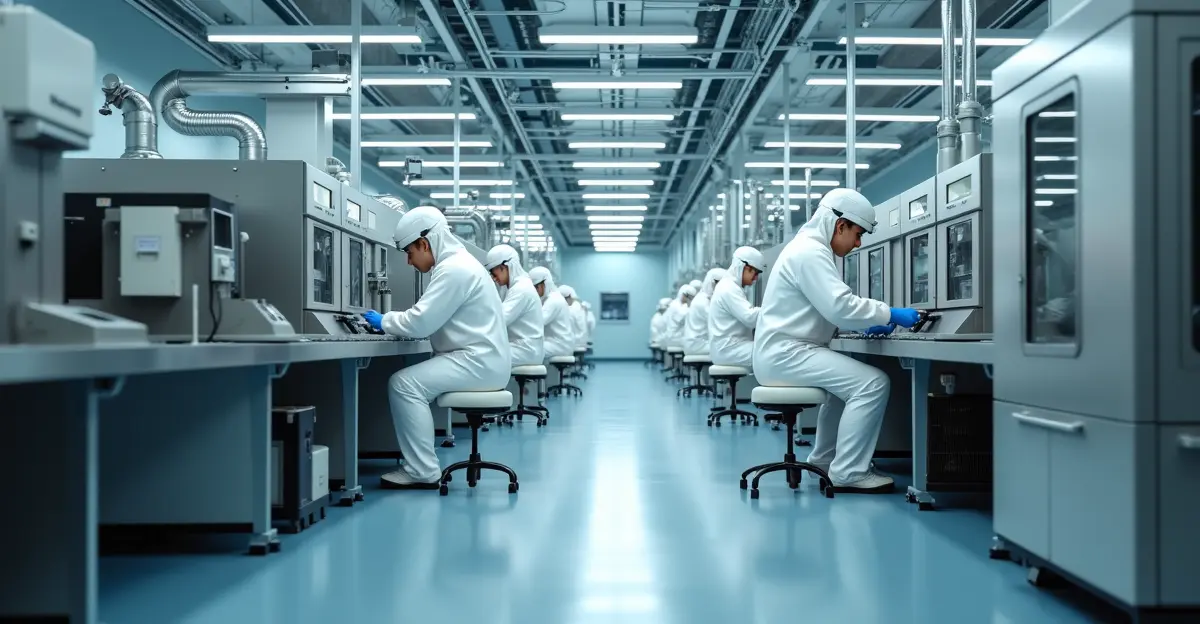
Semiconductor supply chain resilience refers to the strategic capacity of nations and companies to maintain access to advanced chip manufacturing capabilities despite geopolitical disruptions, trade restrictions, or other external shocks. Unlike traditional efficiency-focused models that concentrated production in cost-optimal locations like Taiwan and South Korea, resilience frameworks prioritize geographic diversification, domestic manufacturing capacity, and strategic alliances among trusted partners. This shift represents a fundamental rethinking of how nations secure access to the critical technology infrastructure that powers everything from smartphones to artificial intelligence systems.
The Geopolitical Drivers of Supply Chain Transformation
The semiconductor industry's transformation is primarily driven by escalating US-China tensions that have turned advanced chips from commercial goods into strategic assets. According to a Congressional Research Service report, US export controls on advanced semiconductors to China aim to maintain American technological leadership and prevent military applications. These restrictions, expanded in October 2022, now affect major Chinese tech companies like Huawei and SMIC while impacting global supply chains.
Export Controls and Technological Decoupling
The Netherlands' expanded export restrictions on advanced semiconductor manufacturing equipment, including ASML's TWINSCAN NXT:1970i and 1980i DUV immersion lithography systems, represent a critical development in the technological decoupling. Dutch Foreign Trade Minister Reinette Klever cited national security concerns due to technological advances and geopolitical context. These measures, effective April 1, 2025, target specific measuring and inspection equipment that could enable countries to produce advanced semiconductors for military applications.
The CHIPS Act and Domestic Manufacturing Renaissance
The US CHIPS Act of 2022 represents America's largest industrial policy investment since WWII, allocating $52.7 billion to revitalize domestic semiconductor manufacturing. Major projects include Intel's Arizona expansion ($8.5B CHIPS funding, $100B+ total investment) creating 10,000 manufacturing jobs, TSMC's Arizona facilities ($6.6B funding), and Samsung's Texas expansion ($6.4B funding). These investments aim to reverse America's decline from 37% to 12% of global semiconductor manufacturing capacity since 1990.
The Emergence of 'Friend-Shoring' Alliances
Beyond domestic investments, nations are forming strategic 'friend-shoring' alliances to create parallel supply chains among trusted partners. This approach represents a middle ground between complete self-sufficiency and vulnerable globalization. According to a CSIS analysis, while 95% of CHIPS Act funds support semiconductor fabrication, only 3% supports advanced packaging (OSAT), despite 81% of global capacity being in East Asia. This highlights the continued importance of international collaboration even within resilience frameworks.
Technical Chasm Between Technological Blocs
The export controls and strategic investments are creating a widening technical chasm between Western and Chinese semiconductor capabilities. Academic research examines how American restrictions on semiconductor technology exports to China have created significant obstacles for China's technological advancement and semiconductor self-sufficiency goals. This technological divergence has profound implications for artificial intelligence development and global technological progress.
Industry Impact and Executive Perspectives
KPMG's 21st annual Global Semiconductor Outlook reveals that AI-driven demand has pushed semiconductor industry confidence to near-record highs, with 93% of leaders expecting revenue growth in 2026. The KPMG Semiconductor Industry Confidence Index reached 63, the third-highest score in two decades. However, this optimism is tempered by significant challenges: for the first time, tariffs and trade policy have surpassed talent risk as the top concern.
Industry executives face complex operational realities. According to KPMG's survey of 151 executives, while broad-based demand across AI, data centers, and electric vehicles creates resilient growth, it also intensifies pressure on industry leaders to navigate operational and geopolitical risks. Some executives fear insufficient energy to power advanced chip manufacturing facilities, highlighting the multifaceted challenges of supply chain resilience.
Long-Term Consequences and Strategic Implications
The semiconductor supply chain transformation has profound long-term consequences for multiple sectors. The industry projects $2.3 trillion in new wafer fabrication investments between 2024-2032, with the US expected to capture 28% of capital expenditures compared to just 9% pre-CHIPS Act. This will shift advanced logic chip production capacity beyond Taiwan and South Korea to include the US, Europe, and Japan.
National Security and Economic Competitiveness
Semiconductors have become central to national security calculations, with advanced chips powering military systems, intelligence capabilities, and critical infrastructure. The strategic importance of controlling semiconductor manufacturing has elevated the industry to a matter of national priority, similar to energy security or food independence in previous eras.
Global Innovation and Technological Progress
The fragmentation of semiconductor supply chains risks slowing global innovation by creating parallel, less efficient research and development ecosystems. However, some analysts argue that increased competition between technological blocs could accelerate innovation in specific areas, particularly as nations invest heavily in next-generation computing technologies.
FAQ: Semiconductor Supply Chain Transformation
What is the main driver behind semiconductor supply chain changes?
Geopolitical tensions between the US and China are the primary driver, transforming semiconductors from commercial goods to strategic assets and prompting nations to prioritize supply chain resilience over efficiency.
How much is the US investing in domestic semiconductor manufacturing?
The CHIPS Act allocates $52.7 billion, with major projects including Intel's Arizona expansion ($8.5B CHIPS funding), TSMC's Arizona facilities ($6.6B), and Samsung's Texas expansion ($6.4B), catalyzing over $540 billion in private investment.
What are 'friend-shoring' alliances?
Friend-shoring refers to strategic partnerships among trusted nations to create parallel supply chains, representing a middle ground between complete self-sufficiency and vulnerable globalization in semiconductor manufacturing.
How are export controls affecting semiconductor technology?
Export controls on advanced lithography equipment and manufacturing technologies are creating a technical chasm between Western and Chinese semiconductor capabilities, with significant implications for AI development and military applications.
What are the top concerns for semiconductor executives today?
According to KPMG's 2026 outlook, tariffs and trade policy have surpassed talent risk as the top concern for semiconductor executives, reflecting the industry's growing geopolitical challenges.
Conclusion: The New Semiconductor Landscape
The geopolitical reshaping of semiconductor supply chains represents one of the most significant industrial transformations of the 21st century. As nations prioritize resilience over efficiency, the industry faces both challenges and opportunities. While increased costs and potential innovation fragmentation present risks, the strategic investments in domestic manufacturing and international alliances could create more stable, diversified supply chains capable of supporting continued technological progress. The ultimate success of this transformation will depend on balancing national security concerns with the global collaboration necessary for advancing semiconductor technology.



Follow Discussion