


 Deutsch
 English
 Español
 Français
 Nederlands
 Português


 Share
Share




The Geopolitical Weaponization of Semiconductor Supply Chains: From Global Integration to Strategic Fragmentation
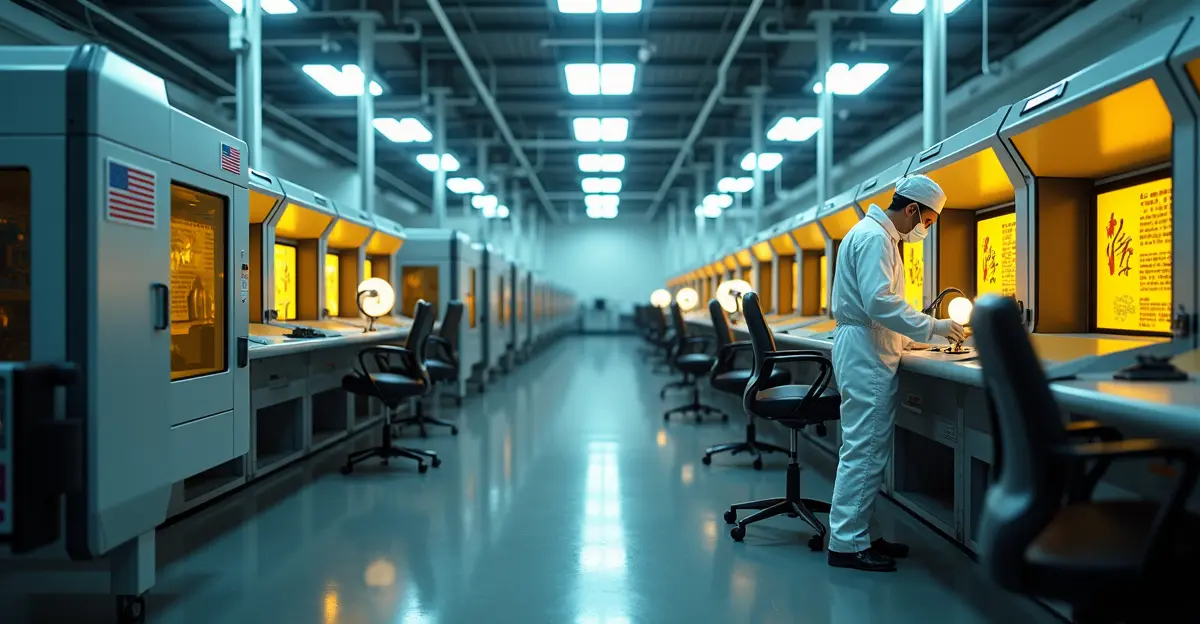
The global semiconductor industry has undergone a radical transformation in 2025, evolving from commercially integrated networks into strategic geopolitical battlegrounds where nations treat advanced chips as critical national security assets rather than mere commercial goods. Recent reports from March 2025 highlight intensifying competition as major powers implement aggressive industrial policies that are fundamentally reshaping global supply chain dynamics, shifting from 'just-in-time' efficiency to 'just-in-case' resilience strategies that threaten to fragment global technology ecosystems.
What is Semiconductor Supply Chain Weaponization?
Semiconductor supply chain weaponization refers to the strategic use of control over chip manufacturing, design software, and production equipment as instruments of geopolitical power. This phenomenon represents a fundamental departure from the market-driven global integration that characterized the industry for decades. According to recent analysis, export controls on advanced lithography equipment like ASML's EUV (Extreme Ultraviolet) and DUV (Deep Ultraviolet) systems have become primary tools in this strategic competition, creating what experts call a 'technical decoupling' between major powers.
The Shift from Efficiency to Resilience
The semiconductor industry's traditional 'just-in-time' model, optimized for cost efficiency and lean inventory management, has proven vulnerable to geopolitical shocks. In response, companies and nations are adopting 'just-in-case' approaches that prioritize resilience through strategic stockpiling, supplier diversification, and geographic redundancy.
Export Controls as Strategic Weapons
Coordinated U.S.-Dutch policy shifts in 2024-2025 have dramatically reshaped the semiconductor equipment landscape. ASML Holding, the critical Dutch manufacturer of EUV lithography systems, has seen its China revenue plummet from 49% in 2024 to approximately 20% in 2025 following stringent export restrictions. These controls target immersion DUV lithography systems and related software upgrades, preventing Chinese fabs from enhancing equipment performance. The restrictions have created what industry analysts call a 'Pax Silica' alliance securing semiconductor supply chains among allied nations.
Electronic Design Automation (EDA) Software Restrictions
Beyond hardware, export controls now extend to Electronic Design Automation software, the critical tools used to design advanced semiconductors. These software restrictions create additional barriers to technological advancement, particularly affecting nations seeking to develop domestic semiconductor capabilities. The U.S. CHIPS Act and similar initiatives in Europe and Asia represent coordinated efforts to build sovereign capabilities while restricting access to competitors.
Technical Decoupling and Ecosystem Fragmentation
The deliberate separation of technological ecosystems represents one of the most significant long-term consequences of semiconductor weaponization. As nations pursue sovereign semiconductor strategies, they risk creating incompatible technical standards, duplicated R&D efforts, and fragmented innovation pathways.
Divergent Technical Standards
The emerging bifurcation of global technology ecosystems threatens to create what some analysts call a 'digital Cold War' with incompatible standards between competing spheres of influence. This fragmentation could slow global AI innovation by limiting the cross-pollination of ideas and creating redundant research efforts across isolated technological camps.
AI Innovation at Risk
Advanced artificial intelligence development depends critically on access to cutting-edge semiconductors, particularly those manufactured using EUV lithography. Export restrictions on these technologies threaten to create technological chasms, with some nations unable to produce the chips needed for next-generation AI systems. According to Bain & Company's 2025 Technology Report, sovereign AI has become a geopolitical imperative, with countries developing domestic AI systems trained on local data and hosted in nationally controlled data centers.
Taiwan's Strategic Vulnerability
The concentration of advanced semiconductor manufacturing in Taiwan represents one of the most critical vulnerabilities in global technology supply chains. Taiwan Semiconductor Manufacturing Company (TSMC) produces approximately 90% of the world's most advanced chips, creating what analysts call a 'silicon shield' that deters aggression through economic indispensability.
Geopolitical Risk Concentration
Recent research applying tabletop exercise and scenario analysis methods identifies three potential Chinese aggression scenarios: quarantine (short-term), blockade (medium-term), and full-scale invasion (long-term). The analysis finds that China would most likely employ a quarantine method before 2027, which would particularly threaten Taiwan's semiconductor supply chain. Current resilience strategies like diversification and stockpiling are inadequate for short-term threats due to high relocation costs and skilled worker training challenges.
The 'America First' Dilemma
Paradoxically, U.S. efforts to onshore semiconductor manufacturing through initiatives like the CHIPS Act and TSMC's $165 billion investment in Arizona facilities may inadvertently weaken Taiwan's strategic position. While reducing dependency on Taiwan enhances U.S. supply chain resilience, it also potentially erodes Taiwan's economic leverage and security position, creating anxiety about the future of its primary defense against potential Chinese aggression.
Impact on Global Technology Ecosystems
The fragmentation of semiconductor supply chains has profound implications for global technology development, economic stability, and international relations. The shift from commercial integration to strategic fragmentation represents a fundamental reordering of how nations approach technological advancement.
Economic Consequences
The weaponization of semiconductor supply chains increases costs throughout the technology ecosystem. According to industry estimates, the shift from 'just-in-time' to 'just-in-case' inventory management increases warehousing demand by 15-20% and creates higher operational complexities. These costs ultimately translate to higher prices for consumers and businesses worldwide.
Strategic Implications
The concentration of strategic vulnerabilities in critical nodes like Taiwan creates systemic risks that extend beyond the semiconductor industry. The global memory supply shortage of 2024-2025, driven by structural reallocation of manufacturing capacity toward high-margin AI products, demonstrates how geopolitical factors can exacerbate market disruptions. As nations pursue semiconductor sovereignty, they must balance strategic autonomy with the economic benefits of global integration.
Expert Perspectives on Semiconductor Geopolitics
Industry analysts and geopolitical experts offer varying perspectives on the future of semiconductor supply chains. 'The transformation of semiconductors from commercial goods to strategic assets represents one of the most significant shifts in international economic relations since the Cold War,' notes a senior technology analyst. 'Nations are now treating chip manufacturing capacity with the same strategic importance they once reserved for oil reserves or military bases.'
Another expert warns: 'The fragmentation of global technology ecosystems threatens to slow innovation precisely when we need accelerated progress to address global challenges like climate change and public health. We risk creating technological islands that cannot communicate or collaborate effectively.'
Frequently Asked Questions
What is semiconductor supply chain weaponization?
Semiconductor supply chain weaponization refers to the strategic use of control over chip manufacturing, design software, and production equipment as instruments of geopolitical power, transforming commercial networks into strategic assets.
How do export controls on EUV lithography affect global chip production?
Export controls on ASML's EUV lithography systems prevent nations like China from producing cutting-edge chips below 7nm nodes, creating technological gaps that affect AI development and advanced computing capabilities.
Why is Taiwan's semiconductor industry so strategically important?
Taiwan produces approximately 90% of the world's most advanced chips through TSMC, creating economic leverage that deters aggression but also concentrates critical vulnerabilities in a geopolitically sensitive region.
What is the difference between 'just-in-time' and 'just-in-case' supply chains?
'Just-in-time' prioritizes efficiency through lean inventory management, while 'just-in-case' emphasizes resilience through strategic stockpiling and supplier diversification, accepting higher costs for greater security.
How does technical decoupling affect AI innovation?
Technical decoupling creates fragmented ecosystems with incompatible standards, potentially slowing AI innovation by limiting collaboration and creating redundant research efforts across isolated technological camps.
Future Outlook and Strategic Considerations
As semiconductor supply chains continue their transformation from globally integrated networks to strategically fragmented ecosystems, nations and companies must navigate increasingly complex geopolitical landscapes. The challenge lies in balancing the economic benefits of global integration with the strategic imperatives of resilience and sovereignty. The geopolitical competition in advanced technology will likely intensify through 2026, with semiconductor supply chains remaining at the center of strategic calculations for major powers worldwide.




Follow Discussion