


 Deutsch
 English
 Español
 Français
 Nederlands
 Português


 Share
Share




The Middle East conflict that erupted in late February 2026 has triggered the largest oil supply disruption in recorded history — slashing roughly 10 million barrels per day from global markets and sending Brent crude to an average of $86 per barrel. But while energy-rich nations weather the storm, it is the developing world that is being pushed to the brink. According to the UN's World Economic Situation and Prospects (WESP) mid-2026 update, inflation in developing economies has climbed from 4.2% to 5.2%, reversing years of hard-won disinflation. With critically constrained fiscal space and soaring borrowing costs, energy-importing nations across Africa, Asia, and Latin America are watching decades of economic progress unravel.
What Triggered the 2026 Oil Supply Shock?
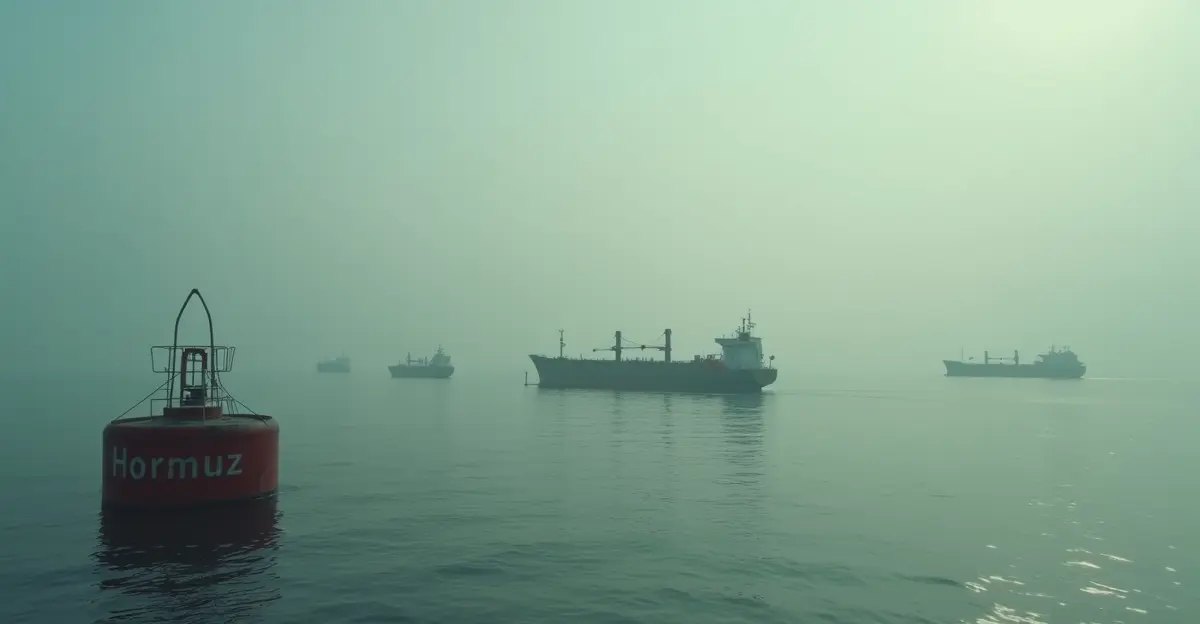
On February 28, 2026, US-Israeli airstrikes — codenamed Operations Epic Fury and Roaring Lion — struck Iranian military and nuclear facilities. Iran retaliated within days by mining the Strait of Hormuz and effectively blockading the waterway. The strait, which handles roughly 35% of global seaborne crude oil trade, became a geopolitical flashpoint overnight. By March, global oil supply had crashed by an unprecedented 10.1 million barrels per day, the largest single-month decline in history.
Brent crude, which averaged $69 in 2025, rocketed 65% in a matter of weeks, briefly touching $119 before settling near $92 after a fragile Pakistan-brokered ceasefire took hold in early April. The World Bank's April 2026 Commodity Markets Outlook projects energy prices will surge 24% for the full year — the sharpest rise since Russia's 2022 invasion of Ukraine. Overall commodity prices are forecast to jump 16%, the first annual increase in four years.
The Asymmetric Burden: Why Developing Economies Are Hit Hardest
The energy shock has not landed evenly. Developed economies, with deeper pockets and strategic reserves, are absorbing the blow with inflation ticking up modestly from 2.6% to 2.9%. For developing nations, the picture is far grimmer. The UN WESP mid-2026 report reveals a full percentage-point jump in inflation — from 4.2% to 5.2% — as higher energy, transport, and import costs cascade through their economies.
"Energy-importing developing economies are facing a perfect storm," a senior UN DESA economist noted in the May 2026 briefing. "They entered this crisis with depleted fiscal buffers after COVID-19, high debt servicing costs, and now they must finance much more expensive energy imports while their currencies are under pressure."
The World Bank's June 2026 Global Economic Prospects report warns that overall developing-economy growth has been revised down to 3.6%, with the poorest nations — particularly those dependent on food and fertilizer imports — facing the most severe consequences. Fertilizer prices are expected to rise 31% in 2026, threatening agricultural output and potentially pushing up to 45 million additional people into acute food insecurity.
Fiscal Space Has Evaporated
The IMF's April 2026 Fiscal Monitor paints an equally stark picture. Emerging market and developing economies entered 2026 with sovereign debt at near-record levels and interest payments consuming an ever-larger share of government revenues. The war-driven energy surge has compounded these pressures through higher global interest rates, dollar appreciation, and widening current account deficits.
For many, the room to maneuver is virtually nonexistent. Unlike during the 2020 pandemic or the 2022 energy crisis, multilateral support mechanisms are stretched thin. The IEA coordinated the largest-ever emergency stockpile release — 400 million barrels across more than 30 nations — in March 2026, but those barrels primarily stabilized OECD markets. Developing countries, lacking strategic petroleum reserves, have been left exposed to spot market volatility.
Policy Responses: Targeted, Temporary, and Transformative
The emerging policy consensus — articulated in the IMF's April 2026 guidance note on the energy shock — calls for measures that are targeted (reaching the most vulnerable), temporary (avoiding permanent fiscal burdens), and transformative (accelerating the energy transition). Yet implementation on the ground has been uneven.
Several South Asian and African governments have resorted to untargeted fuel subsidies — politically expedient but fiscally ruinous. "Every dollar spent on blanket fuel subsidies is a dollar not spent on schools, health, or the green transition," warned a senior IMF fiscal affairs official in a June 2026 press conference. Meanwhile, the IEA's 2026 Energy Crisis Policy Response Tracker shows that 150 countries are now actively pursuing renewable or nuclear energy diversification strategies — a silver lining in an otherwise bleak landscape.
Regional cooperation is also intensifying. The African Union has fast-tracked the African Continental Free Trade Area energy protocol, while ASEAN members are pooling procurement to negotiate better LNG prices. These initiatives, though nascent, signal a structural shift away from vulnerability toward resilience.
What Happens Next?
The outlook hinges on the Strait of Hormuz. As of mid-2026, shipping volumes have partially recovered, but the ceasefire remains fragile. The World Bank's escalation scenario — in which hostilities resume and Brent averages $115 per barrel — would tip several developing economies into outright recession and stall global growth to levels not seen since the COVID-19 pandemic. Even under the baseline, the UN projects global GDP growth of just 2.5% in 2026, a 0.2 percentage-point downgrade from January forecasts.
For energy-importing developing nations, the message is clear: the era of cheap oil is over, and the transition to energy independence can no longer be deferred. The World Bank and IMF have both called for accelerated renewable energy investment in the Global South, backed by concessional finance and technology transfers. The question is whether the international community will deliver before the next shock hits.
FAQ
Why did oil prices spike so dramatically in 2026?
The February 2026 Iran war led to the mining and effective closure of the Strait of Hormuz, which handles 35% of global seaborne crude oil. This removed roughly 10 million barrels per day from global markets — the largest supply disruption on record — sending Brent crude up 65% within weeks.
How much has inflation risen in developing economies?
According to the UN WESP mid-2026 update, inflation in developing economies rose from 4.2% in 2025 to 5.2% in 2026, driven by higher energy, transport, and import costs. In developed economies, the increase was more modest: from 2.6% to 2.9%.
Why are developing countries affected more than rich nations?
Developing economies entered 2026 with high debt, limited fiscal space, and no strategic petroleum reserves. They are disproportionately dependent on energy imports, face higher borrowing costs, and have less capacity to subsidize or cushion price shocks for households and businesses.
What is the outlook for global growth in 2026?
The UN forecasts global growth of 2.5% in 2026, down from earlier projections, with a modest recovery to 2.8% in 2027. The World Bank warns that the conflict has slowed growth to the lowest rate since the COVID-19 pandemic. An escalation scenario could push the global economy close to recession.
What policy responses are being recommended?
The IMF and World Bank urge governments to adopt targeted and temporary support measures — helping the most vulnerable without distorting prices permanently — while accelerating investment in renewable energy to reduce long-term dependence on fossil fuel imports. Regional cooperation on pooled energy procurement is also gaining traction.


Follow Discussion