


 Deutsch
 English
 Español
 Français
 Nederlands
 Português


 Share
Share




Belfast in Flames After Brutal Knife Attack
A wave of violent unrest swept through Belfast on June 9, 2026, after a horrific stabbing attack the previous night left a man in his 40s fighting for his life. Anti-immigration protesters took to the streets, setting buses and cars ablaze, attacking foreign-owned businesses, and clashing with police. The violence, which spread across multiple neighborhoods, has drawn condemnation from UK Prime Minister Keir Starmer and Northern Ireland's political leaders.
What Happened in the Belfast Stabbing?
The attack occurred around 10:30 p.m. BST on Monday, June 8, on Kinnaird Avenue in north Belfast. A 30-year-old Sudanese man allegedly straddled the victim and stabbed him repeatedly in the head, neck, eyes, and back with a kitchen knife. Bystanders — including a man wielding a hurling stick — intervened and are credited with saving the victim's life. The suspect was arrested at the scene and later charged with attempted murder. Police recovered a kitchen knife and have stated there is no evidence of a terrorist motive. The victim remains in hospital with serious slash wounds to his face, eyes, neck, and back.
How Did the Riots Unfold?
Anti-Immigration Protests Turn Violent
Following calls from far-right figures including Tommy Robinson, hundreds of masked demonstrators gathered in east Belfast on the evening of June 9. The crowd, carrying British and Northern Irish flags, chanted slogans such as 'Foreigners out' and displayed signs reading 'Enough is enough' and 'Illegal immigration destroys our civilization.'
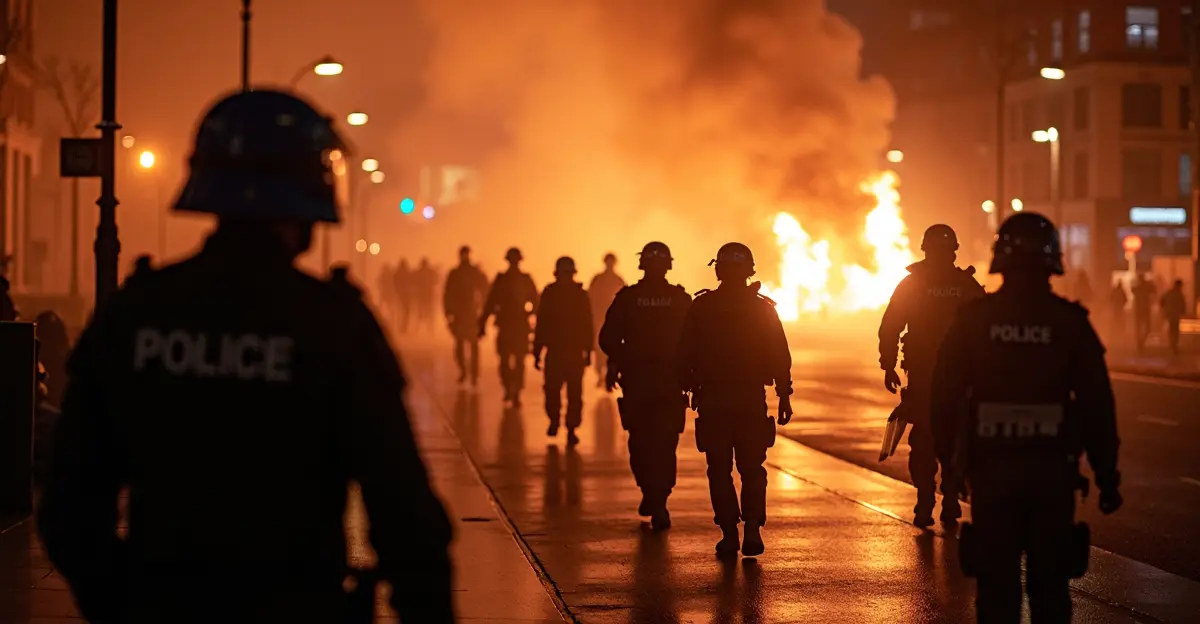
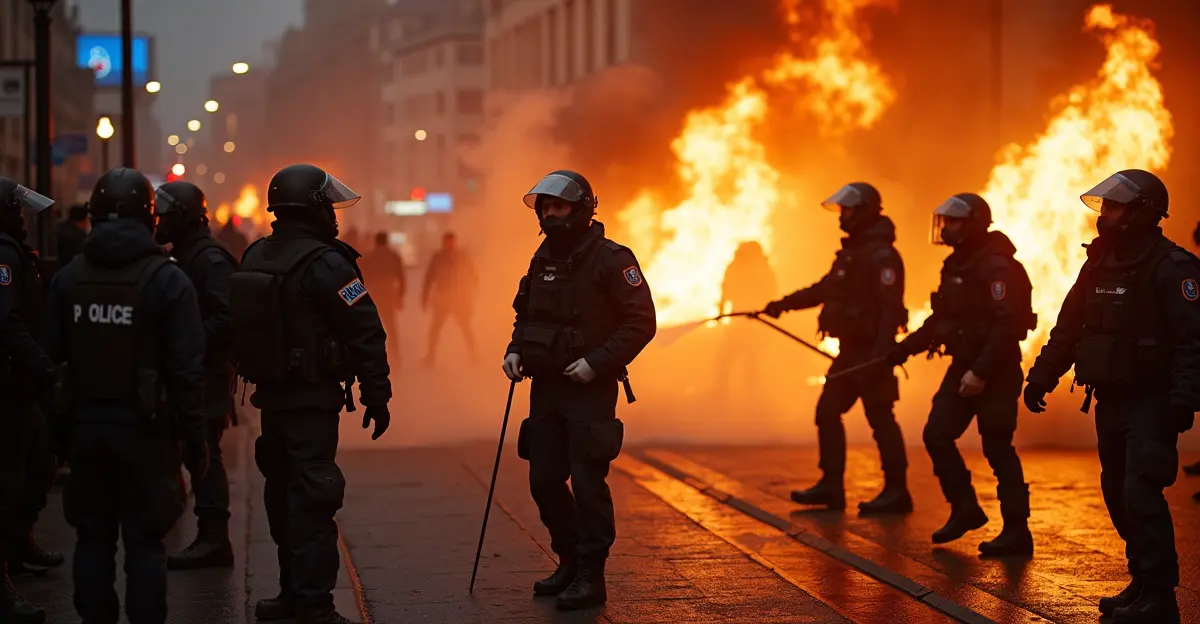
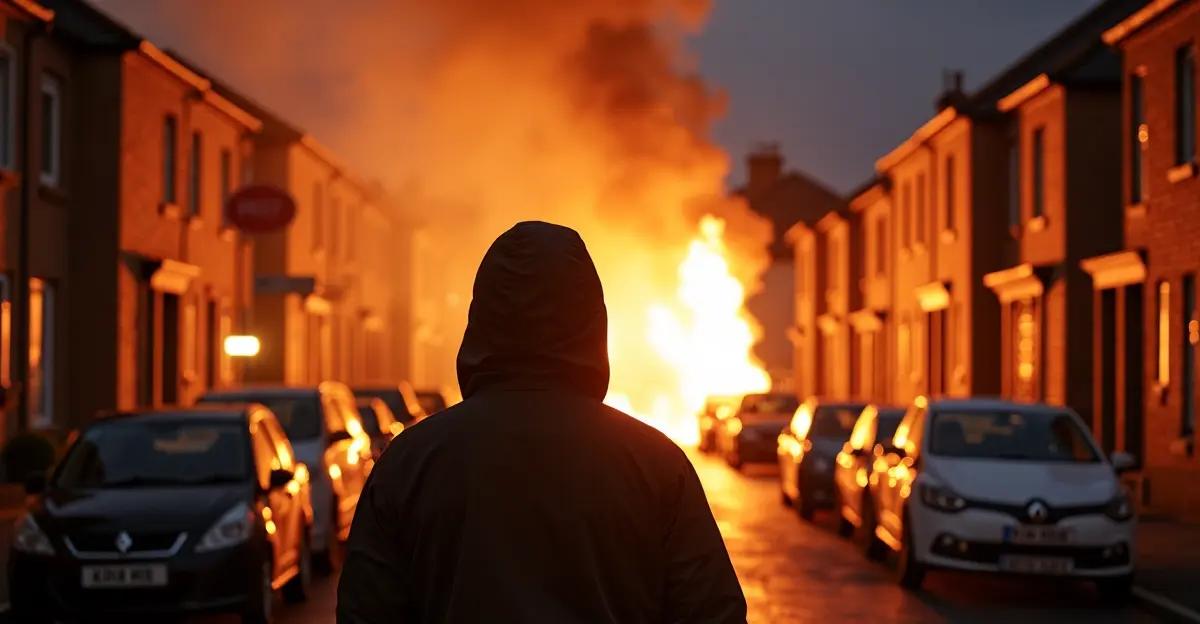
The protest quickly escalated into rioting. On Newtownards Road, rioters pushed burning commercial bins into a Glider bus, setting it ablaze. Multiple cars were torched on Lendrick Street, and homes were engulfed in flames, forcing residents to evacuate. Masked men kicked in doors and windows of homes and businesses, targeting foreign-owned shops including a Middle Eastern supermarket and a Turkish barber. Unofficial checkpoints were set up, and petrol bombs were thrown at police cars. Explosions — likely from bursting tires — were heard near the burning bus.
Police Response and Casualties
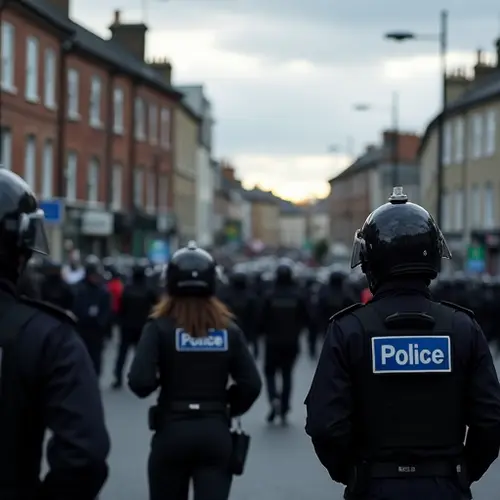
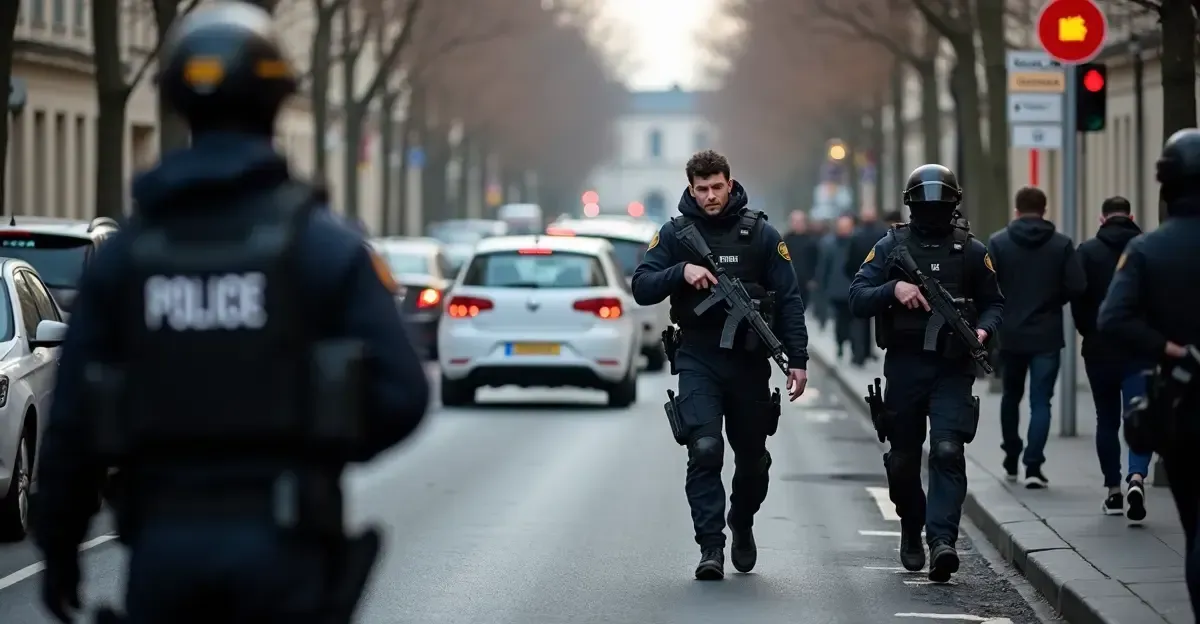
The Police Service of Northern Ireland (PSNI) declared a critical incident and deployed armored vehicles. Chief Constable Jon Boutcher announced an increased police presence across the city and urged the public not to share violent footage. Translink suspended all bus and train services in and out of Belfast. At least three police officers were injured, and four people were arrested. Reports of criminal damage and arson were treated as hate crimes in some cases.
A local minister went onto the streets to appeal directly to masked rioters to stop the violence. Political leaders across the spectrum condemned the unrest. Northern Ireland's First Minister described the attack as 'appalling,' while Deputy First Minister Emma Little-Pengelly appealed for calm, stating that 'violence damages causes.'
Who Is the Suspect?
The suspect, a Sudanese national in his 30s, entered the UK in 2023 and was granted refugee status. He holds leave to remain until 2028. Police have confirmed he was legally residing in Northern Ireland at the time of the attack. The suspect is believed to live near the scene of the stabbing. He is due to appear in court on charges of attempted murder. The UK asylum process for Sudanese refugees has come under renewed scrutiny in the wake of the attack.
Broader Context: Immigration Tensions in Northern Ireland
The unrest echoes similar anti-immigration riots that rocked Northern Ireland in 2024 and 2025, often triggered by violent incidents involving foreign nationals. In August 2024, far-right protests across the UK — sparked by the Southport stabbings — led to widespread disorder, with hotels housing asylum seekers attacked and over 1,800 arrests made. In June 2025, riots broke out in Ballymena after two Romanian Roma teenagers were charged with attempted rape, resulting in 107 police officers injured over two weeks.
The PSNI's capacity to handle such unrest has been questioned, with the force operating at around 6,200 officers — well below the recommended 7,500. Chief Constable Boutcher has repeatedly warned that the service is 'critically underfunded.' The role of loyalist paramilitaries in orchestrating violence has also been raised by human rights groups.
Reactions and Aftermath
Prime Minister Keir Starmer called the stabbing 'sickening' and 'horrific,' vowing 'absolutely no tolerance' for such violence. The leaders of Northern Ireland's five main political parties issued a joint statement condemning the attack and urging calm. Sinn Féin MP John Finucane said the attack was being 'used to whip up fear and division.'
Community leaders and clergy have called for dialogue and restraint. The PSNI continues to investigate and has appealed for witnesses. An increased police presence remains in place across Belfast as the city recovers from one of its worst nights of violence in recent years.
Frequently Asked Questions
What triggered the Belfast riots in June 2026?
The riots were triggered by a brutal stabbing attack on June 8, 2026, in north Belfast. A Sudanese man allegedly stabbed a local man in his 40s multiple times. Far-right figures called for anti-immigration protests, which escalated into violent unrest.
Is the Belfast stabbing being treated as terrorism?
No. Police have stated there is no evidence of a terrorist motive. The suspect has been charged with attempted murder, and investigations are ongoing.
How many people were arrested during the riots?
At least four people were arrested on the first night of rioting. The PSNI received 13 reports of criminal damage and 5 of arson, some treated as hate crimes. Three officers were injured.
What is the condition of the stabbing victim?
The victim, a man in his 40s, remains in hospital with serious slash wounds to his back, face, eyes, and neck. His condition is described as serious but not life-threatening, thanks to bystander intervention.
How has the UK government responded?
Prime Minister Keir Starmer condemned the attack as 'sickening' and 'horrific.' Northern Ireland's political leaders jointly appealed for calm, and the PSNI has deployed additional officers to prevent further disorder.
Sources
Information for this article was compiled from reports by the BBC, CBS News, France 24, The Independent, RTÉ, the Associated Press, and the Police Service of Northern Ireland (PSNI).
Follow Discussion