


 Deutsch
 English
 Español
 Français
 Nederlands
 Português


 Share
Share




A preliminary report from the U.S. National Transportation Safety Board (NTSB) has confirmed that a broken engine fan blade shattered a cabin window on a Ryanair Boeing 737-8AS on July 10, 2026, partially sucking Serbian passenger Ljubisa Karovic out of the aircraft. The Ryanair flight, traveling from Thessaloniki, Greece, to Memmingen, Germany, returned to Thessaloniki for an emergency landing after rapid cabin depressurization. The findings, released on August 13, 2026, contradict earlier statements by Ryanair CEO Michael O'Leary, who had said no passenger was sucked out and blamed foreign object damage.
What happened on the Ryanair flight?
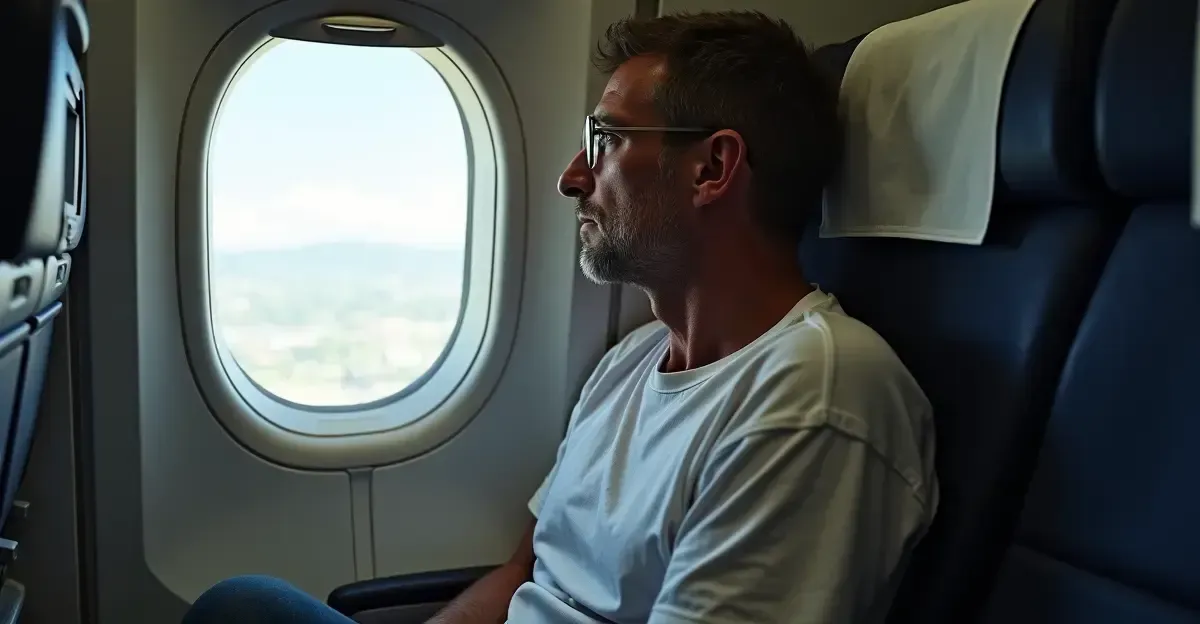
Shortly after takeoff from Thessaloniki Airport, a fan blade in the aircraft's CFM56-7B26 engine broke free and struck the fuselage. The impact shattered a window at seat 11F, causing explosive decompression. Ljubisa Karovic, a 61-year-old Serbian entrepreneur, was seated beside the window and was pulled outward up to his head and right arm. According to The Guardian, Karovic was pulled back inside by his wife and a flight attendant, sustaining significant injuries. The pilots declared an emergency and landed safely back at Thessaloniki.
NTSB preliminary findings
The NTSB report identified fatigue cracking on the failed engine fan blade and also found bird remains inside the engine. Investigators noted that the aircraft had been involved in four reported bird strikes in the preceding 12 months. In two of those cases, bird remains were found, but no damage was recorded. The report also said required FAA engine-covering modifications had not yet been made to the aircraft.
NTSB Chair Jennifer Homendy criticized Ryanair CEO Michael O'Leary for commenting on the open investigation. 'It is inappropriate to comment on an ongoing safety investigation,' Homendy said, according to CNN. The NTSB is leading the inquiry, which typically takes one to two years to complete.
How this compares to previous fan blade failures
The incident echoes earlier accidents involving CFM56 engines and is part of a wider pattern of uncontained engine failures. Below is a comparison of similar events.
| Date | Flight | Aircraft / Engine | Outcome |
|---|---|---|---|
| July 10, 2026 | Ryanair Thessaloniki to Memmingen | Boeing 737-8AS / CFM56-7B | Passenger partially sucked out, survived |
| April 17, 2018 | Southwest Airlines Flight 1380 | Boeing 737-700 / CFM56-7B | Passenger partially ejected, died |
| August 27, 2016 | Southwest Airlines Flight 3472 | Boeing 737-700 / CFM56-7B | Engine failed, no injuries |
Why this echoes the 2018 Southwest Airlines disaster
The most serious comparison is Southwest Airlines Flight 1380 on April 17, 2018. In that accident, a fatigue crack in a CFM56-7B fan blade caused an uncontained engine failure on a Boeing 737-700. Cowling fragments struck the fuselage, broke a cabin window, and led to the death of a passenger who was partially ejected. The NTSB later issued safety recommendations for redesigned fan cowls and improved inspections. The 2026 Ryanair incident has reignited concerns about CFM56 engine inspection standards and the effectiveness of those earlier fixes.
Impact on aviation safety and Ryanair
The preliminary findings put pressure on Ryanair and regulators. The airline had not yet installed required engine-covering modifications, according to the NTSB. The report also highlights the challenge of bird strikes, which are common but rarely lead to window shattering. Aviation experts say the sequence of fatigue cracking and bird remains in the same engine raises questions about maintenance records and inspection intervals.
Regulators in Europe and the United States are now reviewing engine cowling redesign standards as part of the investigation. The final NTSB report is expected in 12 to 24 months and could lead to new airworthiness directives for CFM56-7B engines, which power thousands of Boeing 737 aircraft worldwide.
Frequently Asked Questions
What caused the Ryanair window to shatter?
A broken engine fan blade detached and struck the fuselage, shattering a cabin window at seat 11F. The NTSB found fatigue cracking on the blade and bird remains in the engine.
How did passenger Ljubisa Karovic survive?
Karovic was pulled back inside the aircraft by his wife and a flight attendant after being sucked out up to his head and right arm. He suffered significant injuries but survived.
Has this happened before?
Yes. In April 2018, a similar CFM56 fan blade failure on Southwest Airlines Flight 1380 caused a passenger to be partially ejected and killed. An earlier 2016 event involved the same engine type but no injuries.
What did the NTSB find about bird strikes?
The aircraft had four reported bird strikes in the 12 months before the incident. Bird remains were found in the engine after the July 2026 failure, but earlier strikes had not shown visible damage.
What happens next in the investigation?
The NTSB will continue examining the engine, maintenance records, and bird strike history. A final report with safety recommendations is expected within one to two years.

Follow Discussion