


 Deutsch
 English
 Español
 Français
 Nederlands
 Português


 Share
Share




What is the LaGuardia Airport Crash?
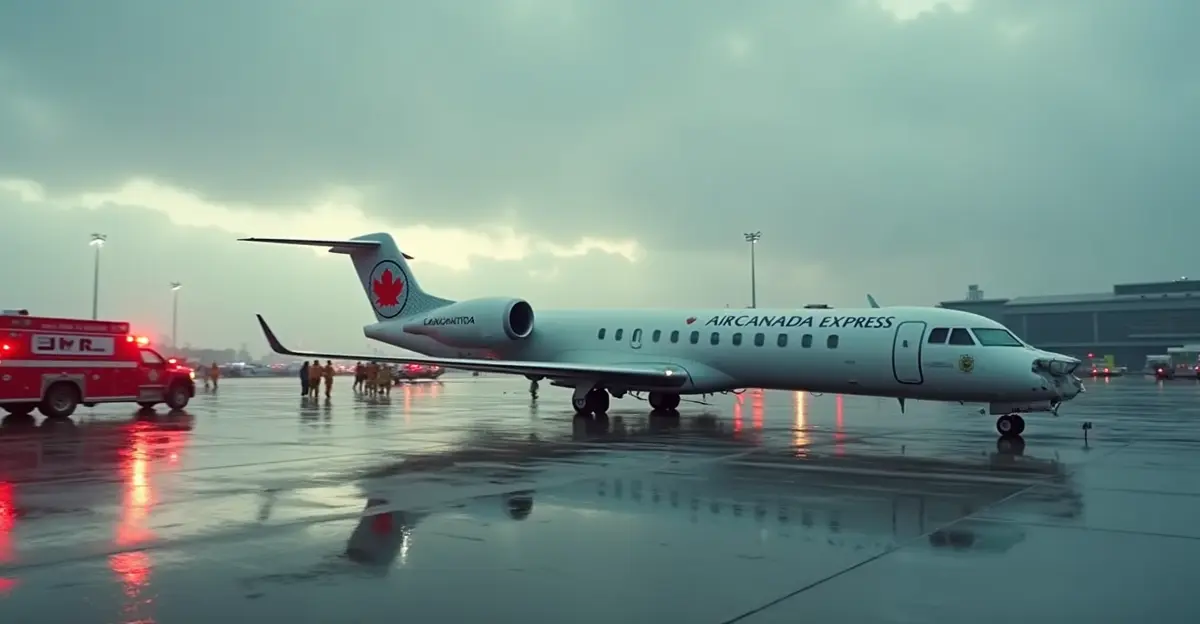
The LaGuardia Airport crash on March 22, 2026, represents one of the most tragic aviation incidents in recent New York history, where an Air Canada Express regional jet collided with a fire truck on the runway, resulting in two pilot fatalities and dozens of injuries. The airport runway safety incident occurred around 11:45 p.m. local time when Flight 8646, operated by Jazz Aviation using a Bombardier CRJ-900 aircraft arriving from Montreal, struck a Port Authority Aircraft Rescue and Firefighting vehicle on Runway 4 during its landing roll. The collision has raised serious questions about air traffic control procedures and runway safety protocols at one of America's busiest airports.
Audio Reveals Frantic Moments Before Impact
Newly released air traffic control audio provides chilling insight into the moments leading up to the fatal collision. The recordings capture controllers desperately shouting "Stop, stop, stop, Truck 1, stop!" as they attempted to prevent the crash. The fire truck had been given clearance to cross Runway 4 to respond to a separate emergency involving a United Airlines Boeing 737 MAX that had reported an unpleasant odor in the cabin. This dual-emergency scenario created a perfect storm of confusion and miscommunication.
The Controller's Admission of Responsibility
Perhaps the most poignant moment in the audio comes after the collision, when the air traffic controller can be heard saying, "I messed up" and "I made a mistake." In a conversation with the crew of a Frontier Airlines aircraft waiting to depart, the controller admits, "We were dealing with an emergency. I messed up." The Frontier crew responds with support, saying, "No, you did what you could," but the controller's self-blame underscores the human element in aviation safety systems.
Investigation and Safety Implications
The National Transportation Safety Board (NTSB) has taken charge of the investigation, with the Federal Aviation Administration (FAA) providing support. Preliminary findings suggest several critical factors contributed to the accident:
- Communication Breakdown: The fire truck was cleared onto the runway while the Air Canada flight was still completing its landing roll
- Speed Discrepancy: Conflicting reports about the aircraft's speed at impact, ranging from 24 mph to over 100 mph
- Dual Emergency: The controller was simultaneously managing two separate aircraft emergencies
- Runway Incursion: A vehicle entering an active runway during landing operations
Aviation safety experts have called the crash "entirely avoidable," noting that allowing a vehicle to cross a runway while an aircraft is landing represents a clear procedural error. The incident highlights ongoing concerns about air traffic control training and the challenges of managing multiple emergencies simultaneously at congested airports.
Casualties and Airport Impact
The human toll of the crash is significant. Both pilots—described by FAA officials as being at the beginning of their careers—were killed instantly. Among the 72 passengers and 4 crew members aboard the aircraft, 39 passengers and 2 crew members were transported to area hospitals, with some sustaining serious injuries. Nine individuals remained hospitalized as of Monday afternoon, including a flight attendant who was ejected from the aircraft and suffered multiple leg fractures but survived the fall.
The two Port Authority employees in the fire truck sustained non-life-threatening injuries. LaGuardia Airport was completely closed following the incident, with one runway reopening Monday afternoon. Runway 4, where the collision occurred, remains closed until at least Friday as investigators continue their work. The airport warned passengers to expect significant delays and cancellations throughout the week.
Broader Aviation Safety Concerns
This incident comes at a challenging time for U.S. aviation, with ongoing concerns about airport infrastructure funding and staffing levels. LaGuardia Airport had recently completed a $8 billion reconstruction project in January 2025, which was supposed to modernize facilities and improve safety. However, this tragic event raises questions about whether procedural improvements have kept pace with physical upgrades.
"This was a preventable tragedy," said former NTSB investigator Michael Barr. "When you have a vehicle crossing an active runway with an aircraft on final approach or landing roll, that's a fundamental breakdown in the safety system. The controller's admission, while heartbreaking, doesn't change the fact that multiple layers of protection failed."
Frequently Asked Questions
What caused the LaGuardia Airport crash?
The crash occurred when an Air Canada Express regional jet struck a fire truck on Runway 4 during its landing roll. The fire truck had been cleared to cross the runway to respond to a separate emergency.
How many people were killed in the crash?
Two pilots were killed in the collision. Both were at the beginning of their aviation careers according to FAA officials.
What is the current status of the investigation?
The National Transportation Safety Board is leading the investigation, with preliminary findings expected in the coming weeks. Runway 4 remains closed for evidence collection.
When will LaGuardia Airport fully reopen?
One runway reopened Monday afternoon, but Runway 4 will remain closed until at least Friday. Passengers should expect ongoing delays and cancellations.
What safety changes might result from this incident?
The investigation will likely lead to recommendations regarding air traffic control procedures, runway incursion prevention, and emergency response coordination at busy airports.



Follow Discussion