


 Deutsch
 English
 Español
 Français
 Nederlands
 Português


 Share
Share




Major Traffic Disruption in Germany's Ruhr Region
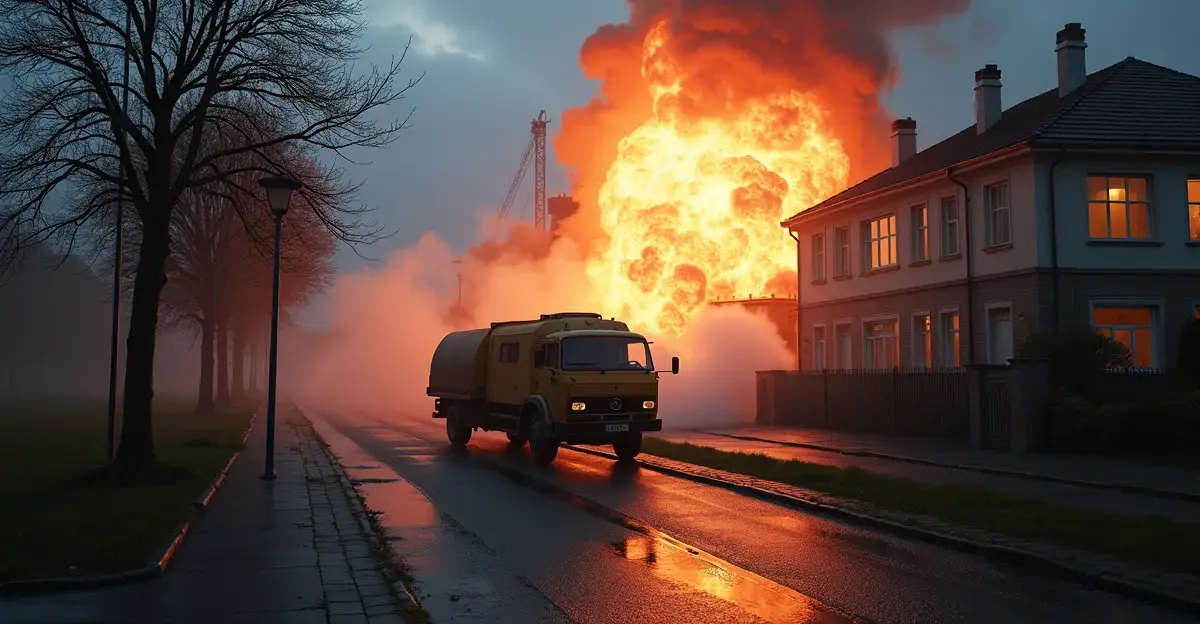
One of Germany's busiest highways, the A40 in the Ruhr region, has been fully closed in both directions for ten days as authorities conduct a meticulous search for unexploded World War II bombs. The closure, which began on Friday, June 12, 2026, at 9 PM and runs until Monday, June 22, 2026, at 5 AM, affects the stretch between Mülheim-Heißen and Mülheim-Winkhausen — a critical artery connecting the cities of Duisburg, Essen, and Dortmund.
The closure is necessary for WWII bomb disposal operations ahead of the reconstruction of two aging bridges: the Hardenbergbrücke and the Geitlingstraße bridge, which are scheduled for demolition and replacement by mid-2028. Only about 20 meters of asphalt need to be removed, but the work requires extreme precision due to the high likelihood of buried ordnance from Allied bombing campaigns during World War II.
Why the A40 Closure Is Necessary
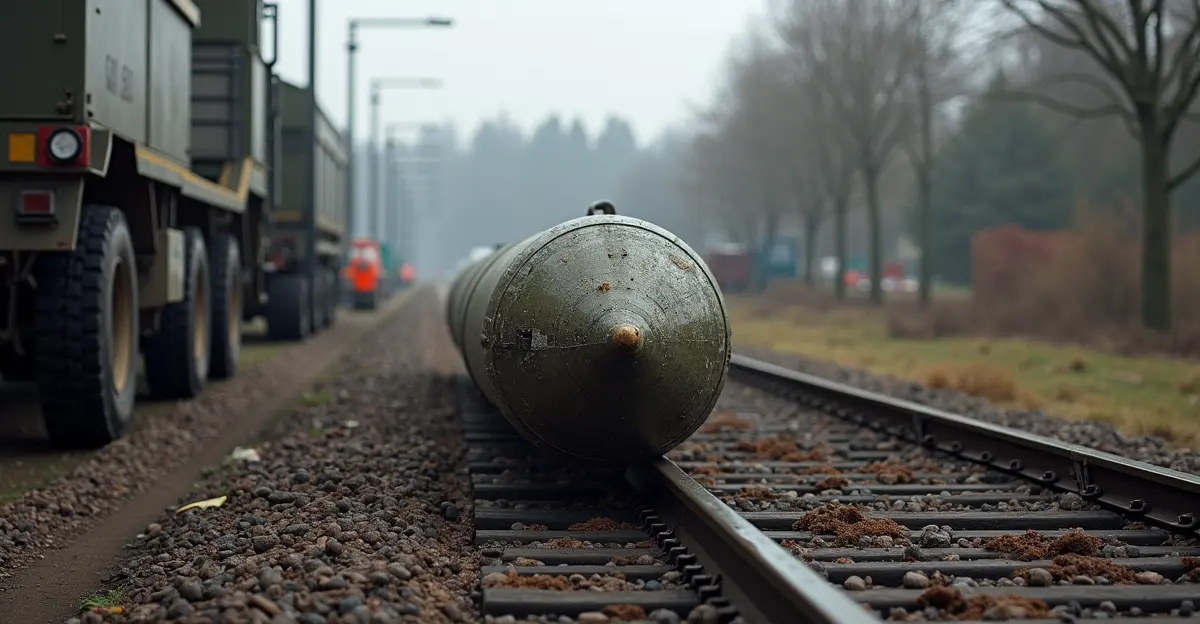
The Ruhr region was heavily bombed during World War II as it housed numerous steel factories and was known as the 'armory of the German Reich.' According to the WWII bomb disposal in Germany statistics, an estimated 2,000 tons of unexploded munitions are still found across the country every year. In the state of North Rhine-Westphalia (NRW) alone, bomb disposal teams neutralized 2,140 bombs in 2025 — a significant increase from 1,606 in 2024, driven largely by rising construction activity.
Of the 2,140 bombs found in NRW in 2025, 282 were heavy bombs weighing 50 kg or more. The state allocated nearly 27 million euros for ordnance disposal in 2025, with 94 specialists working across the region. The Cologne administrative district, which includes the Ruhr area, recorded the highest number of operations with 12,161 requests and 915 ordnance finds.
Bridge Replacement Project Timeline
The bridge replacement is part of a larger, multi-year expansion of the A40 corridor. The first construction phase, between Duisburg-Kaiserberg and Mülheim-Dümpten, is scheduled to begin in early 2027 and will take approximately five years. The entire project involves expanding 12.5 kilometers of highway from four to six lanes, replacing up to 16 bridges, and installing noise barriers up to 8 meters high. The bridge reconstruction safety measures include comprehensive ground-penetrating radar surveys and manual excavation to ensure no explosives remain.
Traffic Impact and Detour Routes
The A40 carries between 80,000 and 90,000 vehicles daily, making this closure one of the most disruptive traffic events in the Ruhr region in recent years. The detour routes add approximately 40 kilometers to the journey between Duisburg and Essen. Authorities have established the following diversion plans:
- Towards Essen: Traffic is diverted from the Duisburg interchange via the A59, A524, and A52 highways.
- Towards Duisburg: The reverse route via the A52 and A524 from the Essen-Ost interchange.
- Local traffic: An alternative route through Mülheim's city center is available, though congestion is expected.
- Truck traffic: Separate detour routes have been designated for heavy goods vehicles.
The closure coincides with other roadworks in the region, including a simultaneous closure on the A43 between Bochum-Riemke and Bochum-Gerthe for bridge maintenance, compounding potential delays. Commuters are advised to use public transport, work from home, or allow significantly extra travel time.
Germany's Ongoing Battle with Unexploded Ordnance
More than 80 years after the end of World War II, Germany continues to grapple with the legacy of unexploded bombs. Allied forces dropped approximately 2.7 million tonnes of bombs on Europe during the war, with Germany bearing the brunt. In Berlin alone, 1.8 million pieces of ordnance were defused between 1947 and 2018.
Recent high-profile incidents include the evacuation of 18,000 people in Dresden in March 2026 for the defusal of a 250-kg British bomb discovered during bridge reconstruction, and a 1,000-pound American bomb found near the U.S. Army base in Wiesbaden in early 2026. The recent German bomb evacuations highlight the persistent danger these munitions pose, especially as aging casings become more unstable over time.
Safety Protocols and Precision Work
For the A40 operation, specialists are using ground-penetrating radar and manual excavation techniques to carefully remove the asphalt and inspect the soil beneath. If bombs are detected, the ordnance will be defused or removed under strict safety protocols. In NRW, bomb disposal teams were involved in 35,681 cases related to construction activities in 2025, including 1,770 random finds.
"Unexploded ordnance remains an invisible risk that we must take extremely seriously," said NRW Interior Minister Herbert Reul in a recent statement, thanking the 94 personnel working in bomb disposal across the state. "Every construction site carries the potential for a dangerous discovery, and our teams are prepared 24/7."
FAQ: A40 Closure and WWII Bomb Search
When is the A40 closed?
The A40 is closed from Friday, June 12, 2026, at 9 PM until Monday, June 22, 2026, at 5 AM — a total of ten days.
Which section of the A40 is affected?
The closure is between the Mülheim-Heißen and Mülheim-Winkhausen junctions, near the city of Mülheim an der Ruhr.
Why is the highway being closed for so long?
The closure is needed for careful ground investigation and potential removal of WWII bombs before bridge reconstruction. Only 20 meters of asphalt are being removed, but the work must be done with extreme precision to avoid triggering any explosives.
How common are WWII bomb discoveries in Germany?
Very common. Approximately 2,000 tons of unexploded munitions are found annually across Germany. In NRW alone, over 2,100 bombs were neutralized in 2025.
What should drivers do during the closure?
Drivers are advised to use the designated detour routes (A59, A524, A52), consider public transportation, or avoid travel through the Ruhr region if possible. Significant traffic congestion is expected.
Sources
Information for this article was sourced from NOS, WDR, Westdeutsche Allgemeine Zeitung (WAZ), the Ministry of the Interior of North Rhine-Westphalia, and historical data from Wikipedia on World War II bomb disposal in Europe.

Follow Discussion