


 Deutsch
 English
 Español
 Français
 Nederlands
 Português


 Share
Share




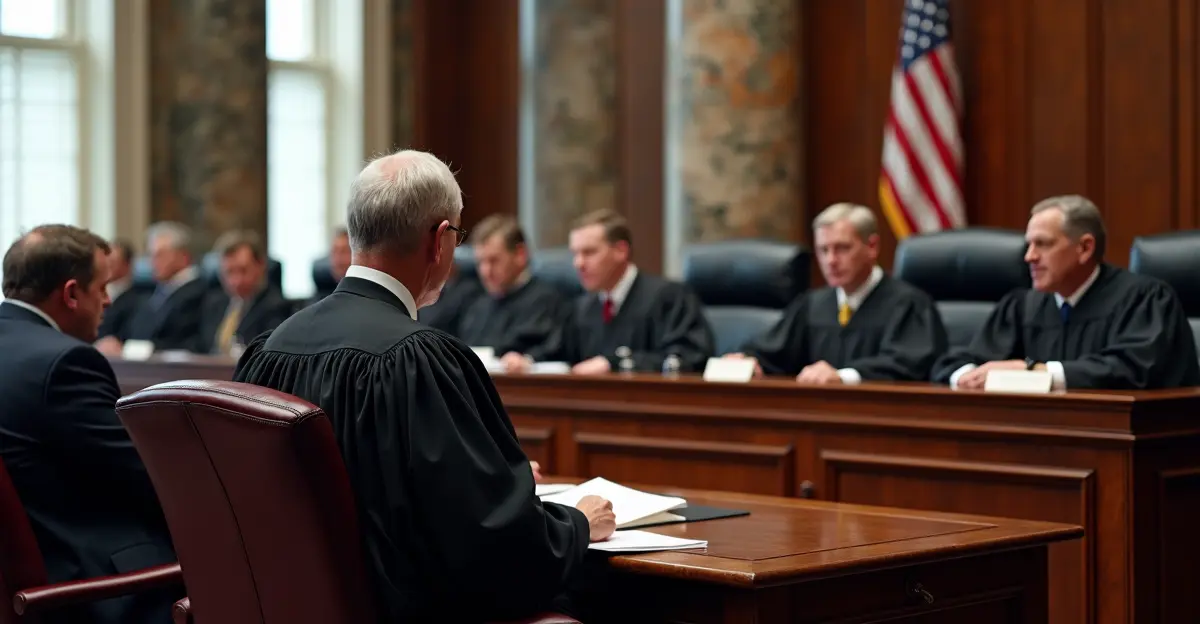
The global trade architecture is undergoing its most dramatic realignment since the Smoot-Hawley era of the 1930s, as overlapping tariff regimes from Washington, Brussels, and Beijing force multinational corporations to abandon decades of globalized supply chains in favor of discrete regional blocs. The cascading escalation—triggered by the U.S. Supreme Court's February 20, 2026 decision to strike down tariffs imposed under the International Emergency Economic Powers Act (IEEPA)—has since spiraled into a multi-theater trade confrontation with no clear off-ramp.
The American Pivot: From IEEPA to Section 122 to Section 301
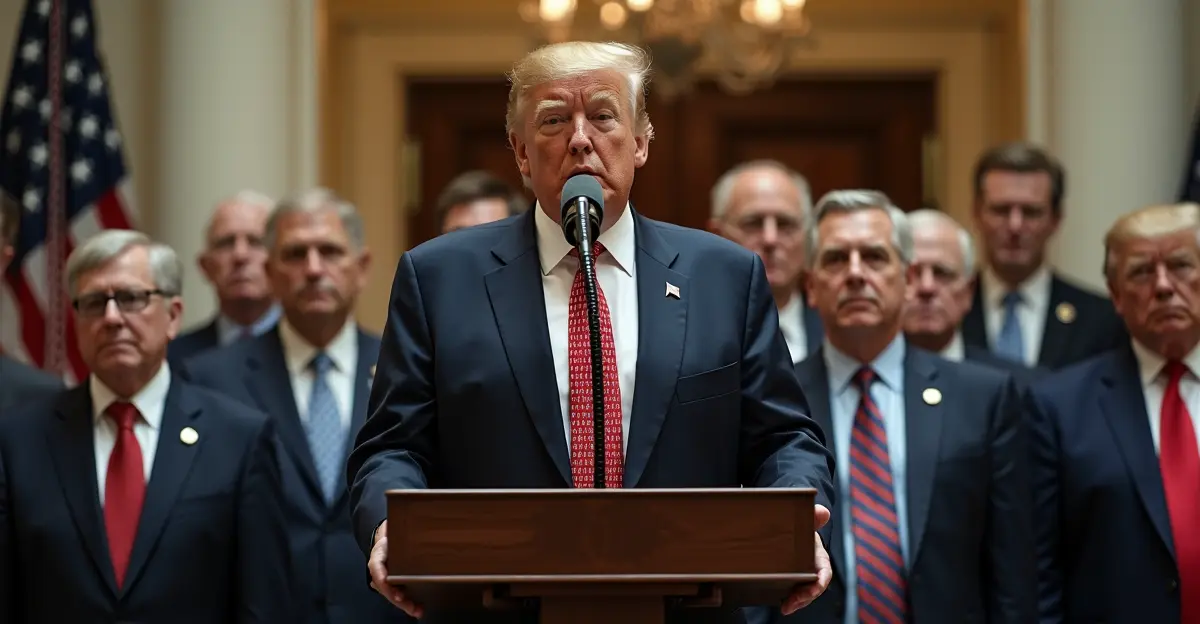
When the Supreme Court ruled that IEEPA does not authorize the president to impose tariffs, the Trump administration moved within four days to invoke Section 122 of the Trade Act of 1974—a never-before-used provision allowing temporary duties to address balance-of-payments crises. Effective February 24, 2026, a 10% ad valorem duty was applied to virtually all imports not covered by free trade agreements, with exemptions for critical minerals, energy products, certain agricultural goods, and USMCA-compliant goods from Canada and Mexico.
The Section 122 tariff was always a bridge. With a statutory 150-day limit, it was set to expire on July 24, 2026, and Congress took no action to extend it. The U.S. Court of International Trade further complicated matters on May 7, ruling 2-1 that the administration had exceeded its authority by citing the trade deficit rather than a debt-payment or dollar crisis. Though an appellate stay kept collections flowing, the legal foundation remained precarious.
The administration's long game was always the Section 301 investigations, launched by the U.S. Trade Representative on March 12, 2026—the largest sweep in history, covering over 60 economies across two tracks. Track 1 targets structural excess capacity in 16-plus economies across steel, semiconductors, electric vehicles, and solar. Track 2 expands forced-labor scrutiny under the Uyghur Forced Labor Prevention Act infrastructure, giving Customs and Border Protection authority to seize goods outright. With no statutory ceiling and no expiration date, Section 301 tariffs are designed to be permanent.
'Section 301 is preferred for its durability,' notes a USTR official familiar with the investigations. 'It has survived every legal challenge since 1974.'
Europe's Dilemma: A €360 Billion Surplus and a Drift Toward Retaliation
Across the Atlantic, the European Union faces its own reckoning with Chinese overcapacity. Beijing's goods trade surplus with the bloc reached €360.6 billion in 2025—up 15% year-on-year, equivalent to nearly €1 billion daily—and continued growing into early 2026. Of the EU's 21 active trade-defense investigations, 18 target Chinese producers, and countervailing duties of up to 35.3% on Chinese electric vehicles are already in force.
Yet Brussels lacks a tool equivalent to Section 301. Safeguard measures are temporary; the Anti-Coercion Instrument is too sweeping. Five member states—Spain, Italy, France, the Netherlands, and Lithuania—have urged the European Commission to develop a European Section 301 equivalent capable of imposing sector-wide tariffs without proving firm-level subsidies. The Commission is expected to unveil draft legislation by September 2026, with provisions targeting currency undervaluation, macro-level subsidies, and forced technology transfer.
'A trade war between the EU and China seems inevitable,' concluded The Economist in June 2026, capturing a growing consensus among trade analysts that the current trajectory is unsustainable.
Supply Chains Fracture Into Regional Blocs
The cumulative effect of these overlapping barriers is accelerating a structural transformation that was already underway. Mexico surpassed China as the United States' largest trading partner in 2026, with exports of $475.6 billion versus $427 billion, driven by nearshoring FDI that topped $40 billion in 2025. Southeast Asia—particularly Vietnam, Thailand, and Malaysia—has emerged as the primary China-plus-one destination for electronics and textiles, while Eastern Europe and North Africa serve as manufacturing platforms for the European market.
The IMF has warned that prolonged trade fragmentation could reduce global GDP by as much as 5%, with developing economies bearing the greatest risk. UNCTAD's January 2026 Global Trade Update described a world entering 2026 'under mounting pressure from slower growth, geopolitical fragmentation, accelerating digital and green transitions and tighter national regulations.'
For multinationals, the strategic calculus has shifted from cost efficiency to resilience. Companies are accepting 15-25% higher input costs for supply chain diversification, building redundant manufacturing capacity across multiple regions. The era of 'just-in-time' has given way to 'just-in-case,' with Total Cost of Ownership models now incorporating geopolitical risk premiums, carbon costs, and speed-to-market considerations.
What Comes Next
The convergence of expiring Section 122 authority, pending Section 301 determinations, and the EU's legislative push creates a critical inflection point not seen since Smoot-Hawley. The WTO's March 2026 outlook offered cautious projections, but acknowledged that the multilateral trading system faces its gravest stress test since 1947.
As the July 24 expiration of Section 122 demonstrated—replaced immediately by Section 301 forced-labor tariffs of 10-12.5% on 60 countries with zero gap—the direction of travel is clear: higher, stickier, more fragmented trade barriers. Whether this represents a temporary adjustment or a permanent reordering of global commerce remains the defining economic question of 2026.
Frequently Asked Questions
What is Section 122 of the Trade Act of 1974?
Section 122 authorizes the U.S. president to impose temporary tariffs or import quotas for up to 150 days to address a serious balance-of-payments deficit or prevent rapid depletion of monetary reserves. It had never been invoked before February 2026.
Why did the Supreme Court strike down IEEPA tariffs?
On February 20, 2026, the Court ruled that the International Emergency Economic Powers Act's grant of authority to 'regulate importation' does not include the power to impose tariffs, affirming an August 2025 Federal Circuit decision.
How large is China's trade surplus with the EU?
China's goods trade surplus with the European Union reached €360.6 billion in 2025, up 15% from the prior year, and continued growing in early 2026. This represents nearly €1 billion per day in favor of China.
What is the EU's proposed 'Section 301 equivalent'?
The EU is developing legislation that would allow sector-wide tariffs without requiring proof of firm-level subsidies, targeting systemic distortions such as currency undervaluation, macro-level subsidies, and forced technology transfer. Draft legislation is expected by September 2026.
How are supply chains changing in response to trade fragmentation?
Multinationals are building redundant regional manufacturing capacity, with Mexico, Vietnam, Eastern Europe, and North Africa emerging as key hubs. Companies are accepting 15-25% higher costs to de-risk supply chains, shifting from just-in-time to just-in-case inventory models.



Follow Discussion