


 Deutsch
 English
 Español
 Français
 Nederlands
 Português


 Share
Share




The World Economic Forum's 2026 Global Risks Report, published in January 2026, identifies geoeconomic confrontation as the top short-term risk facing the global economy. Driven by tariff volatility, supply chain weaponization, and a 300% surge in U.S. tariff revenue, the report signals a systemic restructuring of international trade. According to the Thomson Reuters 2026 Global Trade Report, 68% of trade professionals now cite supply chain disruption as their dominant strategic priority, while 65% have already changed sourcing patterns. This article analyzes how escalating US-China tariff wars, nearshoring acceleration, and the collapse of just-in-time logistics are redrawing the map of global commerce in 2026.
Geoeconomic Confrontation: The New Normal
The WEF's 2026 Global Risks Report, based on a survey of 1,300 leaders from business, government, and civil society, finds that 50% of respondents expect a turbulent or stormy short-term future. Geoeconomic confrontation — fueled by tariffs, export controls, and supply chain weaponization — has leaped to the top of the short-term risk list, cited by 18% of respondents as the most likely trigger of a global crisis. Marsh CEO John Doyle described the current era as one of "poly-crises," involving trade wars, rapid technological revolution, and climate impacts, warning it is "a lot for businesses to confront." The 2026 global trade risks are reshaping corporate strategy at an unprecedented pace.
The Tariff Surge
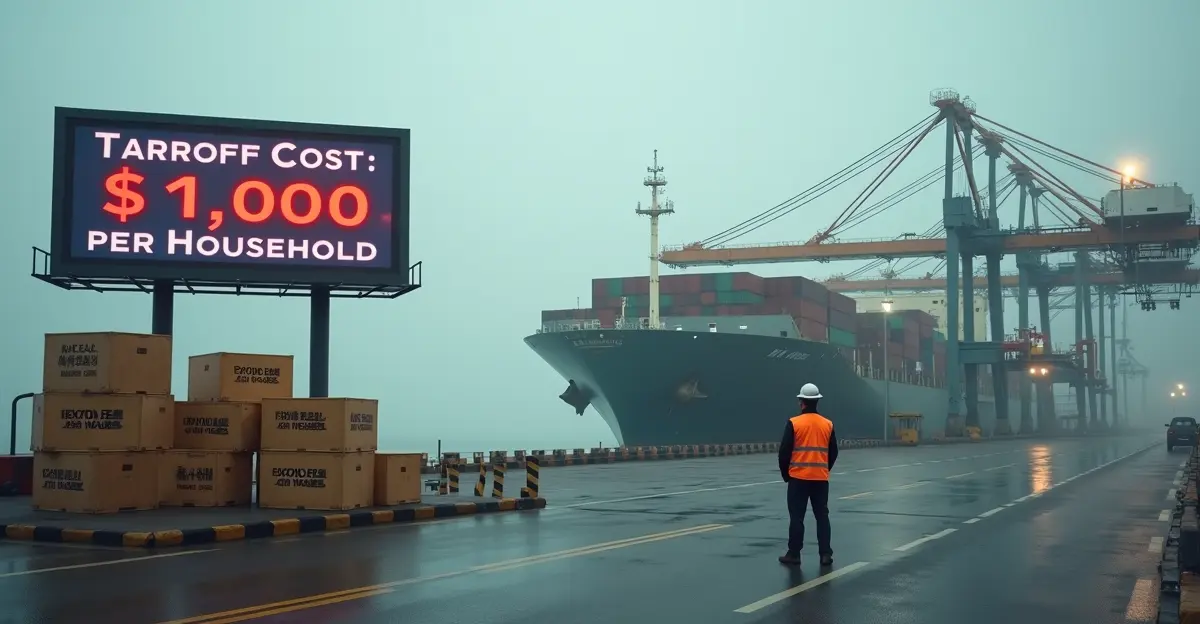
As of January 2026, the United States has imposed a historic 37.3% aggregate tariff rate on Chinese imports — more than double the global average. This includes a 30% base tariff, 50% Section 301 levies on Chinese semiconductors, and steep de minimis duties. The impact has been immediate: Chinese exports to the U.S. fell 18.9% year-on-year to $385.91 billion. The Thomson Reuters report notes that 72% of trade professionals identify U.S. tariff volatility as the most impactful regulatory change, up sharply from 41% the previous year. A Maersk survey found that 78% of European customers expect continued volatility for one to two years.
Supply Chain Restructuring Accelerates
The combination of tariff shocks and geopolitical uncertainty is forcing the fastest supply chain restructuring in modern history. The Thomson Reuters report reveals that 68% of organizations now rank supply chain management as their top priority, nearly double the 35% reported in 2024. To cope, 39% of firms are absorbing tariff costs internally — up from just 13% — rather than passing them to customers. Mitigation strategies include changing sourcing patterns (65%), renegotiating supplier contracts (57%), and nearshoring (51%). McKinsey reported that 82% of supply chain leaders were affected by new tariffs, and 43% of respondents plan to shift supply chains to the U.S. over three years.
Nearshoring and Regionalization
The nearshoring trends 2026 are accelerating as companies seek to reduce exposure to US-China tensions. ASEAN nations and Mexico are emerging as primary beneficiaries, with firms developing parallel supply chains for Western and Asia-Pacific markets. The window for transition is tight, with reciprocal tariffs suspended only until November 2026. Cost control has become critical: Procter & Gamble faces $1 billion in tariff costs, and Boston Scientific has cut discretionary spending. The collapse of just-in-time logistics is giving way to "just-in-case" inventory strategies, with companies building buffer stocks and diversifying supplier bases.
Impact on Industries and Consumers
The tariff shock is rippling through multiple sectors. Semiconductor tariffs are hitting tech hardware, while steel and aluminum levies raise costs for automotive and construction. The WEF report notes that economic downturn and inflation both rose eight positions in the risk rankings, reflecting growing concern about stagflation. Insured losses from natural catastrophes reached $107 billion in 2025, compounding supply chain disruptions. Consumers are feeling the pinch as companies absorb or pass on higher costs — 39% of firms now absorb tariff costs, but many are forced to raise prices, contributing to persistent inflation.
Technology as a Mitigation Tool
In response to complexity, trade departments are gaining strategic influence, and technology adoption is accelerating. The Thomson Reuters report finds that 40% of organizations are exploring AI or blockchain for trade compliance, up from just 6% in 2024. These tools help manage tariff classification, rules of origin, and real-time monitoring of trade policy changes. However, cyber attacks are escalating — a Jaguar Land Rover attack caused €550 million in losses and halted production, highlighting the vulnerability of digitized supply chains.
Expert Perspectives
The WEF report warns that declining trust, protectionism, and weakening multilateral frameworks are threatening global stability. "The defining theme is an 'age of competition' as multilateralism retreats," the report states. Thomson Reuters analysts emphasize that 76% of businesses expect tariffs to persist for at least four years, requiring long-term strategic reconfiguration. The supply chain resilience strategies being adopted today will determine which companies thrive in this new environment.
FAQ
What is geoeconomic confrontation?
Geoeconomic confrontation refers to the use of economic tools — such as tariffs, sanctions, export controls, and supply chain restrictions — to achieve geopolitical objectives. The WEF 2026 report ranks it as the top short-term global risk.
How high are US tariffs on China in 2026?
As of January 2026, the aggregate U.S. tariff rate on Chinese imports stands at 37.3%, including a 30% base tariff, 50% Section 301 levies on semiconductors, and other duties.
What percentage of companies are changing sourcing patterns?
According to the Thomson Reuters 2026 Global Trade Report, 65% of trade professionals report changing sourcing patterns in response to tariff volatility.
Is nearshoring accelerating?
Yes, 51% of organizations are pursuing nearshoring strategies, with 43% planning to shift supply chains to the U.S. over three years, according to McKinsey data cited in the report.
How long are tariffs expected to last?
The Thomson Reuters report finds that 76% of businesses expect current tariff levels to persist for at least four years, indicating a permanent structural shift rather than a temporary disruption.
Conclusion and Future Outlook
The 2026 tariff shock represents a watershed moment for global trade. With the WEF warning of an "age of competition" and supply chain disruption now the top priority for 68% of trade professionals, companies must adapt or risk being left behind. The shift toward regionalization, nearshoring, and technology-enabled resilience is likely to accelerate, even as the risk of further escalation remains high. The future of global trade 2026 will be defined by fragmentation, but also by opportunity for those who navigate the complexity effectively.
Sources
- World Economic Forum, Global Risks Report 2026, January 2026
- Thomson Reuters, 2026 Global Trade Report, November 2025
- CNBC, "World Economic Forum 2026 Global Risks Report," January 14, 2026
- GrowthHQ, "US-China Tariffs 2026: How Extreme Tariff Hikes Are Forcing Global Supply Chain Restructuring," January 2026
- Indigrowth, "Supply Chain Trends 2026: Tariffs, Nearshoring, Resilience," 2026



Follow Discussion