


 Deutsch
 English
 Español
 Français
 Nederlands
 Português


 Share
Share




The World Economic Forum's 2026 Global Risks Report, released in January 2026, has ranked geoeconomic confrontation as the top global risk for the first time in the survey's history. This landmark shift reflects the systemic weaponization of tariffs, export controls, and financial sanctions—particularly between the United States and China—that is fundamentally reshaping the architecture of global supply chains. With US effective tariff rates rising from 2.4% in late 2024 to approximately 22% by mid-2025 before settling near 12% in early 2026, and over 18,000 discriminatory trade measures introduced globally since 2020, the world is witnessing the most significant restructuring of production networks since the advent of container shipping.
The WEF 2026 Global Risks Report: A New Age of Competition
The 21st edition of the WEF's Global Risks Report, published in January 2026, surveyed nearly 1,000 experts and policymakers worldwide. Geoeconomic confrontation surged eight positions to claim the top spot in the two-year outlook, followed by interstate conflict, extreme weather events, societal polarization, and misinformation. Only 1% of respondents expect a calm global outlook over any timeframe, while 50% anticipate a turbulent or stormy environment over the next two years. The report underscores that a new competitive order is emerging as major powers seek to secure their spheres of interest through economic coercion. The rise of trade protectionism is no longer a peripheral concern but the central organizing principle of international relations.
The Tariff Shock: US Policy as a Catalyst
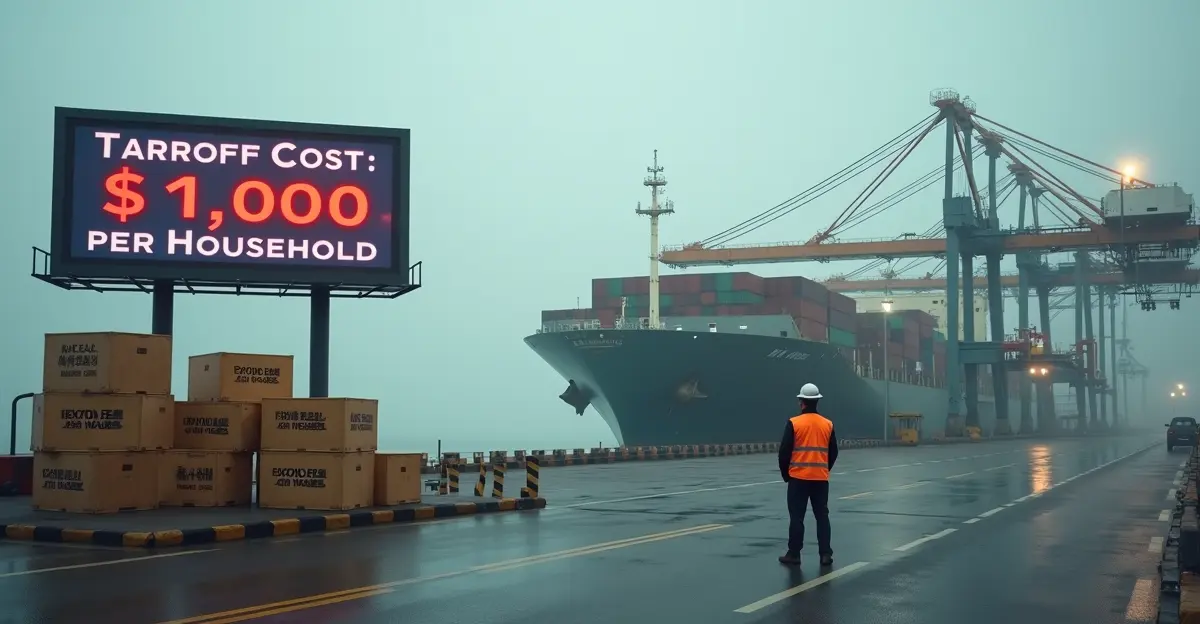
The United States has been the primary driver of this transformation. According to the Penn Wharton Budget Model, the average effective US tariff rate rose from 2.3% in January 2025 to 10.5% by November 2025—a roughly sixfold increase on certain measures. BCG's 2026 geopolitical analysis confirms that US tariffs have increased sixfold in twelve months under the America First agenda. The Federal Reserve Bank of St. Louis documented that Chinese imports faced effective tariff rates peaking at approximately 45% by mid-2025, with computer and electronic product imports from China falling to just 35% of 2024 monthly averages. The US-China trade corridor has shrunk by roughly 30%, with over $165 billion in trade redirected to alternative partners.
Global Trade Alert: 18,000 Discriminatory Measures
The Global Trade Alert (GTA) watchdog reports that since 2020, governments worldwide have introduced approximately 18,000 discriminatory trade measures. These include not only tariffs but also export controls, local content requirements, investment screening mechanisms, and technology transfer restrictions. The UNCTAD Global Trade Update for January 2026 identifies this proliferation of protectionist tools as a key trend reshaping global commerce, noting that trade uncertainty has reached unprecedented levels. The WTO reform deadlock has left the multilateral trading system unable to effectively constrain these measures, accelerating the fragmentation of global trade governance.
Supply Chain Reconfiguration: From Efficiency to Resilience
The response from the corporate world has been swift and structural. McKinsey's 2026 update on global trade confirms a fundamental shift in supply chain geometry, moving from cost-optimized, centralized networks toward regionally resilient, multi-hub configurations. The Thomson Reuters 2026 Global Trade Report found that 72% of trade professionals identify US tariff volatility as the most impactful regulatory change, up from 41% previously. Supply chain management is now the top strategic priority for 68% of respondents. Companies are responding by changing sourcing patterns (65%), renegotiating supplier contracts (57%), and nearshoring production (51%).
Friendshoring and the Rise of Regional Blocs
The concept of friendshoring—shifting supply chains to politically allied nations—has moved from strategic theory to operational reality. Mexico replaced China as the largest exporter to the US in 2023, and this trend has accelerated. Vietnam, Thailand, Malaysia, and India have emerged as key Western-aligned manufacturing hubs. The EU is forging new trade pacts with Mercosur, Indonesia, and India, opening markets to 2 billion consumers. China, meanwhile, has deepened trade ties with over 90 countries and pivoted upstream toward industrial components and intermediate goods, with exports up 9%. The EU carbon border adjustment mechanism adds another layer of complexity, expected to raise transport costs by 20-30% by 2027.
Industrial Policy Arms Races and CEO Sentiment
Governments are not merely reacting but actively shaping the new landscape through industrial policy. The US CHIPS Act and Inflation Reduction Act, along with similar initiatives in the EU and China, have triggered a global subsidy race. BCG identifies six competitive arenas: trade and FDI realignment, supply chain security, industrial capabilities, technology access, human capital, and climate policy. The AI hardware buildout alone accounted for roughly one-third of global trade growth in 2025, with supply chains concentrated through Taiwan, South Korea, and ASEAN. Nearly 75% of CEOs are localizing production, according to PwC's 2026 CEO survey, reflecting a decisive shift in corporate strategy. The reshoring of critical industries is being driven by both government incentives and risk management imperatives.
Implications for Developing Economies
The fragmentation of global trade into competing blocs poses acute challenges for developing economies caught between the US and China. The IMF estimates that friendshoring could reduce global economic output by 2%, with some nations facing GDP losses of up to 6%. South-South trade has surged to $6.8 trillion, offering an alternative pathway, but many least-developed countries lack the infrastructure and capital to navigate the new landscape. UNCTAD warns that the digital divide between developed and developing nations is widening as services trade outpaces goods trade. For businesses and investors, the new multipolar order demands a fundamental reassessment of risk: geopolitical alignment is now a supply chain design criterion, not an afterthought.
Expert Perspectives
Geoeconomic confrontation is not a temporary disruption but a structural shift in the global order. The WEF report makes clear that we have entered an age of competition where economic tools are the primary instruments of statecraft, said Saadia Zahidi, Managing Director of the World Economic Forum. Companies that fail to integrate geopolitical risk into their core operations will find themselves exposed to cascading disruptions that no amount of inventory buffering can mitigate, added a senior partner at McKinsey & Company in the firm's 2026 supply chain report.
Frequently Asked Questions
What is geoeconomic confrontation?
Geoeconomic confrontation refers to the use of economic tools—such as tariffs, export controls, sanctions, and investment restrictions—by states to achieve strategic objectives, often at the expense of multilateral cooperation and open trade.
Why is geoeconomic confrontation the top global risk in 2026?
The WEF's 2026 Global Risks Report ranks it first because of the unprecedented scale and systemic nature of trade weaponization between major powers, particularly the US and China, which is fragmenting global markets and undermining the rules-based trading system.
How are supply chains changing in response?
Supply chains are shifting from centralized, cost-optimized models to regional, resilience-focused networks. Companies are nearshoring, friendshoring, and diversifying suppliers, with 65% changing sourcing patterns and 51% nearshoring production.
What does friendshoring mean?
Friendshoring (or allyshoring) is the practice of moving manufacturing and sourcing to geopolitically aligned allied nations rather than purely cost-effective locations, reducing exposure to geopolitical disruptions.
How does this affect developing economies?
Developing economies face increased pressure as trade fragmentation reduces market access and investment flows. However, South-South trade and new regional pacts offer some opportunities for diversification.
Conclusion: A Multipolar Trade Order Emerges
The elevation of geoeconomic confrontation to the top global risk marks a watershed moment for the international economic system. The WTO-based trading order that has governed global commerce for three decades is fracturing, replaced by a patchwork of regional blocs, allied networks, and strategic rivalries. For businesses, the imperative is clear: build resilience through diversified, regionally anchored supply chains; invest in geopolitical risk intelligence; and prepare for a world where trade is as much about security as it is about efficiency. The future of global trade governance remains uncertain, but one thing is clear—the era of hyper-globalization is over, and the age of geoeconomic competition has begun.
Sources
- World Economic Forum, Global Risks Report 2026, January 2026
- BCG, Geopolitical Forces Shaping Business in 2026, 2025
- McKinsey Global Institute, Geopolitics and the Geometry of Global Trade 2026 Update
- Penn Wharton Budget Model, Effective Tariff Rates Update, February 2026
- Federal Reserve Bank of St. Louis, Shifting US Import Landscape, January 2026
- Thomson Reuters, 2026 Global Trade Report
- Global Trade Alert, Discriminatory Trade Measures Database
- UNCTAD, 10 Trends Shaping Global Trade 2026, January 2026
- PwC, 29th Global CEO Survey, 2026





Follow Discussion