


 Deutsch
 English
 Español
 Français
 Nederlands
 Português


 Share
Share




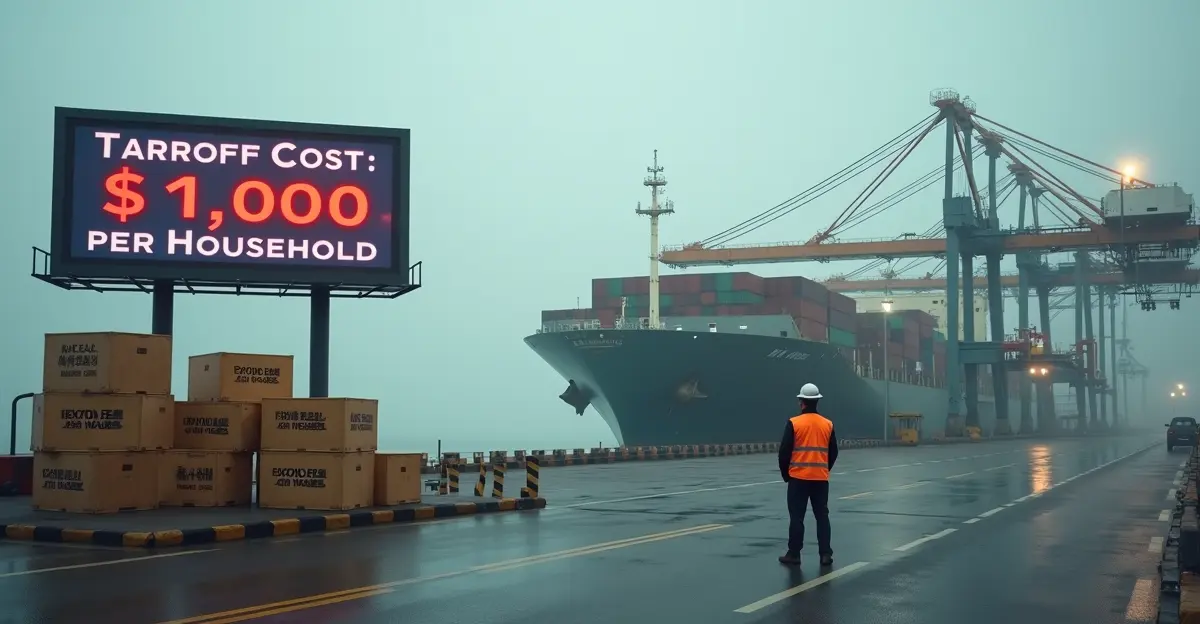
The World Economic Forum's Global Risks Report 2026 has ranked geoeconomic confrontation as the top short-term risk for the first time, signaling that tariffs, export controls, and sanctions have become the primary instruments of strategic competition. With the US-China tariff escalation pushing effective rates on Chinese goods to roughly 22% (and as high as 33% when stacking all tariff layers), over 18,000 discriminatory trade measures enacted globally since 2020, and 65% of multinationals permanently restructuring sourcing via friendshoring and nearshoring, the global trading system is fracturing into competing blocs. This analysis examines how supply chain weaponization is reshaping corporate strategy, sovereign risk, and the prospects for global trade growth—projected to slow to between 1.5% and 2.6% in 2026.
The WEF's 2026 Risk Landscape: A New Age of Competition
The Global Risks Report 2026, based on insights from over 1,300 global experts, paints a stark picture of an 'Age of Competition' where risks are becoming more interconnected and compounding faster than governance structures can adapt. Geoeconomic confrontation—defined as the use of economic tools such as tariffs, export controls, and sanctions for strategic advantage—leapfrogged to the top of the two-year risk ranking, with 18% of respondents identifying it as the risk most likely to trigger a global crisis in 2026. State-based armed conflict followed at 14%, while misinformation and cyber insecurity rounded out the top five.
According to the report, 50% of respondents anticipate a turbulent or stormy outlook over the next two years, worsening to 57% over the decade. Only 1% expect calm conditions. The WEF Global Risks 2026 findings underscore a structural shift: economic tools are now the primary weapons of strategic competition, replacing traditional military confrontation in many arenas.
Supply Chain Weaponization: By the Numbers
The data behind the WEF's warning is staggering. Since 2020, approximately 18,000 new discriminatory trade measures have been introduced globally, according to the UNCTAD Global Trade Update. Technical regulations now affect roughly two-thirds of global trade, raising compliance costs especially for smaller exporters. The US-China tariff war has evolved into a multi-layered system: as of May 2026, the blended effective US tariff on Chinese imports stands at approximately 33%, stacked across MFN base rates, Section 301 tariffs, IEEPA fentanyl tariffs, and reciprocal tariffs. Some sectors face far higher rates—electric vehicles and lithium-ion batteries reach 110-145%, effectively excluding them from the US market.
The Thomson Reuters 2026 Global Trade Report reveals the corporate response: 65% of trade professionals report changing sourcing patterns, 57% are renegotiating supplier contracts, and 51% are pursuing nearshoring or reshoring strategies. Supply chain disruption is now the top priority for 68% of firms, nearly double the previous year. The supply chain reconfiguration 2026 trend is accelerating at an unprecedented pace.
Friendshoring and Nearshoring: The New Geography of Trade
Mexico has emerged as the leading nearshoring destination, surpassing China as the United States' largest trading partner, with record FDI exceeding $40 billion in 2025 and an 18% increase in cross-border truck crossings since 2023. Other hotspots include Southeast Asia (Vietnam, Thailand), Eastern Europe (Poland, Czech Republic), and North Africa (Morocco, Tunisia). These shifts are fundamentally reshaping freight flows: trans-Pacific ocean volumes are plateauing while intra-regional routes expand, and US-Mexico cross-border trucking is surging.
However, the transition is not without friction. Infrastructure gaps, labor shortages, and supply chain maturity issues plague many nearshoring destinations. Moreover, 76% of businesses expect tariffs to persist for at least four years, signaling that these shifts are permanent structural changes rather than temporary adjustments.
Corporate Strategy in an Era of Weaponized Trade
For multinational corporations, the new reality demands a fundamental rethinking of procurement and risk management. According to KPMG's 2026 Global Trade Outlook, companies are adopting political risk scoring for supplier countries, building agile sourcing capabilities, and investing in digital compliance tools. Technology adoption is accelerating: 40% of firms are now exploring AI or blockchain for trade management, up from just 6% in 2024.
The trade compliance 2026 landscape has become a strategic function rather than a back-office operation. Export controls on dual-use technologies, particularly semiconductors, AI, and quantum computing, are tightening across major economies. The US has expanded Section 301 investigations, while the EU is developing its own economic security toolkit. China has retaliated with rare-earth export controls and sectoral measures on agriculture and automotive goods.
"Supply chains are no longer just commercial networks—they are arenas of geopolitical influence," notes a recent analysis from BusinessCraft. "Companies that fail to integrate geopolitical risk into their supply chain design will find themselves exposed to disruptions that can wipe out entire product lines overnight."
Implications for Global Trade and Sovereign Risk
The fragmentation of the global trading system is taking a measurable toll on trade growth. UNCTAD projects global goods trade growth could slow to just 1.5% in 2026, while the World Bank forecasts 2.5% growth. Both projections are well below the pre-pandemic average of around 3%. The UNCTAD report warns that financial conditions now influence trade as much as real economic activity, with over 90% of trade depending on trade finance. Developing economies, generating over 40% of world output, face borrowing rates of 7-11% versus 1-4% in advanced economies, exacerbating the divide.
Sovereign risk is also rising. The sovereign debt risks 2026 are mounting as countries on the front lines of trade wars face revenue losses and fiscal strain. The WEF report notes that economic downturn and inflation have both jumped eight positions in the two-year risk ranking, while mounting debt concerns could trigger a new phase of volatility.
Expert Perspectives
Victoria Gonzalez, geopolitical analyst and author of this report, comments: "The WEF's 2026 report elevated geoeconomic confrontation to its highest-ever threat ranking, and structural shifts like 57% of firms renegotiating supplier contracts are happening in real time. This is the defining macro trend of early 2026. The question is no longer whether supply chains will be weaponized, but how companies and countries can build resilience in a permanently fractured system."
Saadia Zahidi, Managing Director of the World Economic Forum, stated in the report's foreword: "We are entering an era where economic interdependence, once seen as a stabilizer, is increasingly viewed as a vulnerability. Leaders must navigate a landscape where tariffs and sanctions are the new frontline."
Frequently Asked Questions
What is geoeconomic confrontation?
Geoeconomic confrontation refers to the use of economic tools—such as tariffs, export controls, sanctions, and investment restrictions—as instruments of strategic competition between nations. It has become the top short-term global risk according to the WEF's 2026 report.
How many trade measures have been enacted since 2020?
According to UNCTAD, approximately 18,000 discriminatory trade measures have been introduced globally since 2020, affecting nearly two-thirds of global trade.
What percentage of companies are changing sourcing patterns?
The Thomson Reuters 2026 Global Trade Report found that 65% of companies are changing sourcing patterns, 57% are renegotiating supplier contracts, and 51% are pursuing nearshoring or reshoring.
What is the projected global trade growth for 2026?
UNCTAD projects global goods trade growth could slow to 1.5% in 2026, while the World Bank forecasts 2.5%, both well below the pre-pandemic average of around 3%.
Which countries are benefiting from nearshoring trends?
Mexico has emerged as the top nearshoring destination, surpassing China as the US's largest trading partner. Other beneficiaries include Vietnam, Thailand, Poland, Czech Republic, Morocco, and Tunisia.
Conclusion: A Permanent Fracture
The evidence is clear: the global trading system is fracturing into competing blocs, and supply chains have become the primary battlefield of geoeconomic competition. With the WEF's 2026 report confirming this as the top short-term risk, and real-time data showing 65% of multinationals already restructuring sourcing, the trend is irreversible in the near term. Companies must adapt by embedding geopolitical risk into core strategy, while policymakers face the challenge of preventing further fragmentation that could undermine global prosperity. The era of supply chain weaponization is here to stay.
Sources
- World Economic Forum, Global Risks Report 2026
- UNCTAD, Global Trade Update (January 2026)
- Thomson Reuters, 2026 Global Trade Report
- KPMG, 2026 Global Trade Outlook
- Global Trade Alert, June 2026 Monthly Roundup
- World Bank, Global Economic Prospects 2026



Follow Discussion