


 Deutsch
 English
 Español
 Français
 Nederlands
 Português


 Share
Share




The World Economic Forum's Global Risks Report 2026 has ranked geoeconomic confrontation as the top short-term global risk, signaling a profound shift in the international economic order. With roughly 18,000 discriminatory trade measures introduced since 2020 and 65% of companies altering sourcing patterns, the multilateral trading system is fragmenting into competing US, China, and EU-led blocs. Businesses are being forced to shift from efficiency-first to resilience-first supply chains at 15-25% higher cost, while global trade growth slows to just 2.6% in 2026. This article analyzes the structural transformation of global trade architecture, the rising protectionism under the second Trump administration, and how developing economies are disproportionately affected.
What Is Geoeconomic Confrontation?
Geoeconomic confrontation refers to the use of economic tools—tariffs, sanctions, export controls, investment screening, and regulatory barriers—as instruments of geopolitical strategy. Unlike traditional trade disputes, geoeconomic confrontation is characterized by the deliberate weaponization of economic interdependence to achieve strategic objectives. The World Economic Forum Global Risks 2026 report identifies this as the most likely trigger of a material global crisis this year, with 18% of surveyed leaders citing it as their top concern. This marks a departure from previous decades when trade liberalization and multilateral cooperation were the dominant paradigms.
The Fracturing of Global Trade Architecture
US-Led Bloc: Protectionism and Reshoring
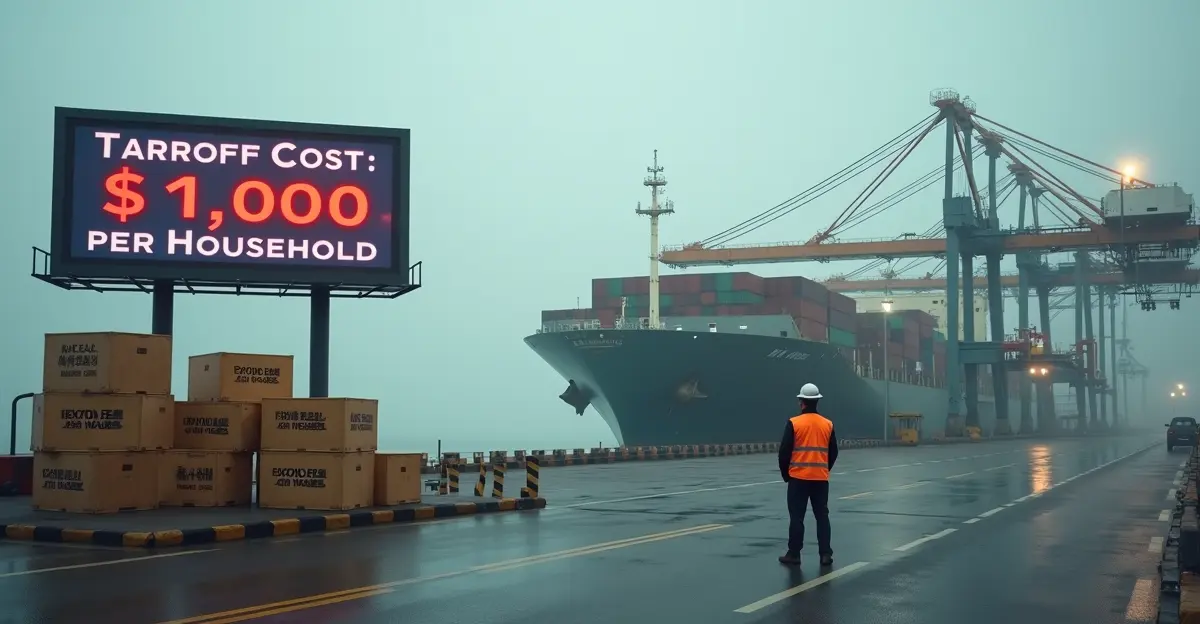
Under the second Trump administration, the United States has intensified its use of tariffs and industrial policy. The US has imposed Section 122 tariffs of up to 15% for balance-of-payment purposes, and the USMCA Joint Review scheduled for July 2026 is expected to tighten rules of origin. The CHIPS Act and Inflation Reduction Act have spurred reshoring of semiconductor and clean energy supply chains, but at a cost. According to UNCTAD's January 2026 Global Trade Update, US trade growth is projected at only 1.5% in 2026, weighed down by protectionist measures and weaker demand from trading partners.
China-Led Bloc: Expanding Influence via South-South Trade
China continues to expand its trade networks through the Belt and Road Initiative and bilateral agreements. South-South trade has surged from $500 billion in 1995 to $6.8 trillion in 2025, with 57% of developing-country exports now going to other developing markets. China's trade growth is projected at 4.6% in 2026, outpacing the global average. However, the US-China trade decoupling has accelerated, with US dependency on Chinese imports dropping since 2018, though some critical goods for the green transition have actually increased.
EU-Led Bloc: Regulatory Power and Carbon Borders
The European Union is leveraging regulatory standards as a trade barrier. The Carbon Border Adjustment Mechanism (CBAM) imposes carbon costs on imports, effectively creating a climate-based trade bloc. The EU-Mercosur agreement, finalized in early 2026, and potential EU-India deal signal a push for regulatory alignment. However, the EU Green Deal industrial policy has also raised concerns about protectionism, with industrial policy interventions rising 262% globally since 2019.
Supply Chain Reconfiguration: From Efficiency to Resilience
The shift from just-in-time to just-in-case supply chains is now a structural reality. A 2025 McKinsey survey found that 65% of companies have altered sourcing patterns due to geopolitical risks, with supply chain costs increasing 15-25%. Firms are adopting strategies such as nearshoring, friend-shoring, and multi-sourcing. For example, US companies are shifting production to Mexico and Vietnam, while European firms are sourcing more from Eastern Europe and North Africa. The global supply chain resilience 2026 trend is reshaping investment flows, with critical minerals and semiconductors becoming focal points of geopolitical competition.
Impact on Developing Economies
Developing economies are bearing the brunt of geoeconomic confrontation. Commodity-dependent countries—80% of developing markets—face heightened vulnerability to price volatility and reduced export demand. The 18,000 discriminatory trade measures since 2020 disproportionately affect smaller exporters who lack the resources to navigate complex regulatory environments. UNCTAD warns that rival regulatory blocs are forcing smaller countries to choose sides, undermining their policy space. Least developed countries still account for only 1.1% of global exports, and the weakening of the WTO's dispute settlement system—with the Appellate Body still non-functional—leaves them without effective recourse.
Expert Perspectives
"The multilateral trading system is under its greatest stress since the Great Depression," said Ngozi Okonjo-Iweala, WTO Director-General, at the Davos 2026 meeting. "We are seeing a fragmentation that could undo decades of development gains." Canadian Prime Minister Mark Carney noted that global trade shifts are structural, not cyclical, requiring fundamental adaptation. The WTO reform 2026 challenges remain unresolved, with the 14th Ministerial Conference in Cameroon expected to address dispute settlement and agricultural subsidies but facing deep divisions.
Frequently Asked Questions
What is geoeconomic confrontation?
Geoeconomic confrontation is the use of economic tools—such as tariffs, sanctions, export controls, and regulatory barriers—as weapons of geopolitical strategy, replacing traditional trade liberalization with strategic competition.
How many discriminatory trade measures have been introduced since 2020?
According to UNCTAD, roughly 18,000 discriminatory trade measures have been introduced globally since 2020, affecting a wide range of goods and services.
What is the projected global trade growth for 2026?
Global trade growth is projected to slow to 2.6% in 2026, down from higher levels in previous years, with the US growing at 1.5% and China at 4.6%.
How are supply chains changing?
Companies are shifting from efficiency-first to resilience-first supply chains, with 65% altering sourcing patterns. Strategies include nearshoring, friend-shoring, and multi-sourcing, increasing costs by 15-25%.
Why are developing economies disproportionately affected?
Developing economies face higher vulnerability due to commodity dependence, limited capacity to navigate complex trade regulations, and reduced access to dispute settlement mechanisms. They are also forced to choose sides in rival blocs.
Conclusion and Future Outlook
The geoeconomic confrontation defining 2026 is not a temporary disruption but a structural transformation of global trade. The fragmentation into US, China, and EU-led blocs is reshaping supply chains, regulatory standards, and economic alliances. While South-South trade offers new opportunities for developing economies, the overall outlook is one of slower growth, higher costs, and increased volatility. Policymakers face the urgent task of reforming multilateral institutions like the WTO to prevent a complete breakdown of the rules-based trading system. Without cooperation, the world risks a prolonged period of economic fragmentation that could undermine global prosperity and stability.



Follow Discussion