


 Deutsch
 English
 Español
 Français
 Nederlands
 Português


 Share
Share




Geoeconomic Confrontation Named Top Global Risk for 2026
The World Economic Forum's Global Risks Report 2026, published in January 2026, has ranked geoeconomic confrontation as the number one short-term risk for the first time, marking a historic shift in the global threat landscape. Based on a survey of over 1,300 leaders from business, government, and civil society, the report finds that 50% of respondents expect a turbulent or stormy outlook over the next two years, with only 1% anticipating calm conditions. Geoeconomic confrontation—fueled by tariffs, supply chain weaponization, and capital constraints—edged out state-based armed conflict (14%) and extreme weather events as the most likely trigger of a global crisis in 2026.
The report underscores a retreat from multilateralism as trust, rule of law, and international cooperation decline. Economic risks have intensified sharply, with economic downturn and inflation each rising eight positions in the rankings. The fastest-rising long-term concern is adverse outcomes of artificial intelligence, which jumped from 30th place to fifth over the ten-year horizon, with warnings about labor displacement, income inequality, and potential loss of human control over AI systems.
The Fracturing of Global Trade Into Three Blocs
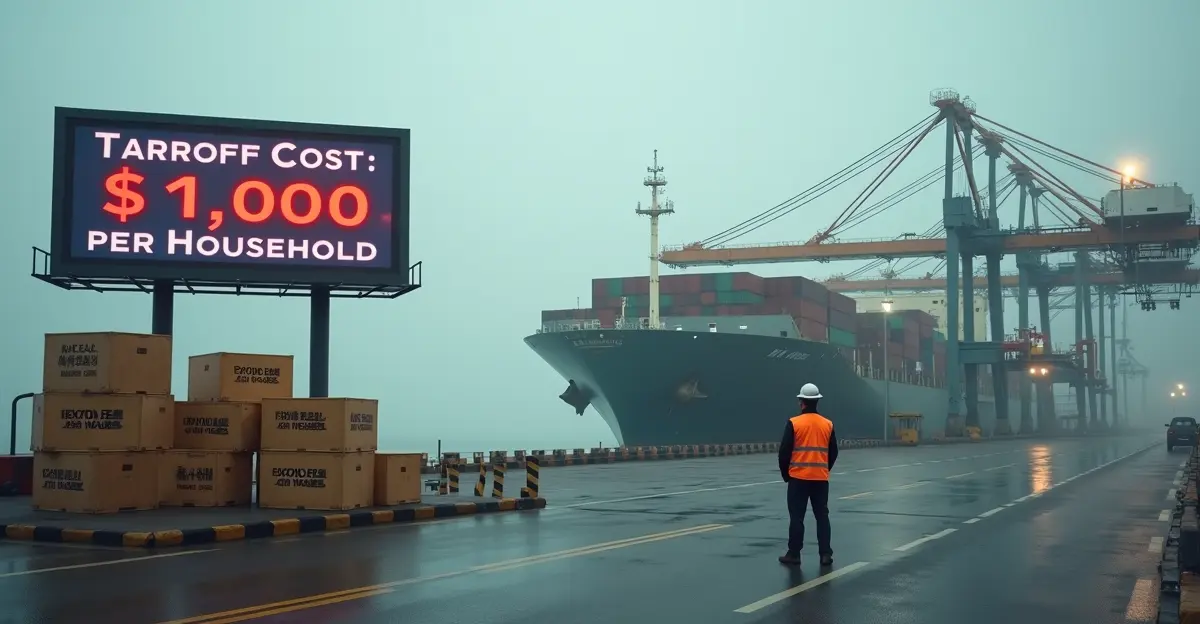
According to UNCTAD's Global Trade Update (January 2026), global trade enters 2026 under mounting pressure from slower growth, geopolitical fragmentation, and accelerating digital and green transitions. Since 2020, over 18,000 discriminatory trade measures have been implemented worldwide. The multilateral trading system is fracturing into three competing blocs anchored by the United States, China, and the European Union—each pursuing distinct economic governance models.
The US-Led Bloc: Tariff Volatility and Reshoring
The Thomson Reuters 2026 Global Trade Report reveals that 72% of trade professionals now cite US tariff volatility as the most impactful regulatory change, up from 41% a year earlier. Supply chain management has become the dominant strategic priority for 68% of respondents. Companies are responding by changing sourcing patterns (65%), renegotiating supplier contracts (57%), and nearshoring (51%). The report notes that 76% of professionals believe new US tariffs represent a permanent shift lasting at least four years, driving fundamental restructuring of supply chain operations.
US-China bilateral trade has fallen dramatically. According to US Census Bureau data, total two-way goods trade dropped from $605.9 billion in 2024 to roughly $414.7 billion in 2025—a decline of approximately $191 billion. The user-cited figure of $170 billion aligns closely with this trajectory. The US goods trade deficit with China narrowed to $202.7 billion in 2025, a 31.6% decrease from $297 billion in 2024, as both nations imposed tariffs exceeding 125% on each other's goods.
The China-Led Bloc: South-South Trade Acceleration
China is deepening ties with emerging economies to circumvent US tariffs. South-South merchandise exports have surged from $0.5 trillion in 1995 to $6.8 trillion in 2025, according to UNCTAD. Brazil-China trade hit a record $171 billion in 2025, more than double Brazil's $83 billion trade with the United States. Chinese demand for Brazilian oil, agricultural goods, and minerals has accelerated, while US tariffs prompted Brasilia to pivot toward Beijing. The China-Brazil trade corridor now accounts for 43% of Brazil's global trade surplus.
Connector economies like Vietnam and Thailand are emerging as critical nodes in the rewired global supply chain. Vietnam's industrial production grew 9.5% in 2025, with electronics becoming its largest export industry at ~$100 billion. Registered FDI in Vietnam hit $15.2 billion in Q1 2026, up 42.9% year-on-year. The Vietnam supply chain shift reflects a broader pattern where production moves from China to Southeast Asian hubs, though challenges remain in local supplier capabilities.
The EU Bloc: Carbon Pricing as a Trade Weapon
The European Union's Carbon Border Adjustment Mechanism (CBAM) entered its definitive operational phase on January 1, 2026, marking a watershed moment where carbon pricing extends beyond national borders. CBAM requires importers of carbon-intensive goods—cement, iron and steel, aluminum, fertilizers, electricity, and hydrogen—to purchase certificates corresponding to the carbon price that would have been paid under EU Emissions Trading System rules. This creates a new geopolitical leverage point, effectively establishing a climate-based trade barrier that differentiates the EU bloc from its US and Chinese counterparts.
The EU CBAM impact on global trade is already being felt, with developing countries expressing concerns about its potential to act as a protectionist measure. UNCTAD warns that commodity-dependent developing nations—80% of emerging markets—face heightened vulnerability due to such non-tariff measures.
Economic Consequences of Permanent Fragmentation
A World Economic Forum analysis, in collaboration with Oliver Wyman and NERA, finds that current trade fragmentation policies could curb global growth by at least 0.2 percentage points and push up inflation. In a worst-case escalation scenario, growth could be reduced by 6.4 percentage points and inflation raised by 6.1 percentage points. The report warns that restrictive trade policies are self-reinforcing: they create concentrated domestic winners who become dependent on protections and advocate for their preservation.
In the US, tariffs lift manufacturing output but raise input costs, reduce real wages across all skill groups, and lower services demand. The analysis cites that US washing machine tariffs cost consumers over $815,000 per job created annually. Countries on the receiving end see manufacturing output decline as exports lose competitiveness. Global insured catastrophe losses hit $107 billion in 2025, adding another layer of economic strain.
The global trade fragmentation economic impact is particularly severe for developing economies. UNCTAD projects global trade growth will stagnate at 2.6% in 2026, with major economies like the US (1.5%) and China (4.6%) slowing down. The WTO's dispute settlement mechanism remains paralyzed, leaving smaller nations with limited recourse against protectionist measures.
Expert Perspectives on the New Trade Architecture
"The transition from efficiency-first to resilience-first trade architecture is the defining economic story of our time," said Mia Chen, economic analyst and author of this report. "Companies that once optimized for just-in-time inventory are now building redundant supply chains across multiple blocs, accepting higher costs in exchange for geopolitical insurance."
The Thomson Reuters report notes that 40% of trade professionals now report enhanced influence over procurement and executive decision-making, as trade departments move from the back office to the boardroom. Technology adoption has surged nearly sevenfold, with 40% exploring AI or blockchain for trade compliance, up from 6% in 2024.
Frequently Asked Questions
What is geoeconomic confrontation?
Geoeconomic confrontation refers to the use of economic tools—such as tariffs, sanctions, export controls, and investment restrictions—as instruments of geopolitical competition between major powers. It is distinct from traditional trade disputes in that the primary objective is strategic advantage rather than commercial balance.
How are supply chains being rewired?
Supply chains are shifting from a China-centric model to a multi-hub architecture. Connector economies like Vietnam, Thailand, Mexico, and India are absorbing manufacturing capacity diverted from China. Companies are adopting "China+1" strategies, nearshoring production to regional hubs, and building redundant supplier networks across different geopolitical blocs.
What is the EU's CBAM and how does it affect trade?
The Carbon Border Adjustment Mechanism is an EU regulation that requires importers of certain carbon-intensive goods to purchase certificates reflecting the carbon price under the EU Emissions Trading System. It aims to prevent carbon leakage and encourage cleaner production globally, but critics argue it functions as a green trade barrier that disproportionately affects developing countries.
Will trade fragmentation reverse?
Most experts believe the fragmentation is structural and likely permanent. The Thomson Reuters report found that 76% of trade professionals expect current tariff regimes to last at least four years. The WEF analysis warns that protectionist policies are self-reinforcing, creating domestic constituencies that lobby for their preservation. Reversing the trend would require a renewed multilateral consensus that currently appears unlikely.
What does this mean for global growth and inflation?
Trade fragmentation is expected to reduce global GDP growth by 0.2 to 6.4 percentage points depending on escalation scenarios, while adding 0.1 to 6.1 percentage points to inflation. The immediate effects include higher consumer prices, reduced trade volumes, and slower productivity growth as resources are diverted from efficient allocation to geopolitical hedging.
Conclusion: A New Era of Economic Statecraft
The WEF Global Risks Report 2026 has crystallized what many economists have long warned: geoeconomic confrontation is no longer a theoretical risk but a measurable reality. With three competing trade blocs entrenching their positions, the world is witnessing the most significant restructuring of global economic architecture since the Bretton Woods system. The future of multilateral trade governance hangs in the balance as nations grapple with the tension between national security imperatives and the benefits of open markets. For businesses and policymakers alike, the imperative is clear: adapt to a fragmented world or risk being left behind.
Sources
- World Economic Forum, Global Risks Report 2026, January 2026
- UNCTAD, Global Trade Update, January 2026
- Thomson Reuters, 2026 Global Trade Report, November 2025
- US Census Bureau, Trade in Goods with China, 2025-2026
- WEF/Oliver Wyman/NERA, Geoeconomic Fragmentation Analysis, 2026




Follow Discussion