


 Deutsch
 English
 Español
 Français
 Nederlands
 Português


 Share
Share




The World Economic Forum's Global Risks Report 2026 has ranked geoeconomic confrontation as the number one short-term risk likely to trigger a global crisis, rising eight positions from the prior year. As the multilateral trading system fractures into competing U.S., China, and EU-led blocs, businesses face a permanent shift from efficiency-first to resilience-first supply chain strategies. With 72% of trade professionals citing tariff volatility as the most impactful regulatory change and 65% of companies altering sourcing patterns, the structural breakup of global trade architecture is reshaping corporate risk frameworks across industries.
What Is Geoeconomic Confrontation?
Geoeconomic confrontation refers to the use of economic tools—tariffs, sanctions, export controls, investment screening, and technology decoupling—as instruments of strategic competition between nations. Unlike traditional trade disputes, geoeconomic confrontation aims to weaken adversaries' economic capabilities while bolstering one's own strategic autonomy. The Global Risks Report 2026 identifies this as the top short-term threat, surpassing state-based armed conflict and economic downturn.
The Fracturing of Global Trade Architecture
Since 2020, UNCTAD data reveals that approximately 18,000 new discriminatory trade measures have been introduced worldwide. Technical regulations now affect roughly two-thirds of global trade, raising compliance costs especially for smaller exporters. The Thomson Reuters 2026 Global Trade Report, surveying 225 trade professionals, found that 76% believe current tariffs will last at least four years, indicating a structural rather than cyclical shift.
U.S.-China-EU Bloc Formation
The global economy is increasingly dividing into three competing spheres: a U.S.-led bloc centered on the Western Hemisphere and Indo-Pacific partnerships; a China-led sphere expanding through Belt and Road initiatives and regional trade pacts; and an EU-led bloc pursuing strategic autonomy through carbon border mechanisms and digital regulation. This fragmentation undermines the WTO's multilateral framework and creates overlapping, sometimes contradictory, regulatory regimes that multinational corporations must navigate.
From Efficiency to Resilience: The Corporate Response
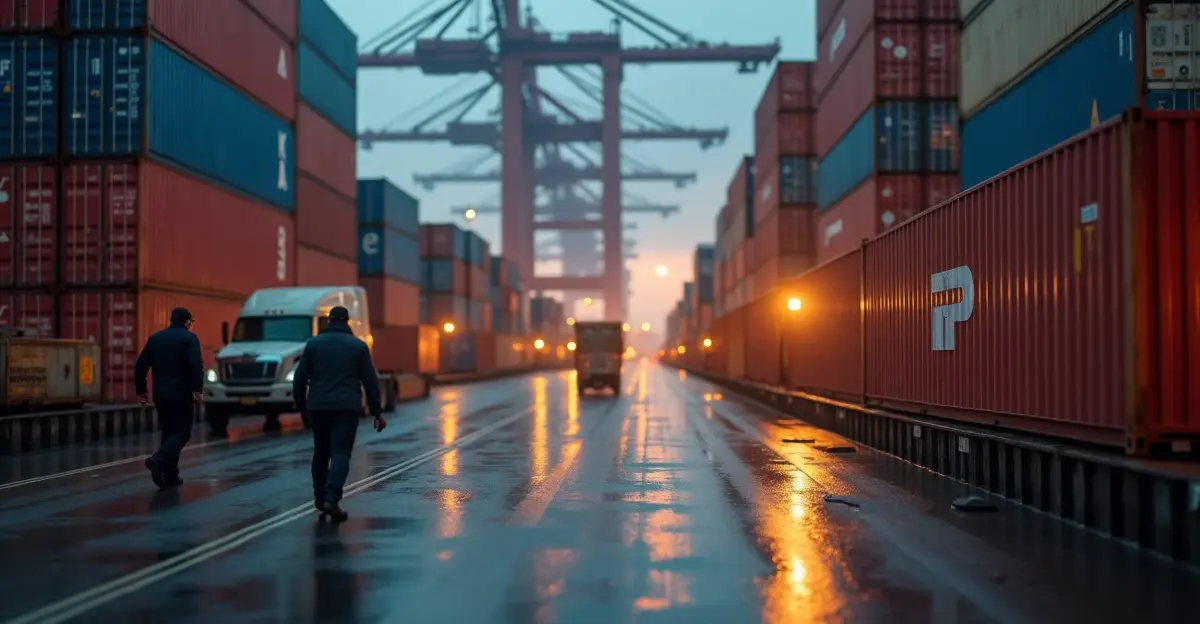
The Thomson Reuters report highlights that supply chain management is now the top strategic priority for 68% of respondents, nearly double last year's 35%. Companies are redesigning networks at an unprecedented pace: 65% are shifting sourcing patterns, 57% renegotiating supplier contracts, and 51% pursuing nearshoring. Mexico has become the largest U.S. trade partner, with cross-border trade exceeding $820 billion. The friend-shoring and strategic autonomy trends are driving a fundamental reorientation of global value chains.
Cost of Resilience
Companies now accept 15-25% higher costs for supply chain resilience, marking a definitive shift from 'just-in-time' to 'just-in-case' manufacturing. 39% of firms are absorbing tariff costs rather than passing them to customers, up from 13% previously. Both KPMG and Thomson Reuters warn that full inflationary impacts are yet to be felt as stockpiled inventories deplete in early 2026, potentially adding 0.5 to 1.0 percentage points to global inflation.
Technology as a Double-Edged Sword
Technology adoption is accelerating in trade management: 40% of firms are exploring AI or blockchain for trade compliance, up from just 6% in 2024. However, the adverse outcomes of AI technologies are also identified as a growing risk in the WEF report, with cyber insecurity and misinformation amplifying geoeconomic tensions. Digital trade barriers are rising alongside physical ones, with data localization requirements and technology export controls becoming key battlegrounds.
Implications for Strategic Resilience
The convergence of WEF, Thomson Reuters, and UNCTAD findings points to an unprecedented regime shift. Global trade growth is projected to slow to 2.6% in 2026, down from over 3% in 2025, with developing economies disproportionately affected. Services trade continues to outpace goods trade (growing 9% in 2025), but digital divides leave least developed countries with only 16% digitally deliverable services exports versus 61% in developed economies. South-South trade now accounts for 57% of developing-country exports, offering an alternative pathway but also exposing new vulnerabilities.
Environmental priorities increasingly shape trade policy, with carbon border adjustment mechanisms emerging as both climate tools and potential trade barriers. Critical minerals face price volatility as countries compete for resources essential to the green transition. The WTO reform and multilateral cooperation remain stalled, raising questions about whether existing institutions can adapt to the new geoeconomic reality.
Expert Perspectives
"Geoeconomic confrontation has emerged as the most severe risk over the next two years, while economic risks have experienced the sharpest rises among all risk categories," states the WEF Global Risks Report 2026. "Supply chain resilience, flexibility, and compliance are now front-line business priorities," adds the Thomson Reuters report, emphasizing that the shift is structural and long-lasting.
UNCTAD's January 2026 Global Trade Update warns that "trade rule reform faces a crossroads ahead of the WTO's 14th ministerial conference, while rising tariffs fuel uncertainty and geopolitical tensions."
Frequently Asked Questions
What is geoeconomic confrontation?
Geoeconomic confrontation is the strategic use of economic tools such as tariffs, sanctions, export controls, and technology decoupling to achieve geopolitical objectives, often at the expense of multilateral trade cooperation.
Why is geoeconomic confrontation the top risk for 2026?
The WEF Global Risks Report 2026 ranks it first because 18% of global experts surveyed believe it is the most likely risk to trigger a global crisis, reflecting the accelerating fragmentation of the global trading system into rival blocs.
How are companies responding to trade fragmentation?
According to the Thomson Reuters 2026 Global Trade Report, 65% of firms are changing sourcing patterns, 57% renegotiating supplier contracts, and 51% pursuing nearshoring, while accepting 15-25% higher costs for supply chain resilience.
What is the impact on developing countries?
Developing economies face higher compliance costs from 18,000 new discriminatory measures, widening digital divides, and slower trade growth, though South-South trade offers some alternative opportunities.
How long will current trade disruptions last?
76% of trade professionals surveyed believe current tariffs will persist for at least four years, indicating a structural shift rather than a temporary disruption.
Conclusion: Navigating a Fractured World
The evidence from the WEF, Thomson Reuters, and UNCTAD is clear: geoeconomic confrontation is not a passing trend but a defining feature of the 2026 global landscape. Businesses and governments must embed strategic resilience into their core operations, accepting higher costs and complexity as the price of operating in a multipolar, contested world. The 2026 global trade outlook demands a fundamental rethinking of risk management, supply chain design, and international cooperation.




Follow Discussion