


 Deutsch
 English
 Español
 Français
 Nederlands
 Português


 Share
Share




The World Economic Forum's Global Risks Report 2026, released on January 14, 2026, has ranked geoeconomic confrontation as the top short-term risk for the first time in the report's history. This landmark finding reflects the systemic weaponization of tariffs, export controls, and sanctions—particularly between the United States and China—that is fundamentally rewiring global supply chains. With over 18,000 discriminatory trade measures introduced globally since 2020, according to UNCTAD's January 2026 Global Trade Update, and US effective tariff rates having surged from 2.2% in January 2025 to approximately 10.9% by October 2025 before settling near 12%, the architecture of global trade is undergoing its most profound transformation since the post-war era.
The WEF 2026 Global Risks Report: A Turning Point
The 21st edition of the Global Risks Report captures a world entering what the WEF describes as the second half of a turbulent decade. Based on insights from over 1,300 global experts, the report identifies geoeconomic confrontation as the risk most likely to trigger a material global crisis in 2026, cited by 18% of respondents. State-based armed conflict follows at 14%, while economic downturn and inflation have risen sharply in the rankings. Half of surveyed leaders expect a turbulent or stormy outlook over the next two years, rising to 57% over a decade.
"The Global Risks Report 2026 signals an age of competition where confrontation replaces collaboration," the WEF states. The report warns that multilateralism is in retreat as major powers increasingly use trade as a weapon of geopolitical strategy. Environmental risks, while deprioritized in the short term, remain the most severe over the next decade, with extreme weather events topping the long-term risk list.
The Weaponization of Trade: Tariffs, Export Controls, and Sanctions
Tariff Escalation and the New Protectionism
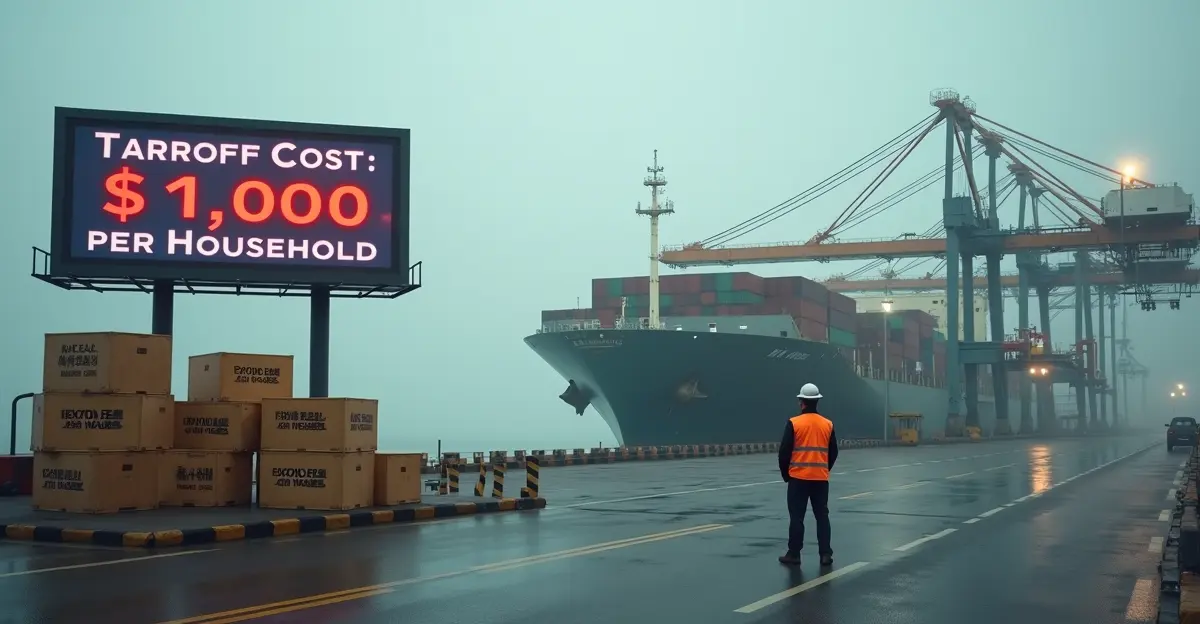
The United States has led a global wave of tariff increases since 2025. According to the Penn Wharton Budget Model, the average US effective tariff rate rose from 2.2% in January 2025 to 10.91% by October 2025—a 394% increase. China faces the highest rates at 37.4%, while steel and aluminum products are the most heavily tariffed category at 41.1%, followed by automotive vehicles at 15.5%. The UNCTAD tariff dashboard, updated February 2026, tracks the evolution of US "reciprocal" and sectoral tariffs introduced since February 2025, noting that these new measures are layered atop existing trade rules and exemptions.
The US-China trade war has expanded beyond tariffs into a comprehensive technology decoupling. In January 2026, the Bureau of Industry and Security revised its licensing policy for semiconductor exports to China, now reviewing applications for advanced chips like Nvidia's H200 and AMD's MI325X on a case-by-case basis under strict security conditions. This represents a calibrated approach to export controls that balances national security with commercial interests.
18,000 Discriminatory Measures and Counting
Since 2020, governments worldwide have introduced approximately 18,000 discriminatory trade measures, according to UNCTAD. The Global Trade Alert, the world's trade policy watchdog, has documented a surge in tariffs, subsidies, licensing requirements, and local content rules. The WTO's Trade Measures Database confirms that G20 economies have increasingly turned to import-restrictive measures, with trade coverage reaching record highs. This proliferation of barriers is not limited to the US-China axis; the European Union has introduced carbon border adjustment mechanisms, India has tightened local content requirements, and multiple nations have imposed export restrictions on critical minerals.
Supply Chain Reconfiguration: From Efficiency to Resilience
The cumulative effect of these trade barriers is a fundamental structural shift in global supply chains. The old model—cost-optimized, centralized, and efficiency-driven—is giving way to regionally resilient, multi-hub configurations. Three key strategies define this transformation.
Nearshoring: Mexico's Rise
Mexico has emerged as the primary beneficiary of nearshoring. In 2025, Mexico posted a record US$664.84 billion in exports, with over 80% going to the US market, solidifying its position as the largest exporter to the United States—surpassing both China and Canada for the first time. US companies announced $35 billion in nearshoring investments to Mexico in 2023 alone, and foreign direct investment in Mexican manufacturing has exceeded $40 billion. Tesla's $5 billion gigafactory in Nuevo León exemplifies this trend. Nearshoring has reduced supply chain costs by 15-20% for 65% of firms and cut lead times by 40%, according to industry data.
Friendshoring: Geopolitical Alignment as a Design Criterion
Beyond geographic proximity, geopolitical alignment has become a critical supply chain design criterion. The friendshoring trend involves shifting production to politically allied nations. The US CHIPS Act and Inflation Reduction Act provide subsidies to incentivize this shift, while the USMCA trade agreement has strengthened North American integration. USMCA exemption claims for Canadian and Mexican imports jumped to nearly 89.1% by October 2025, according to the Penn Wharton model.
However, friendshoring comes with economic costs. The International Monetary Fund estimates that friendshoring could reduce global economic output by 2% due to trade barriers, with uneven impacts across nations—less than 1% for the US but up to 6% for some countries. The IMF's October 2025 World Economic Outlook projects global growth slowing from 3.3% in 2024 to 3.2% in 2025 and 3.1% in 2026, with risks tilted to the downside from prolonged uncertainty and protectionism.
Multi-Hub Configurations and Regionalization
Supply chains are evolving toward multi-hub models that combine nearshoring, friendshoring, and selective offshoring. Southeast Asia has emerged as a "China+1" destination, while Eastern Europe and North Africa serve European markets. Freight flows reflect this shift: trans-Pacific ocean volumes are plateauing, while intra-regional routes expand. US-Mexico cross-border trucking has surged, with an 18% increase in crossings since 2023, and intermodal rail corridors are growing. The global nearshoring market is projected to grow at a 15% compound annual rate through 2030.
Impact on Global Trade Architecture
The reconfiguration of supply chains is reshaping the entire trade architecture. South-South trade now accounts for 57% of developing-country exports, according to UNCTAD, while services trade—less affected by tariffs—grew 9% in 2025 and now represents 27% of global trade. Critical minerals have become a new arena of geopolitical competition, with countries imposing export restrictions to secure supply chains for the energy transition.
The global trade fragmentation is accelerating faster than most realize. The WTO's multilateral framework is struggling to adapt, as the dispute settlement system remains paralyzed and major economies pursue bilateral and regional agreements instead. The IMF warns that a deeper trade war could worsen the outlook, while de-escalation could revive growth.
Expert Perspectives
"Geoeconomic confrontation has moved from a background risk to the central strategic challenge for global business," said Saadia Zahidi, Managing Director of the World Economic Forum. "Companies can no longer design supply chains based solely on cost; they must now factor in geopolitical risk, regulatory uncertainty, and resilience."
Jeffrey Kessler, Under Secretary for Industry and Security at the US Department of Commerce, stated that the revised semiconductor export policy "allows controlled sales to strengthen the American technology ecosystem while protecting national security."
Frequently Asked Questions
What is geoeconomic confrontation?
Geoeconomic confrontation refers to the use of economic tools—such as tariffs, export controls, sanctions, and investment restrictions—as instruments of geopolitical strategy between major powers, particularly the United States and China.
How many discriminatory trade measures have been introduced since 2020?
According to UNCTAD's January 2026 Global Trade Update, approximately 18,000 discriminatory trade measures have been introduced globally since 2020, including tariffs, subsidies, licensing requirements, and local content rules.
What is the difference between nearshoring and friendshoring?
Nearshoring involves relocating production to geographically nearby countries (e.g., US companies moving to Mexico), while friendshoring involves shifting production to politically allied nations, regardless of geographic proximity.
How much could friendshoring reduce global economic output?
The IMF estimates that friendshoring could reduce global economic output by approximately 2%, with the US experiencing less than 1% reduction but some countries facing up to 6% losses.
Which country has benefited most from nearshoring to the US?
Mexico has been the primary beneficiary, surpassing China in 2025 as the largest exporter to the United States, with record exports of US$664.84 billion and over 80% destined for the US market.
Conclusion: The New Normal
The WEF's 2026 Global Risks Report confirms that geoeconomic confrontation is not a temporary disruption but the defining strategic economic trend of the decade. Supply chains are being rewired along geopolitical lines, with resilience and security joining cost and efficiency as core design principles. While the transition imposes significant economic costs—estimated at 2% of global output—it also creates opportunities for countries like Mexico and for industries that adapt quickly. The key question for 2026 and beyond is whether the world can manage this fragmentation without triggering a broader economic crisis, or whether the weaponization of trade will escalate into more destructive forms of confrontation.
Sources
- World Economic Forum, Global Risks Report 2026, January 14, 2026
- UNCTAD, Global Trade Update, January 2026
- Penn Wharton Budget Model, Effective Tariff Rates Analysis, January 15, 2026
- International Monetary Fund, World Economic Outlook, October 2025
- Global Trade Alert, Trade Policy Watchdog Data
- US Department of Commerce, BIS Semiconductor Export Policy Revision, January 13, 2026
- Mexico Business News, Mexico Export Record 2025
- FreightPulse, Nearshoring Reshaping Supply Chains 2026




Follow Discussion