
 Deutsch
 English
 Español
 Français
 Nederlands
 Português






AI Data Center Geopolitics: Water Scarcity, Energy Grids & Strategic Competition Explained
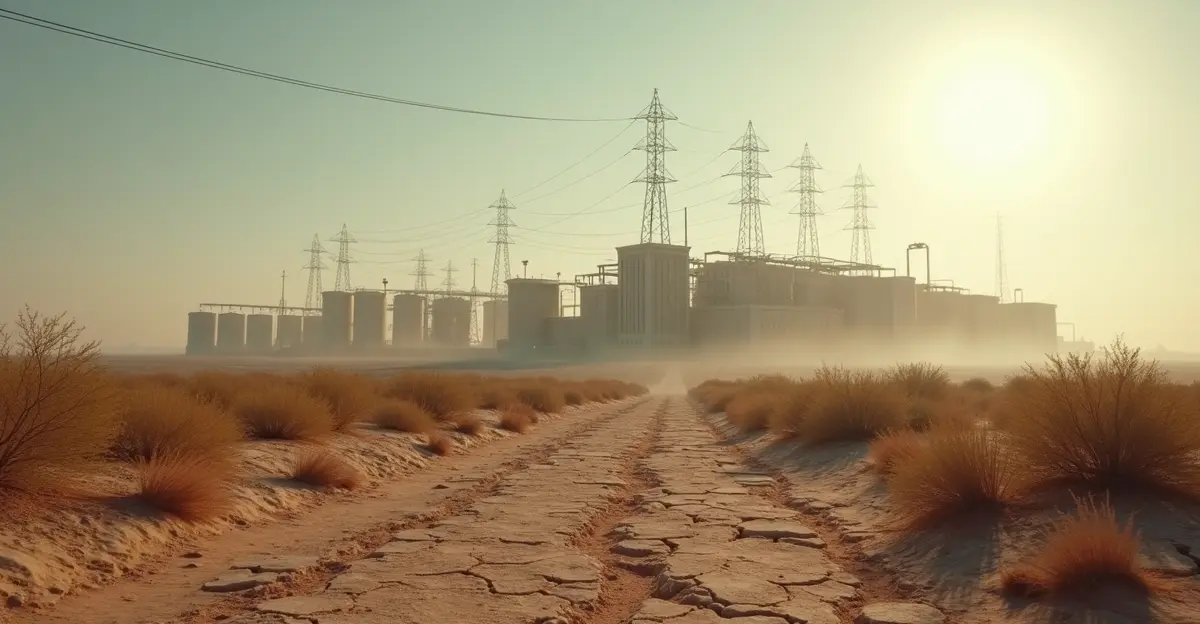
The explosive growth in artificial intelligence infrastructure is creating new geopolitical fault lines as nations and tech giants compete for resource-advantaged locations to build AI data centers. With $550 billion in construction projects underway globally, nearly one-third are situated in regions projected to face severe water scarcity by 2050, creating immediate strategic implications for technology companies and governments alike. This intersection of AI advancement with climate resilience, energy policy, and national security considerations represents one of the most significant geopolitical shifts of our time.
What is the AI Data Center Resource Crisis?
AI data centers represent the physical infrastructure powering artificial intelligence systems, requiring massive amounts of electricity and water for cooling operations. Unlike traditional data centers, AI facilities consume exponentially more resources due to the computational intensity of training large language models and running inference workloads. The current global construction boom involves projects worth $550 billion, with U.S. data centers alone consuming 176 terawatt hours annually—4.4% of total U.S. power as of March 2026, projected to reach 9-17% by 2030. This massive energy demand is driving retail electricity prices up 42% since 2019 and straining aging power grids across multiple continents.
The Water-Energy Tradeoff: A Critical Geopolitical Calculus
Water Scarcity Projections and Strategic Siting
MSCI analysis reveals that nearly one-third of new data centers under construction are in regions projected to face greater water scarcity by 2050, particularly in Chile, Brazil, Mexico, Turkey, and Australia. This creates a fundamental tension between energy and water efficiency: water-based cooling systems reduce energy use but increase water consumption through evaporation, while air-based cooling conserves water but requires more electricity. Training GPT-3 alone consumed 700,000 liters of freshwater, and U.S. data center water usage has surged from 21.2 billion liters in 2014 to 66 billion liters in 2023. A UC Riverside study warns that data center growth could require $10-58 billion in new water infrastructure to handle peak cooling demands, with some facilities needing up to 8 million gallons daily during hot weather.
Energy Grid Strain and Regional Competition
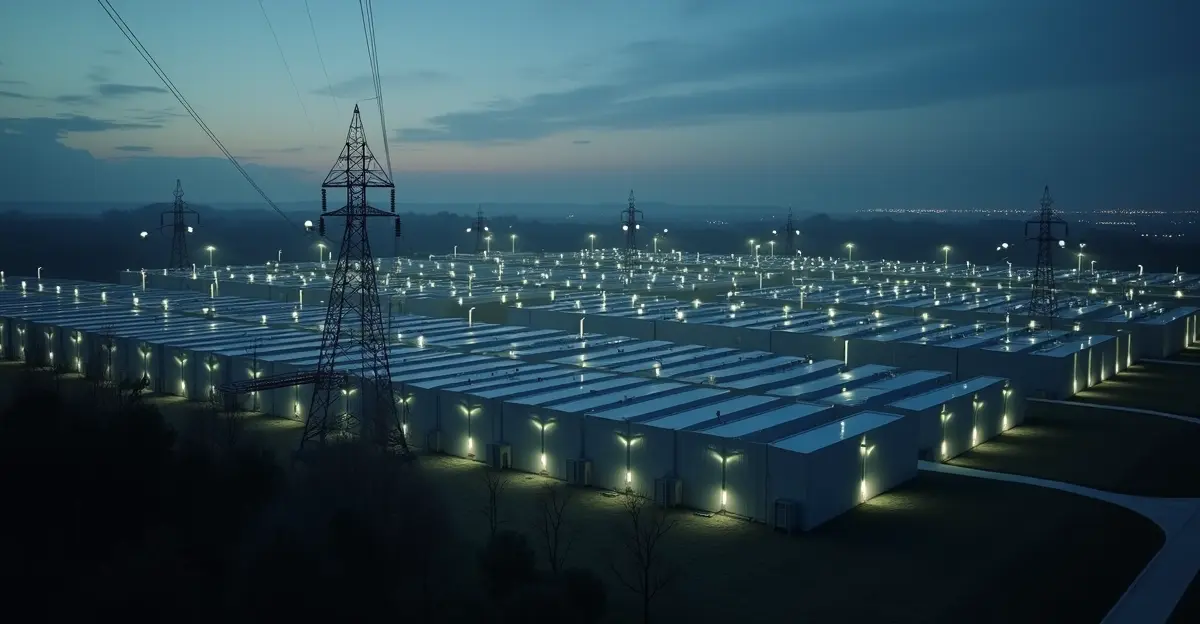
The U.S. electric grid faces unprecedented strain from AI expansion, with data center electricity consumption projected to grow from 176 TWh (4.4% of U.S. total) in 2023 to between 325-580 TWh (6.7-12.0%) by 2028. Northern Virginia hosts the world's largest data center cluster with 561 facilities, consuming 20% of the state's electricity. A July 2024 voltage fluctuation in this region caused 60 data centers to disconnect simultaneously, creating a 1,500-megawatt power surplus that nearly triggered cascading outages. Four tech giants—Amazon, Google, Meta, and Microsoft—control 42% of U.S. data center capacity and are investing over $330 billion in AI infrastructure expansion, with Amazon alone planning to quadruple its U.S. capacity to 12 gigawatts.
Emerging Geopolitical Competition Patterns
Strategic Resource Advantage Locations
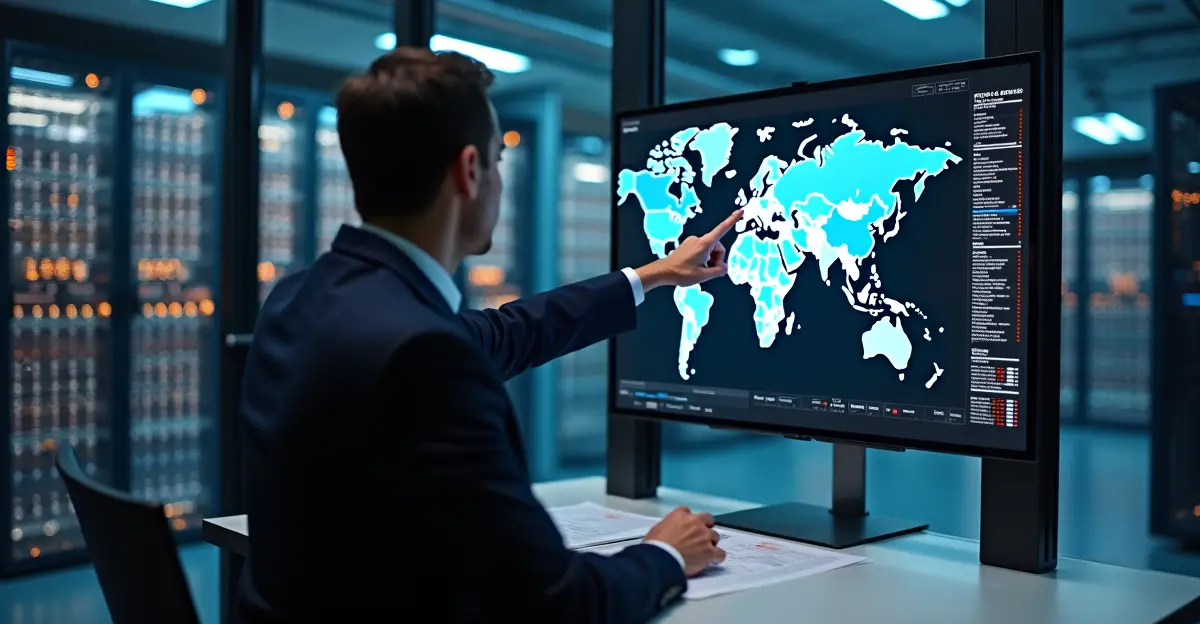
Nations and corporations are increasingly competing for locations with abundant, reliable water and energy resources, creating new dependencies and vulnerabilities in the global AI supply chain. The World Economic Forum notes that data centers have evolved from back-end facilities to critical strategic assets, with the U.S. hosting 51% of global data centers, prompting other nations to build domestic capacity for digital sovereignty and resilience. This competition is particularly acute in regions with existing water stress challenges, where data center construction may exacerbate local resource conflicts and community opposition.
US-China Technological Rivalry
The strategic competition between the U.S. and China is marked by rising trade barriers, competing AI ambitions, and a scramble for control over data and digital infrastructure. According to JPMorgan Chase's Center for Geopolitics report, AI capabilities are becoming central to national security, economic competitiveness, and geopolitical influence. The U.S.-China rivalry has led to tech decoupling, with export controls on advanced AI chips creating a fragmented global tech ecosystem. Governments are implementing data localization laws, fragmenting the once-borderless cloud into national silos, potentially leading to a 'digital Cold War' with incompatible technological spheres.
Impact and Strategic Implications
The concentration of AI infrastructure in resource-advantaged locations creates significant geopolitical implications. First, it establishes new forms of digital dependency, where nations without adequate water and energy resources may become technologically dependent on resource-rich neighbors. Second, it creates security vulnerabilities, as concentrated infrastructure represents attractive targets for both physical and cyber attacks. Third, it exacerbates existing climate justice issues, as data centers in water-scarce regions may compete with agricultural and residential needs for limited resources. Fourth, it drives innovation in alternative cooling technologies and renewable energy integration, potentially creating new technological leadership opportunities for nations that invest in sustainable AI infrastructure.
Expert Perspectives and Corporate Responses
Major tech companies are responding to these challenges with ambitious sustainability pledges. Google and Microsoft have committed to becoming Water Positive by 2030, while Microsoft has reportedly explored restarting the Three Mile Island nuclear plant to power its AI operations. However, transparency and standardized reporting remain challenges, with community opposition growing in multiple regions. 'The tension between energy and water efficiency is central to the AI infrastructure challenge,' notes the Environmental Law Institute analysis. 'As climate change increases water stress, water availability is becoming a critical operational and reputational risk for operators.' The Belfer Center warns that insufficient regulation risks grid instability, rising consumer costs, and setbacks to climate goals, while overregulation could hinder AI development.
Frequently Asked Questions
How much water do AI data centers consume?
AI data centers consume massive amounts of water for cooling, with U.S. facilities using 66 billion liters in 2023, up from 21.2 billion liters in 2014. Training GPT-3 alone required 700,000 liters of freshwater, and global data center water use is estimated at 560 billion liters annually, potentially rising to 1.2 trillion liters by 2030.
Why are data centers located in water-scarce regions?
Data centers are often located in water-scarce regions due to existing infrastructure, tax incentives, proximity to major markets, and historical development patterns. Nearly one-third of new data centers under construction are in regions projected to face greater water scarcity by 2050, creating significant long-term operational risks.
How does AI data center growth affect electricity prices?
AI data center expansion has driven retail electricity prices up 42% since 2019 in affected regions, with residential rates rising 5.2% in October 2025 alone. Electricity costs near data centers have increased by up to 267% compared to five years ago, creating economic strain for local communities.
What is the geopolitical significance of AI data centers?
AI data centers have become critical strategic assets in geopolitical competition, with nations seeking control over digital infrastructure for economic competitiveness, national security, and technological leadership. The U.S.-China rivalry has intensified competition for AI infrastructure dominance, potentially leading to fragmented technological ecosystems.
How are tech companies addressing water and energy challenges?
Major tech companies like Google and Microsoft have pledged to become Water Positive by 2030 and are investing in renewable energy, nuclear power solutions, and more efficient cooling technologies. However, implementation challenges and community opposition continue to pose significant hurdles.
Future Outlook and Conclusion
The geopolitical calculus of AI data center locations will increasingly shape international relations, economic competitiveness, and technological leadership in the coming decades. As water scarcity projections for 2050 influence trillion-dollar investment decisions, nations and corporations must balance AI advancement with climate resilience and resource sustainability. The emerging competition for resource-advantaged locations represents both a challenge and opportunity—requiring innovative solutions, international cooperation, and strategic foresight to ensure that AI development proceeds in a manner that is both technologically advanced and environmentally sustainable.
Sources
Tech Insider: AI Data Center Power Crisis 2026
Belfer Center: AI Data Centers and the US Electric Grid
CNN: AI Data Centers and Electricity Prices 2026
Environmental Law Institute: AI's Cooling Problem
MSCI: When AI Meets Water Scarcity
World Economic Forum: AI Geopolitics and Data Centers 2025

Follow Discussion