


 Deutsch
 English
 Español
 Français
 Nederlands
 Português


 Share
Share




SpaceX Wins $4.16 Billion Pentagon Contract for Golden Dome Missile-Tracking Satellites
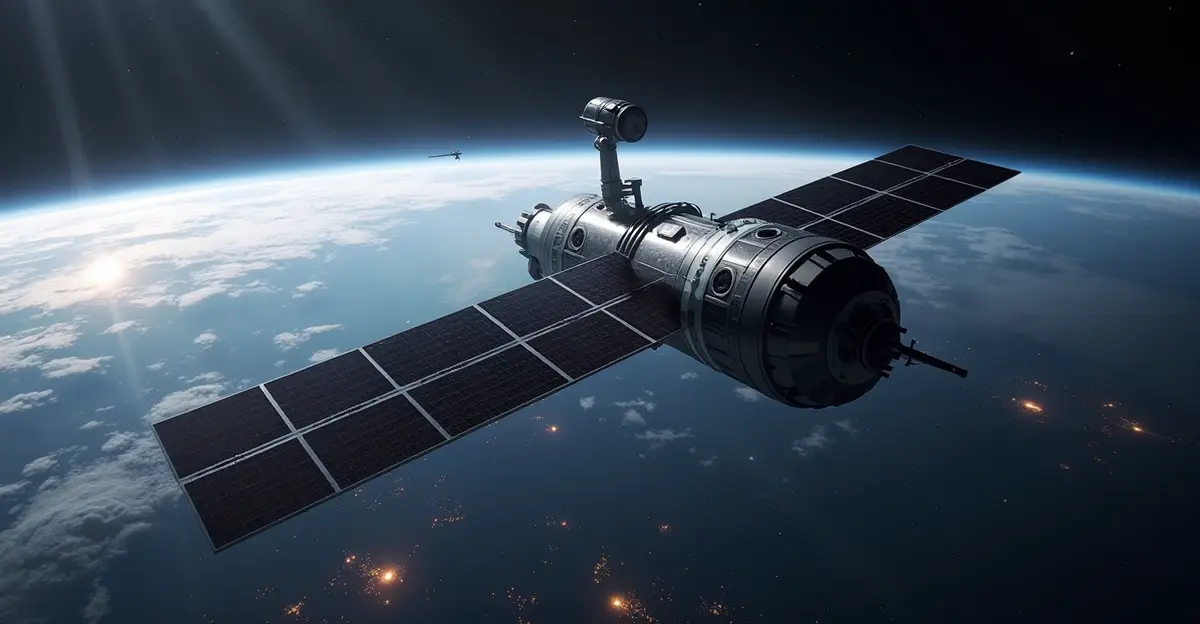
SpaceX has secured a landmark contract worth $4.16 billion from the U.S. Department of Defense to build a constellation of satellites equipped with a missile tracking system. The satellites will form a critical component of the Golden Dome, a space-based missile defense system championed by President Donald Trump. The deal marks one of the largest commercial space contracts in history and underscores the Pentagon's growing reliance on private aerospace companies for national security infrastructure.
The Golden Dome program, named in allusion to Israel's Iron Dome, is designed to detect, track, and intercept ballistic, hypersonic, and cruise missiles from space. Unlike the Iron Dome, which defends against short-range rockets over a limited area, the Golden Dome aims to provide a global shield against advanced threats from peer competitors such as China and Russia. The system is expected to include thousands of satellites equipped with sensors and, potentially, space-based interceptors.
What is the Golden Dome Missile Defense System?
The Golden Dome is a planned multi-layered missile defense architecture for the United States. On January 27, 2025, President Trump signed an executive order directing the Secretary of Defense to submit a plan for what was initially called the 'Iron Dome for America,' later renamed Golden Dome. The system is intended to be operational before the end of his term, with Space Force General Michael Guetlein stating that it will be partially operational by the end of 2028.
The concept draws inspiration from President Ronald Reagan's Strategic Defense Initiative (SDI) of the 1980s, which proposed a space-based missile shield. However, the Golden Dome goes further by incorporating modern technologies such as artificial intelligence, autonomous data networks, and advanced interceptors. The system would employ a constellation of satellites in low Earth orbit, data centers in space, and a cross-domain AI-enabled network for automated command and control.
Cost estimates for the Golden Dome vary widely. The White House has estimated $175 billion, the Congressional Budget Office projects $1.2 trillion, and the American Enterprise Institute puts the figure as high as $3.6 trillion, depending on architectural details. The One Big Beautiful Bill Act allocated $24.4 billion in federal funding for the Golden Dome in 2025, with an additional $13 billion for fiscal year 2026. In total, $25 billion has been made available to build the system, with the SpaceX contract representing a significant portion.
SpaceX's Role in the Golden Dome Project
Under the new contract, SpaceX will develop and deploy satellites with advanced missile tracking capabilities. These Golden Dome satellites will detect and follow hostile missiles from launch through their trajectory, providing real-time data to ground-based and space-based interceptors. The Pentagon has also awarded SpaceX $2.29 billion to develop the data network that will connect these assets.
In addition to tracking satellites, SpaceX is working on prototypes for space-based interceptors — weapons designed to destroy incoming missiles while they are still in space. This marks a significant expansion of SpaceX's role in national defense, moving beyond satellite launches and Starlink communications into active weapons development. The company has previously been involved in other elements of the Golden Dome, including earlier contracts for sensor payloads and launch services.
The involvement of SpaceX's CEO Elon Musk has raised questions about potential conflicts of interest, given Musk's close relationship with President Trump and his role as head of the Department of Government Efficiency (DOGE). Critics have pointed to the Elon Musk government contracts as a potential conflict, though the Pentagon maintains that the awards followed standard procurement procedures.
Comparison: Iron Dome vs. Golden Dome
| Feature | Iron Dome | Golden Dome |
|---|---|---|
| Scope | Regional (Israel) | Global (Earth-wide) |
| Targets | Short-range rockets, artillery | Ballistic, hypersonic, cruise missiles |
| Platform | Ground-based batteries | Space-based satellites and interceptors |
| Operational Since | 2011 | Expected partial operation 2028 |
| Estimated Cost | $210 million (development) | $175 billion – $3.6 trillion |
| Interceptors | Tamir missiles | Space-based kinetic and directed-energy weapons |
Strategic Implications and Controversies
The Golden Dome program has sparked intense debate among defense experts and policymakers. Proponents argue that it is essential to counter the growing missile threats from China, Russia, and North Korea, all of which are developing advanced hypersonic weapons that can evade traditional ground-based defenses. A space-based tracking layer would provide the warning time and targeting data needed to intercept such threats.
Critics, however, raise several concerns. First, the cost is astronomical, with some estimates exceeding $3 trillion. Second, the technology remains unproven — space-based interceptors have never been tested in combat conditions. Third, there are fears that the system could destabilize international relations by undermining existing arms control treaties, such as the Anti-Ballistic Missile Treaty, from which the U.S. withdrew in 2002. Some experts worry that the Golden Dome could accelerate a new arms race in space.
Space Force General Michael Guetlein has defended the program, stating that it will be deployed incrementally to manage risk. 'The Golden Dome will be a game-changer for our national security,' Guetlein said in a recent briefing. 'By the end of 2028, we will have a partial operational capability that will fundamentally alter the strategic calculus of our adversaries.'
Others are more skeptical. 'The Golden Dome risks making the threat of nuclear war more likely, not less,' said Dr. Sarah Johnson, a defense analyst at the Center for Strategic and International Studies. 'If an adversary believes their missiles can be neutralized, they may be more inclined to strike first in a crisis.'
The role of private space companies in defense is also under scrutiny. SpaceX's dual role as a commercial launch provider and defense contractor raises questions about accountability and oversight. The company's Starlink satellite network has already been used extensively by the Ukrainian military, blurring the lines between civilian and military space assets.
The Road Ahead: Timeline and Next Steps
The Pentagon has outlined an aggressive timeline for the Golden Dome. Initial satellite prototypes are expected to launch within the next 18 months, with a full constellation of tracking satellites in orbit by 2028. The space-based interceptors will follow, with testing scheduled for 2027. Northrop Grumman is also a key partner in the program, working on sensor and interceptor technologies.
Congress has shown strong bipartisan support for the program, reflecting the perceived urgency of the missile threat. However, budget constraints could slow progress, especially if cost overruns materialize — a common problem in large defense programs. The Government Accountability Office has been asked to monitor the program closely.
For SpaceX, the Golden Dome contract represents a major milestone in its evolution from a launch provider to a full-spectrum defense contractor. The company's ability to deliver on such a complex and high-stakes program will be closely watched by both the Pentagon and the global space industry.
Frequently Asked Questions (FAQ)
What is the Golden Dome system?
The Golden Dome is a U.S. space-based missile defense system designed to detect, track, and intercept ballistic, hypersonic, and cruise missiles from space. It is named after Israel's Iron Dome but is far larger in scope and cost.
How much is the SpaceX contract worth?
The contract is valued at $4.16 billion for building missile-tracking satellites. SpaceX has also received $2.29 billion for developing the associated data network, bringing the total to approximately $6.45 billion.
When will the Golden Dome be operational?
According to Space Force General Michael Guetlein, the system will be partially operational by the end of 2028. Full operational capability is expected later, possibly in the 2030s.
How does Golden Dome differ from Iron Dome?
Iron Dome is a ground-based system that protects a small area (Israel) from short-range rockets. Golden Dome is a space-based global system designed to counter advanced intercontinental ballistic missiles and hypersonic weapons.
Is there controversy around Elon Musk's role?
Yes. Critics have raised concerns about potential conflicts of interest due to Musk's close ties to President Trump and his leadership of DOGE. The Pentagon says contracts were awarded through standard procedures.


Follow Discussion