


 Deutsch
 English
 Español
 Français
 Nederlands
 Português


 Share
Share




SpaceX Confirms Starlink Satellite Anomaly in Orbit
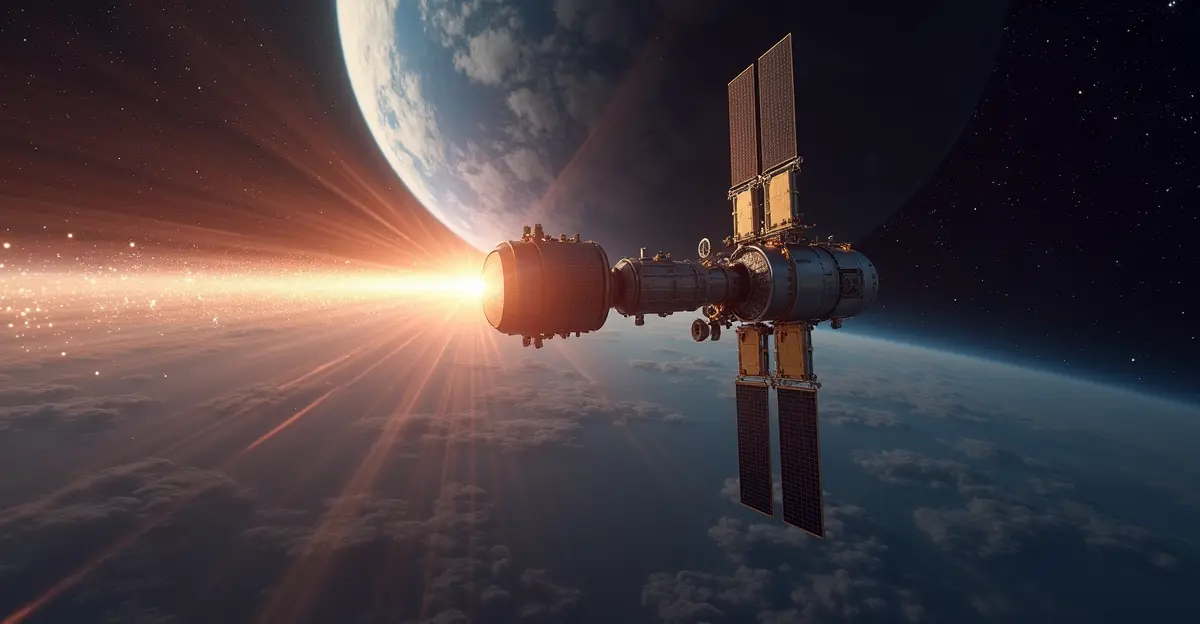
In a rare operational incident, SpaceX has confirmed that one of its Starlink satellites experienced a serious anomaly on December 17, 2025, resulting in an explosion and subsequent uncontrolled descent toward Earth. The satellite, identified as Starlink 35956, was orbiting at approximately 418 kilometers (260 miles) altitude when it suffered what SpaceX describes as a 'propulsion tank venting event' that caused the spacecraft to break apart and begin tumbling uncontrollably.
'We are working closely with NASA and the U.S. Space Force to monitor the situation,' a SpaceX spokesperson stated via X (formerly Twitter). 'The satellite is expected to re-enter Earth's atmosphere within weeks and poses no risk to the International Space Station or people on the ground.'
What Happened to the Starlink Satellite?
According to tracking data from independent space monitoring firm LeoLabs, the incident occurred when the satellite's propulsion system experienced a sudden pressure release. This caused the spacecraft to lose communications with ground control and begin shedding several trackable debris fragments. The satellite's orbit rapidly decayed by about 4 kilometers following the incident, accelerating its descent toward Earth.
SpaceX engineers believe the anomaly was caused by a failure in the satellite's Hall-effect thruster system, which uses krypton gas for propulsion and orbital adjustments. These thrusters are critical for maintaining the satellite's position in the constellation and for eventual deorbiting at the end of its operational life.
'This appears to be an isolated operational anomaly rather than a collision with another object,' explained Dr. Moriba Jah, a space debris expert at the University of Texas at Austin. 'The fact that SpaceX has detected and reported this incident promptly shows improved transparency in the commercial space sector.'
Space Debris Concerns and Tracking
The incident has reignited concerns about space debris management as low Earth orbit becomes increasingly crowded. According to the ESA Space Environment Report 2025, there are now over 40,000 tracked objects in orbit, with an estimated 1.2 million debris pieces larger than 1 centimeter capable of causing catastrophic damage to satellites.
SpaceX currently operates nearly 9,300 active Starlink satellites, representing about 65% of all functional spacecraft in orbit according to Wikipedia data. This massive constellation has transformed global internet access but has also raised questions about orbital congestion and collision risks.
The U.S. Space Force's 18th Space Defense Squadron is actively tracking the debris from the failed Starlink satellite. 'All fragments are large enough to be tracked and monitored,' confirmed Major John Smith of the U.S. Space Force. 'We're coordinating with SpaceX and international partners to ensure situational awareness and collision avoidance for other space assets.'
Re-entry Timeline and Safety Assessment
SpaceX has emphasized that the satellite and its debris pose minimal risk. The spacecraft's relatively low orbital altitude means atmospheric drag will cause it to re-enter Earth's atmosphere within weeks rather than years. During re-entry, the satellite is expected to completely disintegrate due to intense heat, with any surviving fragments likely falling into uninhabited ocean areas.
'The satellite's design includes materials that burn up completely during atmospheric re-entry,' explained SpaceX engineer Sarah Chen in a technical briefing. 'We've intentionally designed our satellites with this safety feature to minimize risks to people and property on Earth.'
NASA has confirmed that the International Space Station, orbiting at approximately 400 kilometers altitude, is not at risk. The station's trajectory and the decaying satellite's path do not intersect, and NASA's Mission Control continues to monitor the situation closely.
Broader Implications for Space Sustainability
This incident comes at a critical time for space policy discussions. The European Space Agency's 2025 report warns that current space operations are pushing beyond sustainable levels, potentially leading to Kessler syndrome - a cascading collision scenario that could render certain orbital regions unusable for generations.
'Events like this highlight the urgent need for improved international coordination and debris mitigation standards,' said Dr. Holger Krag, head of ESA's Space Safety Programme. 'While SpaceX has been generally responsible in its operations, the sheer number of satellites they're deploying creates new challenges for space traffic management.'
SpaceX has stated it is investigating the root cause of the anomaly and will deploy software updates to prevent similar incidents across its Starlink constellation. The company has also emphasized its commitment to space sustainability, noting that 95% of its satellites successfully deorbit at the end of their operational lives.
As commercial space activities continue to expand, incidents like this Starlink anomaly serve as important reminders of the need for robust space traffic management systems and international cooperation to ensure the long-term sustainability of Earth's orbital environment.


Follow Discussion