Nederlands
 English
 Deutsch
 Français
 Español
 Português





Technical Issues Force Month-Long Delay for Historic Lunar Flight
NASA has officially postponed the launch of its Artemis II mission to March 2026, following multiple technical problems discovered during a critical dress rehearsal. The highly anticipated mission, which will send four astronauts on a lunar flyby for the first time since 1972, was originally scheduled for February but now faces at least a month's delay while engineers address several concerning issues.
Multiple Problems During Rehearsal
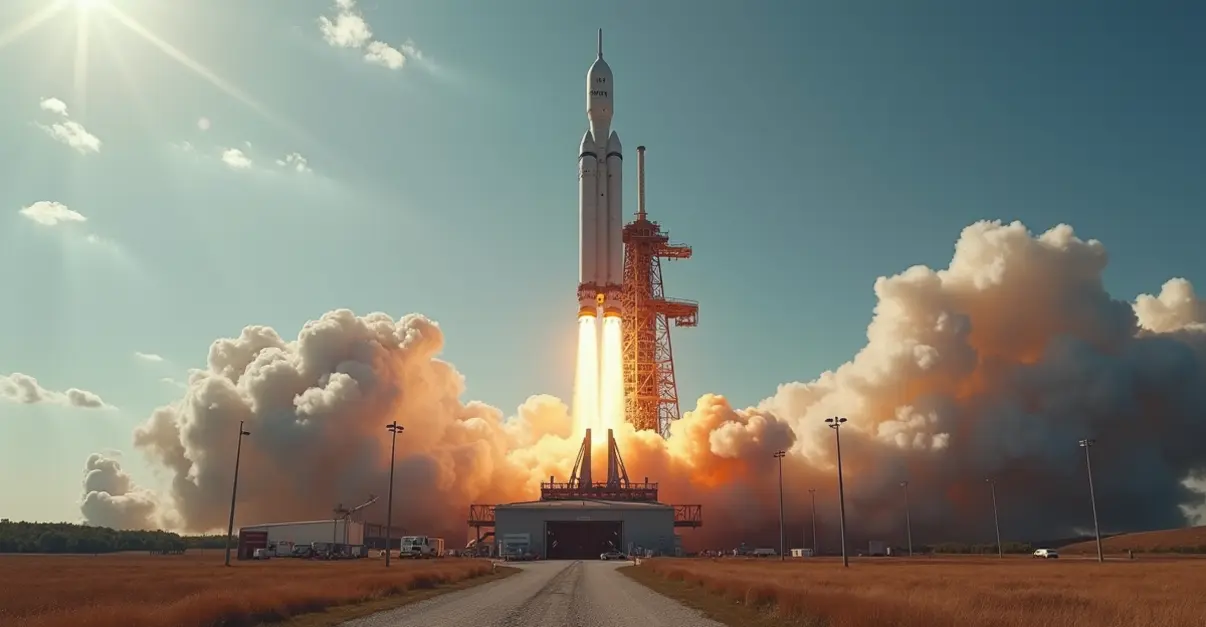
The wet dress rehearsal, conducted earlier this week, revealed a persistent liquid hydrogen leak in the connection between the Space Launch System (SLS) rocket and its launch platform. This recurring issue, similar to problems that delayed the uncrewed Artemis I mission in 2022, forced the countdown to terminate at T-minus 5 minutes and 15 seconds when hydrogen levels exceeded NASA's 4% safety limit.
Additional complications included problems with the Orion capsule's pressurization system, where a valve malfunction prevented proper cabin pressure maintenance. Ground communication systems also experienced intermittent dropouts, and cold weather in Florida affected camera functionality during the test.
'Safety remains our top priority,' NASA Administrator Jared Isaacman stated in a press briefing. 'We will only launch when we are fully ready for this historic crewed lunar mission.'
March Launch Window and Crew Status
NASA now targets March 6-9 or March 11 for the next launch attempt, with backup dates available in April if needed. The Artemis II crew—commander Reid Wiseman, pilot Victor Glover, mission specialist Christina Koch, and Canadian astronaut Jeremy Hansen—have been released from quarantine while engineers review data and plan another dress rehearsal.
This 10-day mission represents a crucial test of NASA's deep space capabilities, as the crew will travel approximately 230,000 miles from Earth and spend several days in lunar orbit before returning. The mission serves as a precursor to Artemis III, which aims to land astronauts on the lunar surface by 2028.
Intensifying Space Race with China
The delay comes amid growing competition in lunar exploration, with China methodically advancing toward its own crewed moon landing before 2030. According to RAND Corporation analysis, China's space program has demonstrated remarkable progress since launching its first astronaut in 2003, with a $19 billion budget and reliable Long March rockets boasting a 97% success rate.
'Unless something changes, it is highly unlikely the United States will beat China's projected timeline,' former NASA Administrator Jim Bridenstine recently warned, highlighting the geopolitical stakes of this new space race.
China's planned mission would use the new Long March 10 rocket and Mengzhou crew capsule, capable of carrying up to six astronauts compared to Orion's four. The country aims to establish a permanent lunar research station, potentially giving it significant influence over future lunar resource utilization and space governance.
Historical Context and Future Implications
The Artemis program, formally established in 2017, represents NASA's most ambitious lunar exploration effort since the Apollo era. According to Wikipedia, the program's long-term goal includes establishing a sustainable human presence on the Moon to facilitate eventual missions to Mars.
Artemis II's success is critical not only for NASA's timeline but also for maintaining international partnerships through the Artemis Accords, which currently include over 30 signatory nations. The mission will test life support systems, radiation protection, and communication capabilities essential for future deep space exploration.
As engineers work to resolve the technical issues, the world watches closely—aware that the outcome will shape not only the future of lunar exploration but also the geopolitical landscape of space for decades to come.