Nederlands
 English
 Deutsch
 Français
 Español
 Português
Iran's regime faces unprecedented pressure from mass protests, but experts say revolution requires military defection, economic paralysis, and unified opposition - elements still missing despite brutal crackdown.
Iran's Leadership Faces Unprecedented Pressure Amid Protests
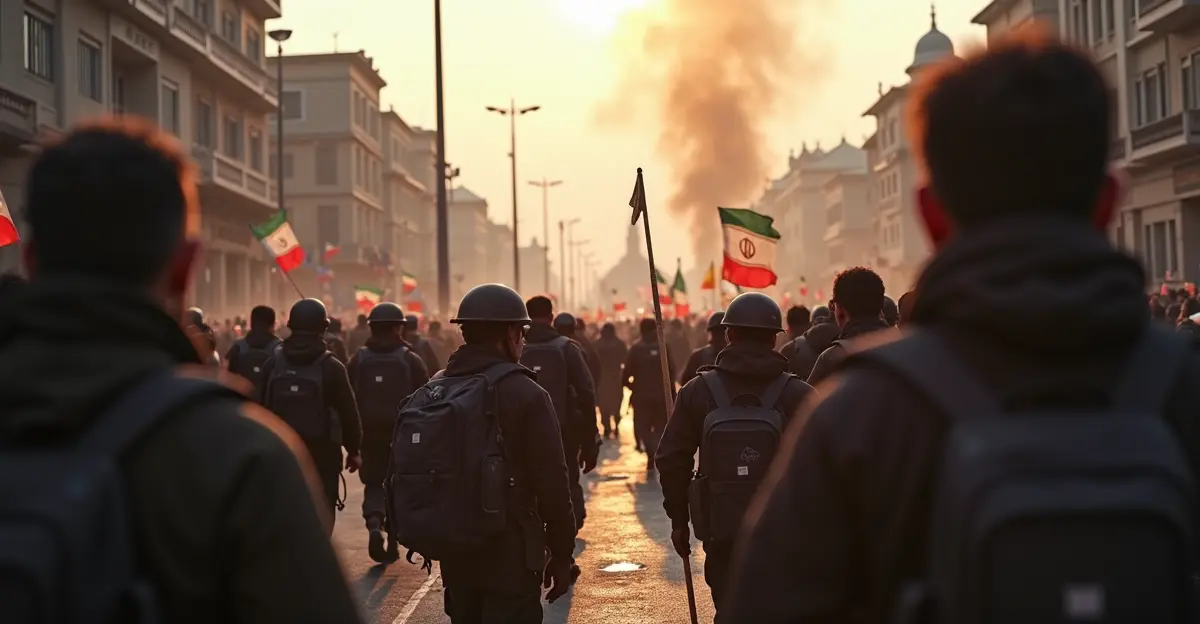
The Iranian regime is facing one of its most serious challenges in decades as mass protests continue to sweep across the country, but experts warn that a successful revolution requires several key elements that are still missing. The current wave of demonstrations, which began in late December 2025 following economic collapse and currency crisis, has evolved into nationwide calls for systemic change, with protesters demanding the downfall of the Islamic Republic.
Military Loyalty Remains Key Obstacle
According to Middle East expert Erwin van Veen from Clingendael Institute, 'We are still far from a revolutionary situation.' The critical factor missing is military defection. Hazem Kandil, a scholar at Cambridge University and author of The Power Triangle, explains: 'No revolution is possible without at least part of the armed forces deserting or taking a neutral position.' The Islamic Revolutionary Guard Corps (IRGC), with approximately 125,000 personnel, remains firmly loyal to Supreme Leader Ayatollah Ali Khamenei and has shown no signs of fracturing.
The IRGC, established after the 1979 revolution, has constitutional authority to protect the Islamic Republic's integrity and has grown into an economic and political empire controlling key sectors of Iran's economy. 'Everything is possible, but it will be difficult to get the Revolutionary Guard to side with the demonstrators,' says Kandil, noting that guards are heavily indoctrinated and closely monitored.
Scale and Unity Challenges
Iran historian Peyman Jafari emphasizes the need for larger participation: 'We have seen several hundred thousand demonstrators spread across different cities at the same time, but for a revolution you need millions of people.' The current protests, while widespread, haven't reached the critical mass needed to overwhelm security forces.
Another crucial element missing is economic paralysis. During the 1979 revolution, a general strike crippled the country. While bazaar merchants have joined current protests, Jafari notes: 'The economy has changed over the decades. The bazaar no longer plays such a big role as before.' For a successful uprising, truck drivers, civil servants, food producers, steelworkers, and oil industry workers would need to strike en masse - something not yet seen.
Leadership and Opposition Fragmentation
The opposition remains deeply divided. Reza Pahlavi, son of the deposed Shah, has positioned himself as a potential leader, but his support is polarizing. 'The complicated thing is that he works as much to unite as to divide,' explains Jafari. Polls show about one-third of Iranians support him, one-third strongly oppose him, and minorities associate him with Persian nationalism and oppression.
According to Al Jazeera analysis, Iran's opposition movement is fragmented with no clear leadership due to government suppression. The 2009 Green Movement leaders remain under house arrest, and protesters increasingly rely on decentralized organizing through student groups and social media.
Brutal Crackdown and International Pressure
The regime's response has been exceptionally brutal. According to Amnesty International, security forces have used live ammunition, shotguns with metal pellets, water cannons, tear gas, and beatings against largely peaceful protesters. Death toll estimates vary dramatically - while official figures suggest 2,000-3,000 casualties, activist groups and international media report 12,000-20,000 deaths.
The United Nations has expressed concern, and the U.S. has threatened military action. 'President Trump has made it clear that all options are on the table,' said the U.S. ambassador to the UN recently. However, Van Veen cautions that external intervention could backfire: 'A military attack by the US could accelerate the situation, but the effect depends strongly on how large and successful the attack is.'
As the protests continue, the regime appears determined to maintain power through brutal repression. While the current situation represents the most significant challenge to Iran's leadership since 1979, experts agree that without military defection, mass economic paralysis, and unified opposition leadership, a successful revolution remains elusive.