


 Deutsch
 English
 Español
 Français
 Nederlands
 Português


 Share
Share




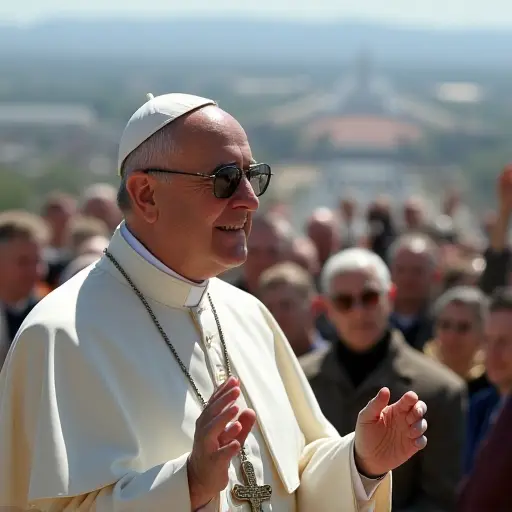
Pope Leo XIV Inaugurates the Tower of Jesus Christ at Barcelona's Sagrada Família
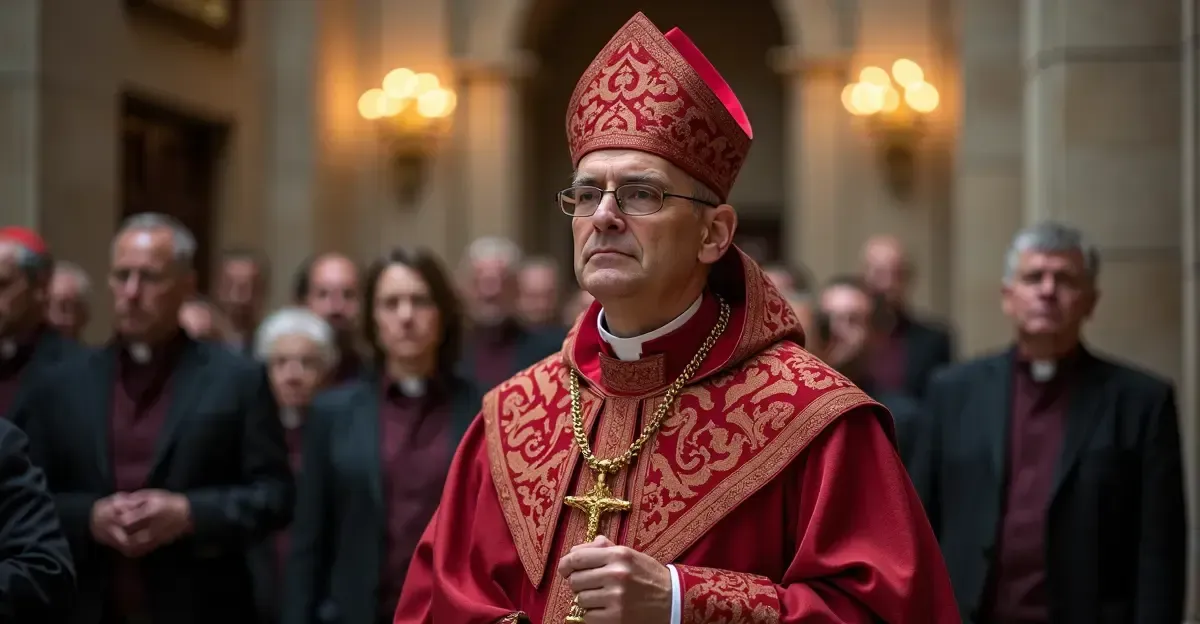
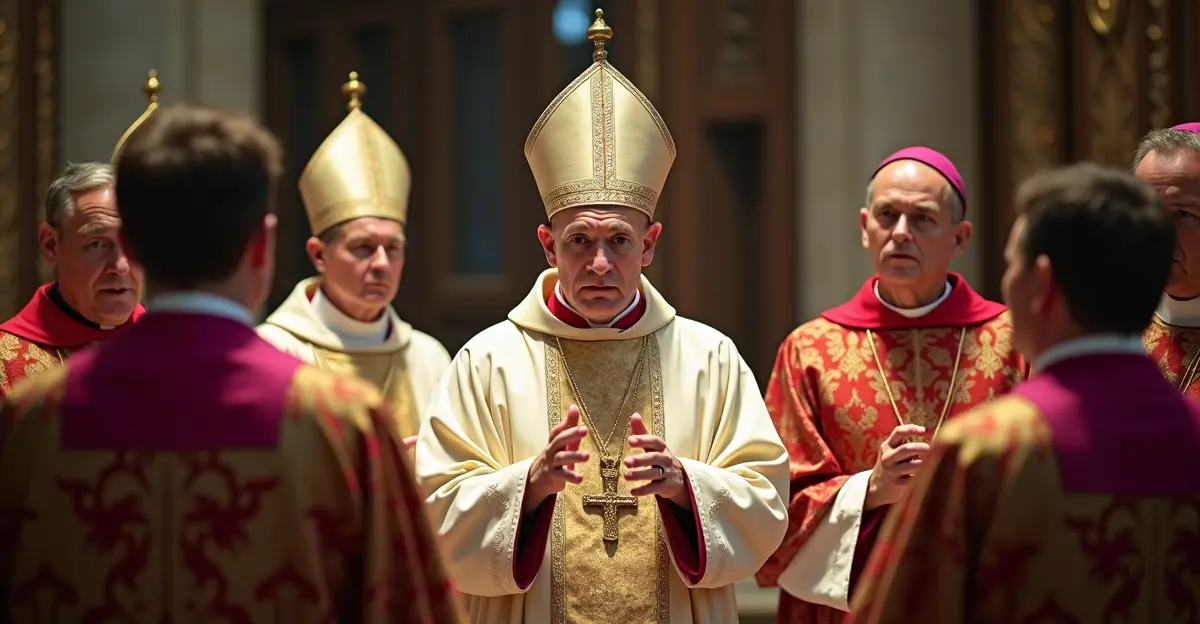
On June 10, 2026, Pope Leo XIV blessed the newly completed Tower of Jesus Christ at Antoni Gaudí's Sagrada Família in Barcelona, marking a historic milestone exactly 100 years after the architect's death. The ceremony, attended by Spain's King Felipe VI, Queen Letizia, and Prime Minister Pedro Sánchez, drew tens of thousands of faithful to the streets of Barcelona. The tower, which reaches 172.5 meters (566 feet), makes the Sagrada Família the tallest church in the world, surpassing Ulm Minster in Germany.
The basilica, which began construction in 1882 under architect Francisco de Paula del Villar before Gaudí took over in 1883, has been under construction for 144 years. Gaudí died in 1926 with less than a quarter of the project complete. The completion of the central tower — topped with a 17-meter, 5.5-ton four-arm cross — represents a major step toward finishing Gaudí's magnum opus. However, the Glory Facade, the largest and most complex facade, is still expected to take another decade, with completion now projected for 2034.
Controversy Over Fidelity to Gaudí's Vision
While the blessing was a moment of celebration for many, critics argue that the modern construction has strayed from Gaudí's original vision. Architect and art historian Carolina García-Estévez, who has extensively studied Gaudí's work, told NOS: 'The proportions are mathematically calculated, not based on real bodies. When you stand before the part that Gaudí himself made, it feels like you are truly in nature. The changes and additions made after his death are highly controversial.'
García-Estévez believes the basilica should have been left unfinished. 'The most beautiful things remain unfinished by definition, because modernity is precisely about that. We never finish anything. Time always catches up with us.' She is particularly critical of the cross atop the Tower of Jesus Christ, which visitors can reach by elevator. 'You should not be able to enter a symbol. A symbol is merely something to look at and draw inspiration from.'
However, Jordi Barbany, whose family stone-carving business has worked on the Sagrada Família for generations, sees the evolution differently. 'For me, the importance of the Sagrada Família is that the building has been in motion, that it has evolved, that it has developed together with society.' He believes Gaudí intentionally left room for future generations to interpret his work. The controversy over Gaudí's legacy continues to divide opinions among architects and art historians.
Language Dispute Overshadows Religious Ceremony
The papal visit was not without political tension. Initially, the Vatican released a missal scheduling the blessing entirely in Spanish, sparking backlash from Catalan separatist leaders, including former president Carles Puigdemont and parliamentary speaker Josep Rull. Within 24 hours, the Vatican revised the plan, and Pope Leo XIV delivered the blessing in both Spanish and Catalan. The Pope, speaking from the basilica, described the Sagrada Família as 'a work in progress' and emphasized that 'Christ's path is a journey that never ends.'
The language controversy highlights ongoing tensions between Catalan nationalists and the Spanish state. The Sagrada Família, a symbol of Catalan identity and Gaudí's deep Catalan pride, has often been caught in the crossfire of regional politics. The Catalan independence movement's influence on cultural events remains a sensitive topic in Spain.
Local Residents Face Uncertainty Over Glory Facade
While the tower completion is celebrated globally, local residents face uncertainty over the planned Glory Facade, which may require demolishing nearby residential buildings. The controversial plan could displace up to 1,000 families. Community leaders have described the situation as a 'pressure cooker,' with residents frustrated by years of uncertainty. The basilica's board has yet to finalize the design, and protests have been organized by affected neighborhoods.
The Sagrada Família attracted nearly 5 million visitors in 2025, generating €134.5 million in revenue, 96.9% from ticket sales. The impact of mass tourism on Barcelona has been a growing concern for city officials and residents alike.
FAQ
When was the Sagrada Família's Tower of Jesus Christ completed?
The final piece of the central tower was installed on February 20, 2026, reaching the basilica's full height of 172.5 meters.
Why is Pope Leo XIV blessing the Sagrada Família?
The blessing coincides with the 100th anniversary of Antoni Gaudí's death on June 10, 1926, and marks the completion of the basilica's tallest tower.
Is the Sagrada Família finished now?
No. While the central tower is complete, the Glory Facade — the largest and most ornate — is still under construction, with completion expected around 2034.
What is the controversy about the Sagrada Família's completion?
Critics argue that modern construction methods and design choices have strayed from Gaudí's original vision. There are also concerns about the planned demolition of nearby buildings for the Glory Facade, which would displace hundreds of families.
How many people visit the Sagrada Família each year?
In 2025, the basilica welcomed 4,877,567 visitors, making it Spain's most-visited tourist attraction.

Follow Discussion