


 Deutsch
 English
 Español
 Français
 Nederlands
 Português


 Share
Share




NATO Crisis 2026: US Absence Sparks Alliance Concerns & European Defense Shift
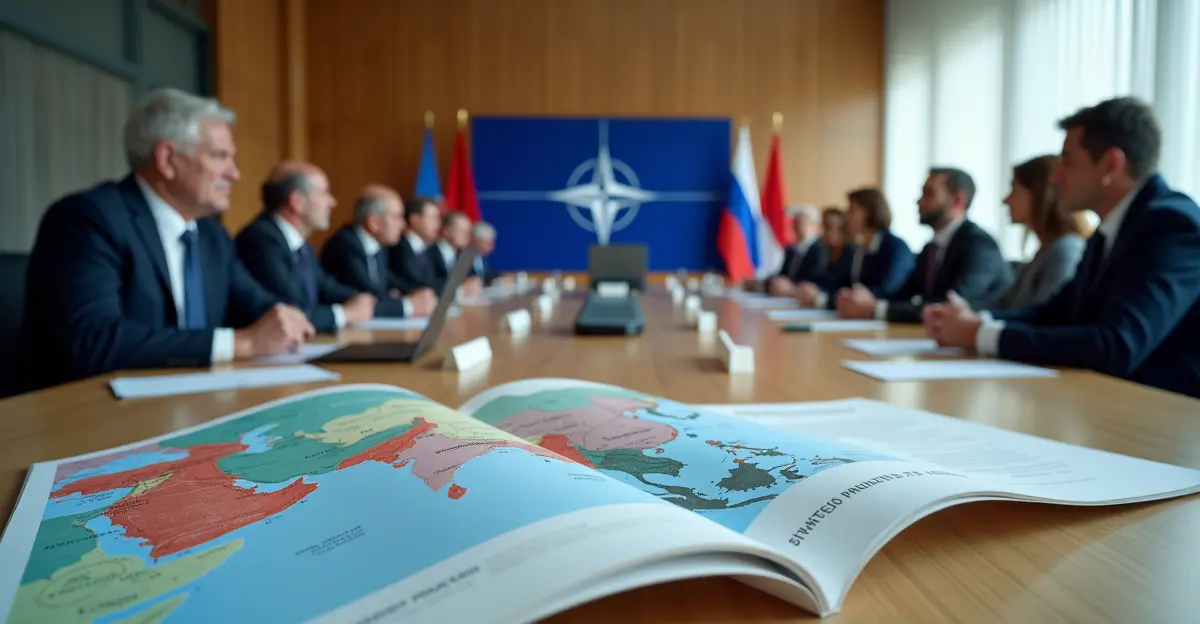
In a significant development that has raised alarms across the transatlantic alliance, U.S. Defense Secretary Pete Hegseth skipped a crucial NATO defense ministers meeting in Brussels on February 12, 2026, marking the second consecutive absence of a top American official from key alliance gatherings. The unprecedented no-show has triggered concerns about U.S. commitment to the 77-year-old military alliance, even as European allies publicly downplay the significance while privately expressing growing unease about Washington's strategic priorities.
What is NATO and Why Does This Matter?
The North Atlantic Treaty Organization (NATO) is a military alliance established in 1949 that currently includes 32 member countries committed to collective defense. The alliance operates on the principle that an attack against one member is considered an attack against all, creating a powerful deterrent against aggression. The current U.S. absence from high-level meetings represents a significant departure from decades of American leadership within the alliance and signals potential seismic shifts in global security architecture.
The Brussels Meeting: Public Calm, Private Concerns
While U.S. Under Secretary of Defense Elbridge Colby attended in Hegseth's place, the absence of the defense secretary himself was noted by all 31 other member nations. Icelandic Foreign Minister Þorgerður Katrín Gunnarsdóttir quipped, 'Sadly for him, he is missing a good party,' but behind closed doors, diplomats expressed deeper concerns about the political message being sent.
NATO Secretary-General Mark Rutte attempted to downplay the situation, stating, 'I make myself not too worried if some high American officials, who also have to take care of their own hemisphere in the Indo-Pacific, cannot always be here in Brussels.' However, this marked the second consecutive absence of a U.S. cabinet official, following Secretary of State Marco Rubio's no-show at the previous foreign ministers meeting.
Former Ambassadors Sound Alarm
In a timely intervention, 16 former U.S. ambassadors to NATO and former Supreme Allied Commanders Europe issued a joint statement emphasizing the alliance's critical importance to American security. Their declaration, released coinciding with the defense ministers meeting, warned that 'NATO is not an American gesture of generosity' but rather a strategic arrangement ensuring U.S. global leadership at minimal cost.
The former officials, who served under both Democratic and Republican administrations since 1997, argued that without NATO, the U.S. would face defense costs $100-200 billion higher annually while losing crucial intelligence-sharing capabilities and strategic basing in Europe. Their statement represents a direct counter to growing Trump administration NATO skepticism within Washington policy circles.
NATO 3.0: The Europeanization of Defense
The meeting highlighted what analysts are calling 'NATO 3.0' – a fundamental rebalancing where European allies assume greater responsibility for conventional defense while the U.S. pivots toward the Indo-Pacific. Under Secretary Colby explicitly called for this shift, stating Europe must take primary responsibility for its own defense.
This transformation is already underway through several concrete measures:
- Command Transfers: The U.S. has transferred command of two NATO headquarters to European allies
- Burden Shifting: European nations are taking over coordination of Ukraine aid from American leadership
- Defense Spending: Multiple European countries now exceed the new 3.5% GDP defense spending target
- Industrial Base: Europe is rebuilding defense production capacity after decades of underinvestment
Arctic Sentry: A New Strategic Mission
One key outcome of the meeting was the formal launch of 'Arctic Sentry,' a new multi-domain military activity consolidating NATO's presence in the increasingly contested Arctic region. The mission, led by Joint Force Command Norfolk, integrates existing exercises like Denmark's Arctic Endurance and Norway's Cold Response into a unified operational approach.
Analysts note that Arctic Sentry serves multiple purposes: countering Russian and Chinese military activity in the High North, addressing U.S. security concerns about the region, and potentially dissuading any unilateral moves regarding Greenland territorial disputes that have strained transatlantic relations.
Implications for Global Security Architecture
The current developments represent more than routine alliance adjustments – they signal potential fundamental changes in how global security is organized. With the U.S. increasingly focused on great power competition with China, European allies face the challenge of maintaining deterrence against Russia while building independent defense capabilities.
German Defense Minister Boris Pistorius acknowledged the shift, stating Europeans must take over more responsibility to keep NATO transatlantic. However, questions remain about whether Europe can rapidly develop the military capabilities, industrial base, and political unity needed to fill the gap left by reduced American engagement.
The timing is particularly sensitive given ongoing Ukraine conflict dynamics and increasing Russian military activity along NATO's eastern flank. While European nations have stepped up support for Ukraine, with Britain pledging an additional £500 million for air defense, the long-term sustainability of European-led security efforts remains uncertain.
FAQ: NATO's Future and U.S. Role
Why is the U.S. skipping NATO meetings?
The Trump administration is prioritizing the Indo-Pacific region and wants European allies to take greater responsibility for their own defense, reducing what it sees as disproportionate U.S. burden-sharing.
What is NATO 3.0?
NATO 3.0 refers to the alliance's transformation toward greater European leadership in conventional defense while maintaining U.S. nuclear umbrella protection and focusing American resources on other global theaters.
How are European countries responding?
European nations are increasing defense spending, taking over NATO command roles, and rebuilding defense industrial capacity, though challenges remain in achieving strategic autonomy.
What is Arctic Sentry?
Arctic Sentry is NATO's new integrated military activity in the Arctic region, combining existing exercises to strengthen alliance presence in the increasingly contested High North.
Could the U.S. leave NATO entirely?
While complete withdrawal seems unlikely given congressional support and military establishment opposition, reduced engagement and burden-shifting represent significant changes to the traditional transatlantic security relationship.



Follow Discussion