


 Deutsch
 English
 Español
 Français
 Nederlands
 Português


 Share
Share




NATO Chief Rejects Calls for EU Defence Independence
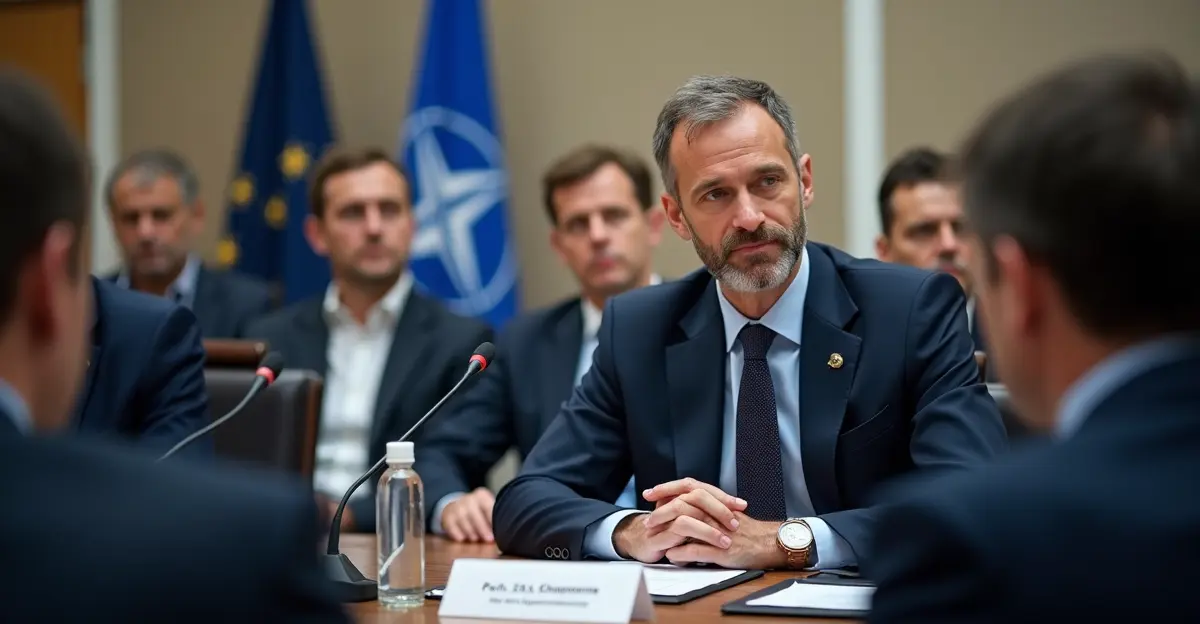
NATO Secretary General Mark Rutte has firmly rejected proposals for European Union defence independence from the United States, stating that transatlantic cooperation remains essential for European security. In a recent interview with European Newsroom, Rutte emphasized that while Europe needs to take more responsibility for its defence, this should happen alongside the US rather than through complete autonomy.
The Transatlantic Alliance Debate
The discussion comes amid growing calls from some European politicians for greater strategic autonomy. Manfred Weber, leader of the conservative European People's Party (EPP) and the largest group in the European Parliament, has advocated for what he calls a 'European NATO' - a defence structure under EU command that could operate independently from the US-led alliance.
Rutte, who served as Dutch prime minister for 14 years before becoming NATO Secretary General in October 2024, acknowledged Weber's position but offered a different perspective. 'Let's not forget that when it comes to Europe and NATO, there is more than the EU,' Rutte stated, pointing out that the 23 EU countries within NATO account for only about a quarter of the alliance's total economic output.
The 5% Defence Spending Commitment
Rutte highlighted the historic agreement reached at the June 2025 NATO summit in The Hague, where all allies committed to raising defence-related spending to 5 percent of gross domestic product (GDP) by 2035. This represents a significant increase from the previous 2% target that many NATO members had struggled to meet.
'I think it is still one of the biggest foreign policy victories of President Trump, the 5 percent, the clear commitment to produce more,' Rutte said, acknowledging the pressure from the US administration for European allies to contribute more to collective defence.
The new spending target, detailed in The Hague Summit Declaration, requires at least 3.5% of GDP for core defence requirements and NATO capability targets, with the remaining 1.5% allocated to critical infrastructure protection, network defence, and strengthening the defence industrial base.
Strategic Realities and Russian Threats
Rutte's position reflects growing concerns about European security amid ongoing Russian aggression. In a separate speech in Berlin earlier in December 2025, Rutte warned that Russia has become 'more brazen, reckless, and ruthless' under President Vladimir Putin, with alarming statistics showing Russia has launched over 46,000 drones and missiles against Ukraine in 2025 alone.
Intelligence assessments suggest Russia could pose a serious threat to NATO territory as early as 2027, making transatlantic unity more crucial than ever. Rutte emphasized that 'Ukraine's ability to resist Russia is key to preventing a potential Russian invasion of NATO territory, which could trigger World War III.'
Economic and Strategic Considerations
The NATO chief pointed to practical limitations of EU-only defence cooperation. 'Seventy-five percent is still outside the EU,' he noted, referring to NATO members such as the UK, Norway, Canada and the US. This economic reality makes complete EU defence independence impractical, according to Rutte.
He also highlighted strategic areas like the Arctic and North Atlantic that require joint US-European defence cooperation, areas where EU-only capabilities would be insufficient against potential threats.
European Responsibility Within NATO
While rejecting calls for independence, Rutte strongly endorsed increased European defence efforts within the NATO framework. 'The United States expects Europe to take on more responsibility and spend more money on defence,' he told dpa, adding that 'I'm absolutely convinced that the US is completely invested in NATO. There's no doubt.'
Rutte praised Germany's commitment to increase defence spending to 3.5% of GDP by 2029 as an example of European allies stepping up their contributions. He emphasized that the goal should be 'doing this alongside the US' rather than separately.
The Future of Transatlantic Defence
The debate comes at a critical juncture for European security. With the war in Ukraine continuing and Russia showing no signs of backing down, European leaders face difficult choices about defence priorities and resource allocation.
Rutte's position represents the mainstream NATO view that while European defence capabilities need strengthening, this should occur within the established transatlantic framework rather than through separate structures. As he put it, 'Europe's security is strongest when working closely with American allies.'
The discussion is likely to continue as European countries work to implement the ambitious 5% defence spending target while balancing calls for greater strategic autonomy with the practical realities of global security challenges.
Follow Discussion