


 Deutsch
 English
 Español
 Français
 Nederlands
 Português


 Share
Share




Canadian Passenger Tests Positive for Hantavirus Aboard MS Hondius
A Canadian cruise passenger has tested positive for the hantavirus after traveling on the Dutch cruise ship MS Hondius, bringing the total number of confirmed cases in the outbreak to 11, with three fatalities. The patient, who is in stable condition and isolated in a hospital in British Columbia, developed mild symptoms including fever and headache two days before being admitted. The result is awaiting laboratory confirmation, but health officials are treating the case as positive. "This is clearly not what we had hoped for, but it is what we prepared for," said the chief health officer of British Columbia.
Background of the MS Hondius Hantavirus Outbreak
The outbreak began in April 2026 on the MS Hondius, a Dutch cruise ship operated by Oceanwide Expeditions. The vessel departed Ushuaia, Argentina, on April 1 with 114 passengers and 61 crew members. The first death occurred on April 11, and the virus quickly spread among passengers and crew through close, sustained contact. The ship made stops at Tristan da Cunha, Saint Helena (where 30 passengers disembarked), Cape Verde, and Tenerife, where all remaining passengers were evacuated and repatriated to multiple countries including Canada, Australia, and several European nations. The 2025 cruise ship virus outbreaks provide context for how such incidents are managed.
What is Hantavirus and the Andes Virus Variant?
Hantaviruses are a family of viruses carried primarily by rodents. They are transmitted to humans through inhalation of aerosolized particles from rodent urine, droppings, or saliva. The virus causes two main diseases: hemorrhagic fever with renal syndrome (HFRS) and hantavirus pulmonary syndrome (HPS). The Andes virus, a New World hantavirus found in South America, is the only hantavirus known to spread from person to person, typically through close contact, body fluids, or sharing utensils. This characteristic has made the MS Hondius outbreak particularly concerning for public health authorities. The incubation period ranges from 4 to 42 days, and initial symptoms include fever, fatigue, muscle aches, headaches, and dizziness, which can rapidly progress to severe respiratory failure. There is currently no specific antiviral treatment or vaccine available; early medical care is critical for managing symptoms.
Confirmed Cases and Fatalities
As of mid-May 2026, the World Health Organization (WHO) has confirmed 11 cases of Andes virus infection linked to the MS Hondius, including three deaths. The first victims were a Dutch couple who are believed to have been infected before boarding the cruise, possibly in Argentina. A German passenger also died from the virus. Subsequent cases have been reported among passengers from the United States, France, Spain, and now Canada. The global health emergency response systems were activated by multiple countries to contain the spread. The US Centers for Disease Control and Prevention (CDC) classified the outbreak as a Level 3 emergency response and deployed epidemiologists to the Canary Islands to conduct exposure risk assessments. American passengers were evacuated on a government medical repatriation flight to Offutt Air Force Base in Nebraska and transported to the National Quarantine Center at the University of Nebraska Medical Center in Omaha.
Evacuation and Quarantine Measures
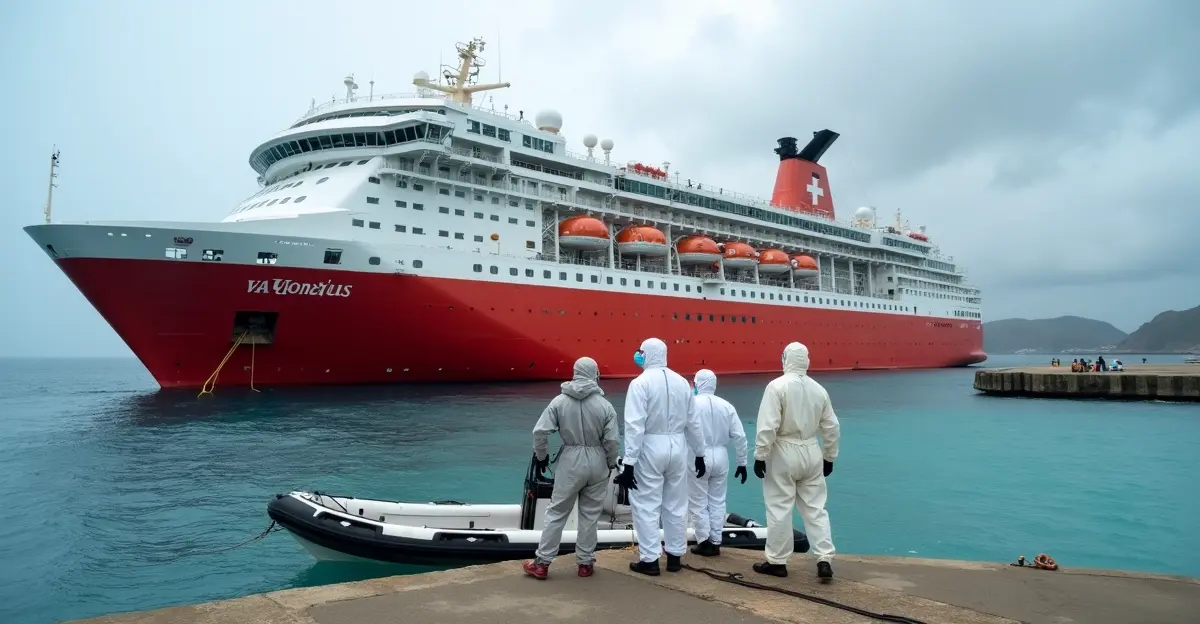
The Dutch government coordinated the repatriation of 26 passengers to the Netherlands, all of whom tested negative for the Andes virus upon arrival, according to the Dutch National Institute for Public Health and the Environment (RIVM). Passengers who were evacuated to other countries, including Canada, Australia, France, Spain, and the United States, were placed under quarantine and monitoring protocols. The Dutch Minister of Health described the six-week home quarantine requirement for passengers as a "passing measure" to ensure public safety. The MS Hondius continued its journey to the Netherlands with only crew members on board. The WHO assessed the risk of a wider epidemic as low, given the limited person-to-person transmission capacity of the Andes virus and the rapid containment measures implemented.
Implications for the Cruise Industry and Public Health
The outbreak has raised serious questions about cruise ship health protocols, particularly for voyages to remote regions where medical facilities are limited. The future of cruise industry health regulations is likely to be shaped by this incident. Cruise ships have been hotspots for infectious disease outbreaks in the past, including norovirus and COVID-19, but the hantavirus outbreak on the MS Hondius is unprecedented due to the high case fatality rate of HPS (30-60%). Health authorities emphasize that the risk to the general public remains extremely low, as the Andes virus requires close and sustained contact for transmission. However, the incident underscores the importance of rapid detection, isolation, and international cooperation in managing emerging infectious disease threats.
Frequently Asked Questions
What is the hantavirus?
Hantavirus is a genus of viruses carried by rodents that can cause two severe diseases in humans: hemorrhagic fever with renal syndrome (HFRS) and hantavirus pulmonary syndrome (HPS). The Andes virus, responsible for the MS Hondius outbreak, is a New World hantavirus that causes HPS and can spread from person to person.
How is the Andes virus transmitted?
The Andes virus is primarily transmitted through inhalation of aerosolized rodent excreta. It is unique among hantaviruses because it can also spread person-to-person through close contact, body fluids, or sharing utensils and drinks.
What are the symptoms of hantavirus infection?
Early symptoms include fever, fatigue, muscle aches, headaches, dizziness, chills, and abdominal issues. Within days, the disease can progress to coughing, shortness of breath, and respiratory failure. Immediate medical attention is critical.
Is there a treatment or vaccine for hantavirus?
There is no specific antiviral treatment or vaccine for hantavirus infection. Management focuses on supportive care, including oxygen therapy and mechanical ventilation for severe respiratory distress. Early hospitalization significantly improves survival chances.
How many people have been affected in the MS Hondius outbreak?
As of May 17, 2026, there have been 11 confirmed cases of Andes virus infection linked to the MS Hondius, including three deaths. Cases have been reported in the Netherlands, Germany, France, Spain, the United States, and Canada.



Follow Discussion